Auburn Hair Color: How to Choose the Right Shade Before You Dye
Compare light, classic, and deep auburn hair color by depth, warmth, starting color, and upkeep before you take a reference to the salon.

· 9 min read

On this page
The easiest way to choose auburn hair color is to decide how light or deep you want it before choosing how red. Auburn is a red-brown family: it can read softly coppery, balanced and chestnut, or almost brunette with a red glow. Your starting color, the amount of warmth you like near your face, and the upkeep you are willing to do matter more than the shade name on a single inspiration photo.
Key Takeaways
- Auburn is a range of red-brown shades, not one standard salon formula.
- Choose depth first—light, medium, or deep—then decide whether you want more copper, brown, or muted red.
- Your current hair color and color history affect what can be achieved in one appointment; a photo alone cannot predict the formula.
- Skin undertone can help you describe the contrast you like, but it is not a rule that limits which auburn you can wear.
- Compare a few shades in consistent, natural-looking light and bring a clear reference to your stylist.
Auburn hair color is red mixed with enough brown depth to feel grounded; the best shade is the one whose depth and warmth make sense beside your current hair and face.
What Counts as Auburn Hair Color?
Auburn sits between brunette and red. Depending on the formula and light, it may show copper, mahogany, chestnut, or a subtle burgundy cast. The word is used loosely, so two salon photos both labeled “auburn” can look quite different.
That range is reflected in Wella Professionals’ 2026 auburn shade guide, which presents soft, true, dark, and chestnut auburn as distinct looks. Treat those names as inspiration directions, not standardized formulas.
It helps to separate auburn from nearby shades:
- Copper usually reads brighter and more orange-gold. If that is the look you want, see our copper hair color guide.
- Chestnut brown is mainly brown, with a softer red or golden reflection.
- Burgundy tends to look more wine-like or violet-red than a natural red-brown auburn.
- Auburn keeps a visible red quality while retaining brown depth.
When you save a reference, note what you like about it—its brightness, red-vs-brown balance, or placement—instead of relying on the label alone.
Choose Your Auburn Shade by Depth
Start with the overall depth you want next to your face. The comparison below is directional rather than a promise of an exact salon result; screen brightness, lighting, and the underlying hair color all change how a shade appears.
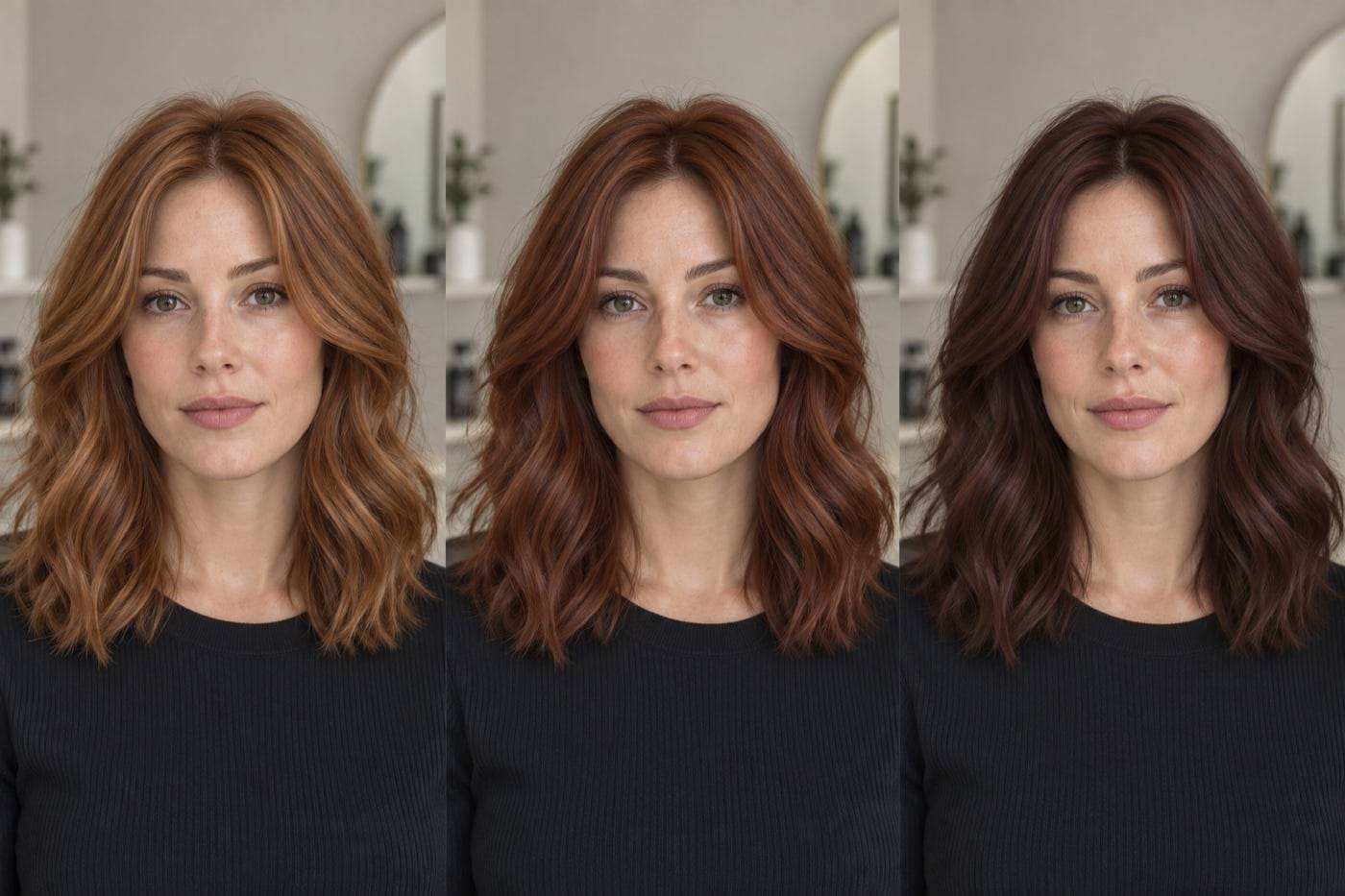
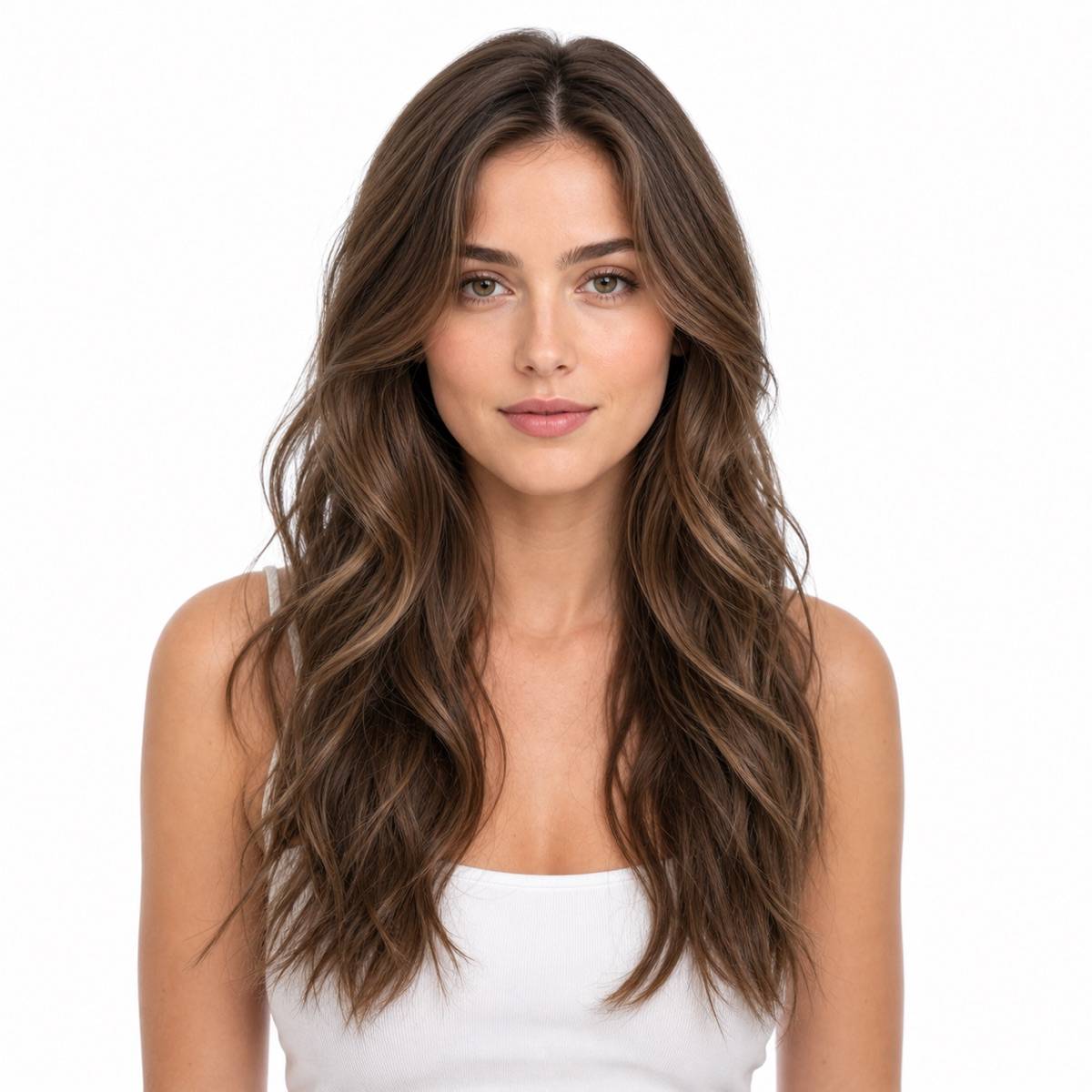
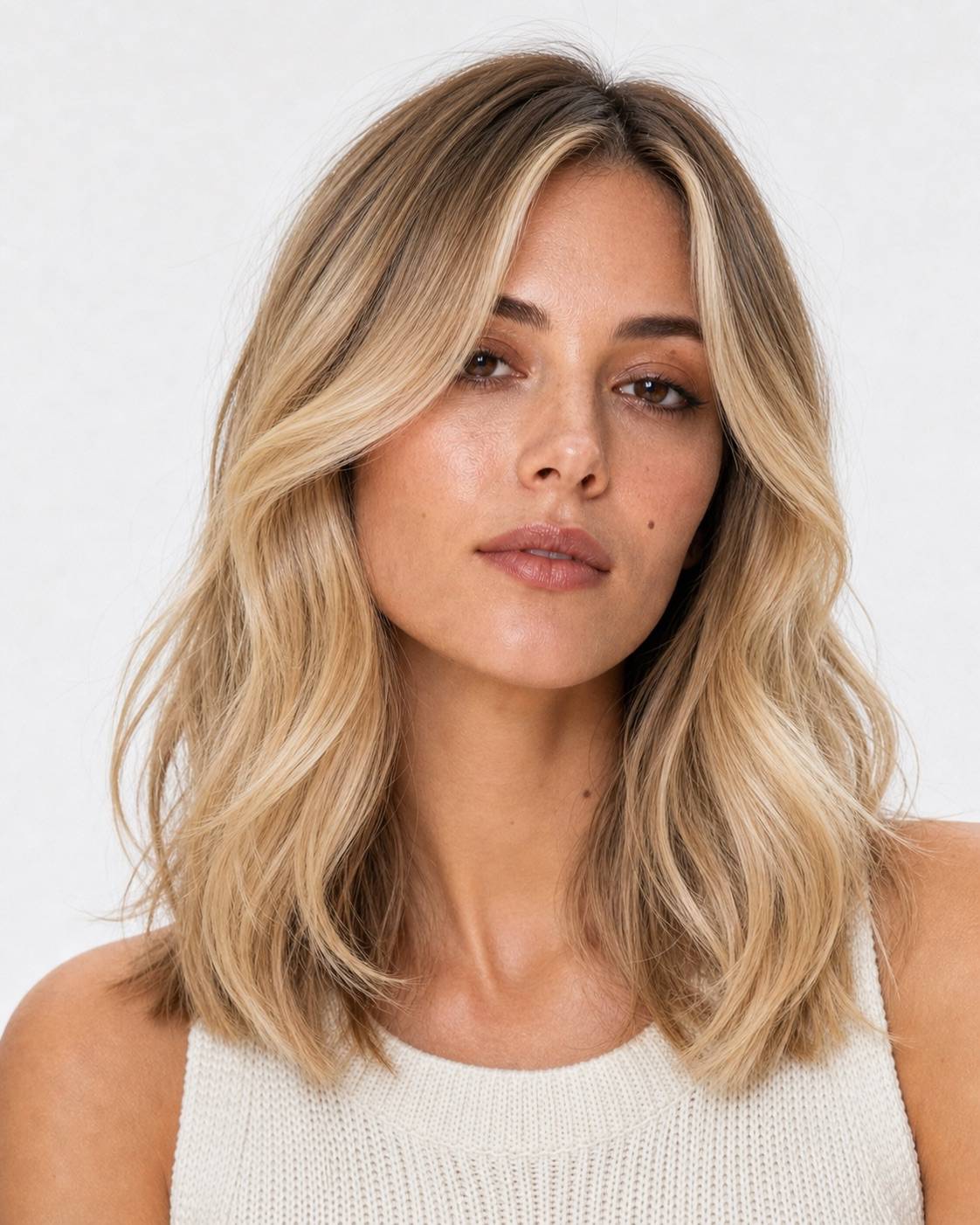
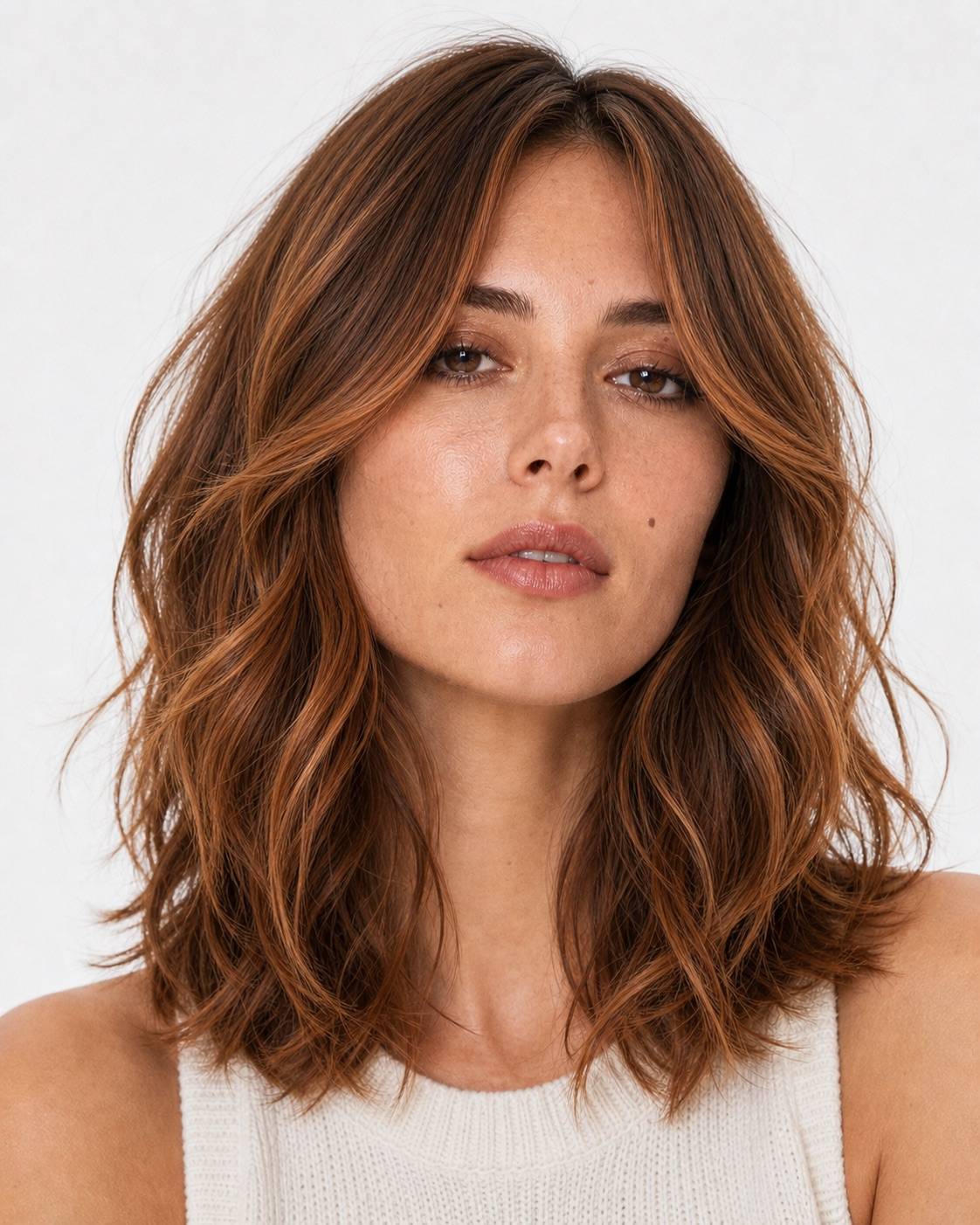
Left to right: a lighter golden auburn, a balanced classic auburn, and a deeper red-brown auburn.
| Direction | How it tends to read | A useful starting point if you want… | Ask your stylist to clarify |
|---|---|---|---|
| Light or golden auburn | Brighter, with more copper or golden warmth | A noticeable warm change that still has brown-red depth | How much lift your current base needs and how bright the front pieces will be |
| Classic or medium auburn | A balanced red-brown that is clearly auburn without reading vivid orange | A recognizable auburn result that is not extremely light or dark | Whether the reference leans more red, copper, or chestnut |
| Deep auburn | Dark brunette depth with red warmth visible in the light | A lower-contrast change or a richer brunette direction | How much red reflect will show indoors versus daylight |
| Muted or mahogany auburn | A more subdued red-brown, sometimes with a cooler or wine-like cast | Less orange warmth or a moodier finish | Whether “mahogany” means brown-red or a more violet-red result in that salon |
If you are between two shades, compare them on the same photo and in similar lighting. That makes the depth difference easier to judge than scrolling through unrelated salon photos.
Use Your Starting Hair Color as a Reality Check
The same auburn reference can produce different results on different bases. Natural or lightly colored hair may take a color deposit differently from hair with several layers of box dye, old highlights, or a previous dark color service.
- Blonde or light brown: A red-brown tone may appear brighter than expected. Ask how the stylist will keep the result from feeling too orange or too flat.
- Medium brunette: This is often a useful place to compare classic auburn, chestnut auburn, and deeper red-brown options. The amount of lift depends on how visible you want the red to be.
- Dark brunette or previously colored hair: A subtle auburn reflection and a vivid lighter auburn are different projects. Tell the stylist exactly what color services are already on your hair before discussing lightening.
- Gray or highlighted hair: The existing variation can make auburn look dimensional, but coverage and tone may vary across sections. Bring photos in more than one kind of light.
A gloss or deposit-only service can adjust tone when the starting depth is suitable; it does not reliably turn dark, previously colored hair into a much lighter auburn. Ask your stylist what can realistically be achieved in one visit and whether a strand test or staged plan makes sense for your hair history.
Think About Warmth Without Treating Undertone as a Rule
Skin undertone can help explain why one reference feels harmonious and another feels high-contrast, but it should not be used as a strict “you can” or “you cannot” rule. People with warm, neutral, and cool undertones can all wear auburn; they may simply prefer different balances of copper, red, and brown.
If you are unsure, compare the saved shade beside your face in daylight and in your usual indoor lighting. Notice whether you like the overall contrast, not whether a color chart says the shade is “correct” for you. Brows, makeup, clothing, camera filters, and the room’s lighting can all change that impression.
Choose the Placement and Upkeep You Can Live With
The same shade family can feel very different depending on where the color sits:
| Placement | The visual effect | Consider it when… |
|---|---|---|
| All-over auburn | The clearest overall color change | You want the full head to read red-brown, not just catch the light |
| Auburn gloss or tone | A subtler shift in reflect and shine | Your base is already close to the depth you want |
| Auburn highlights or balayage | Red-brown dimension through selected sections | You want movement or a softer grow-out rather than one solid color |
| Face-framing auburn | Warmth is concentrated near the front | You want to test how the shade reads beside your complexion before coloring more hair |
Red tones can fade differently depending on the formula, washing routine, heat styling, sun exposure, and your starting color. Rather than relying on a universal refresh schedule, ask your stylist what upkeep they expect for the exact service and what the lower-maintenance alternative would be. If you do not want regular color appointments, a deeper shade or partial placement may be easier to live with than a bright all-over result.
What to Tell Your Stylist
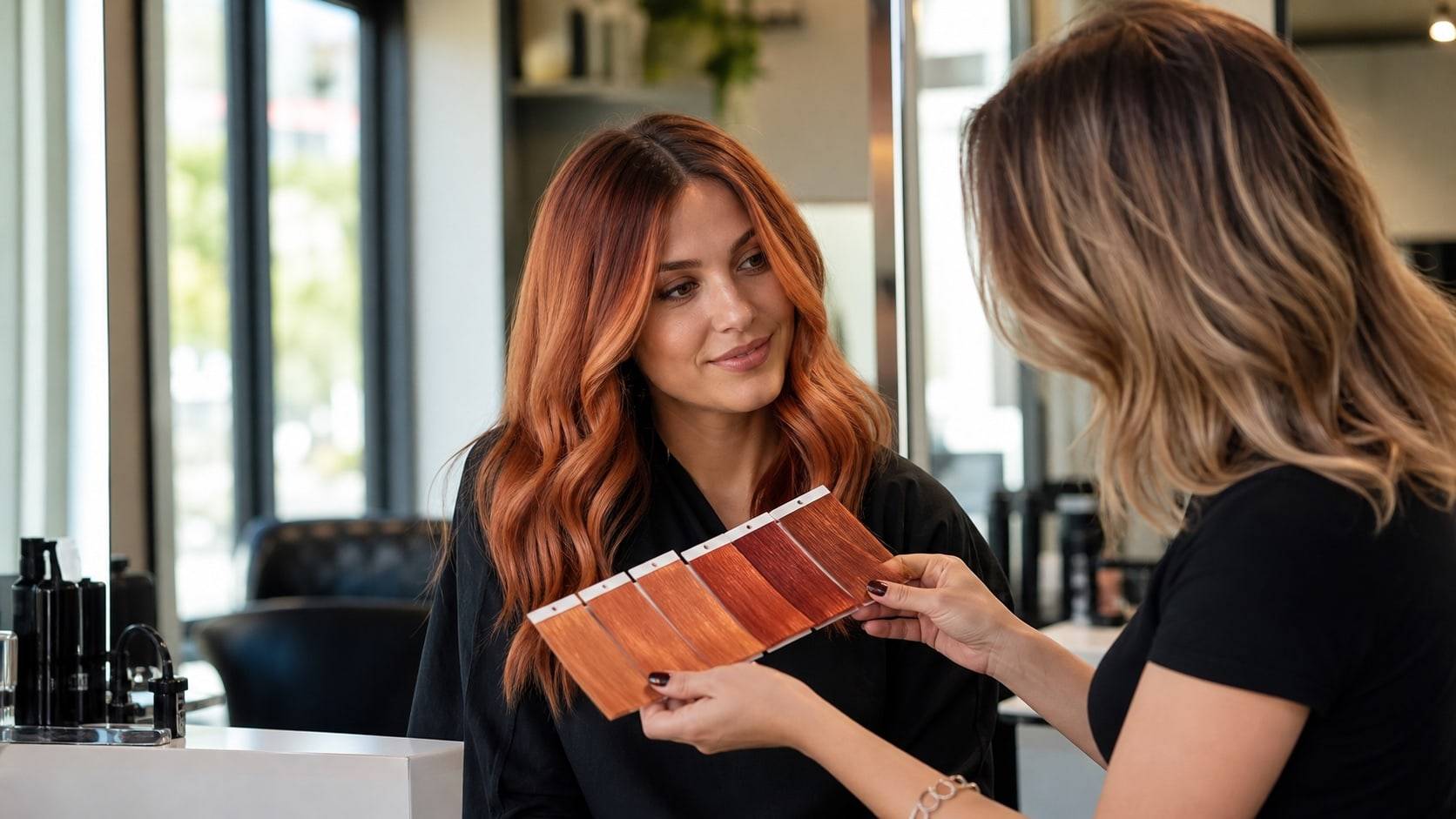
Bring two or three references that show the depth you like. Include at least one image in natural light if possible, and be candid about your recent color history.
You can use this brief:
“I’m looking for auburn, but I want to choose the depth before the exact tone. I like this amount of red-brown warmth and want to avoid going more orange or more burgundy than the reference. Based on my current color history, what is realistic in one appointment, and what would the upkeep look like?”
Then ask:
- Will my current base need to be lightened to get this level of auburn?
- Could we achieve a lower-commitment version with a gloss, highlights, or face framing?
- How will the shade look in ordinary daylight as it grows out or fades?
- What maintenance should I expect for this specific formula and placement?
Where HairWow Fits
Choosing auburn is a visual decision: the shade has to feel right beside your face, not just on a model under salon lighting. HairWow lets you preview an auburn direction on your own photo and compare it with your current look before you decide what references to bring. Treat the preview as a way to narrow your preference—not as a guarantee of a salon formula or final color.
You can also browse hair color and hairstyle ideas or use HairWow Try-On to compare another direction. If you are deciding between an orange-gold result and a red-brown one, the copper shade guide covers that distinction in more detail.
Frequently Asked Questions
Is auburn red or brown?
Auburn is a red-brown color family. Some shades look more copper-red, while others appear mostly brunette until light catches the red reflect.
What is the difference between auburn and copper hair?
Copper usually has more orange or golden warmth; auburn usually has more brown depth. They overlap, and a stylist may describe a shade as copper auburn when it sits between the two.
Can I get auburn hair without bleaching?
It depends on your current hair depth, color history, and how bright you want the result. A subtle red-brown tone may be possible without major lightening on some bases, while a much lighter or vivid auburn may require a separate lightening plan. Ask a stylist to assess your hair in person.
Does auburn hair suit cool undertones?
It can. If you prefer less orange warmth, ask to compare a deeper or more muted red-brown with a golden auburn. Use your own photo and daylight to judge the contrast you like rather than treating undertone charts as rules.
Is auburn hair high maintenance?
Maintenance depends on the shade, placement, formula, starting color, and your routine. Ask the stylist who will do the service how often that particular result may need refreshing, and compare it with a lower-contrast or partial option.
How do I explain the auburn shade I want?
Bring a few reference photos and describe the depth and warmth separately: for example, “medium red-brown, not bright orange and not wine-red.” Also explain your current color and what kind of upkeep you are willing to do.
Summary
Choose auburn hair color by depth first, then decide how much copper, red, or brown you want to see. Your starting color and past services shape the realistic options, while lighting and personal contrast matter more than rigid undertone rules. Compare references on your own photo, bring a clear salon brief, and ask what the specific color plan will require before you commit.