Should I Get Bangs? A Practical Face-Shape Checklist
Decide if bangs will suit your face shape, hair texture, routine, and grow-out tolerance before you cut them.
· 13 min read · Updated
On this page
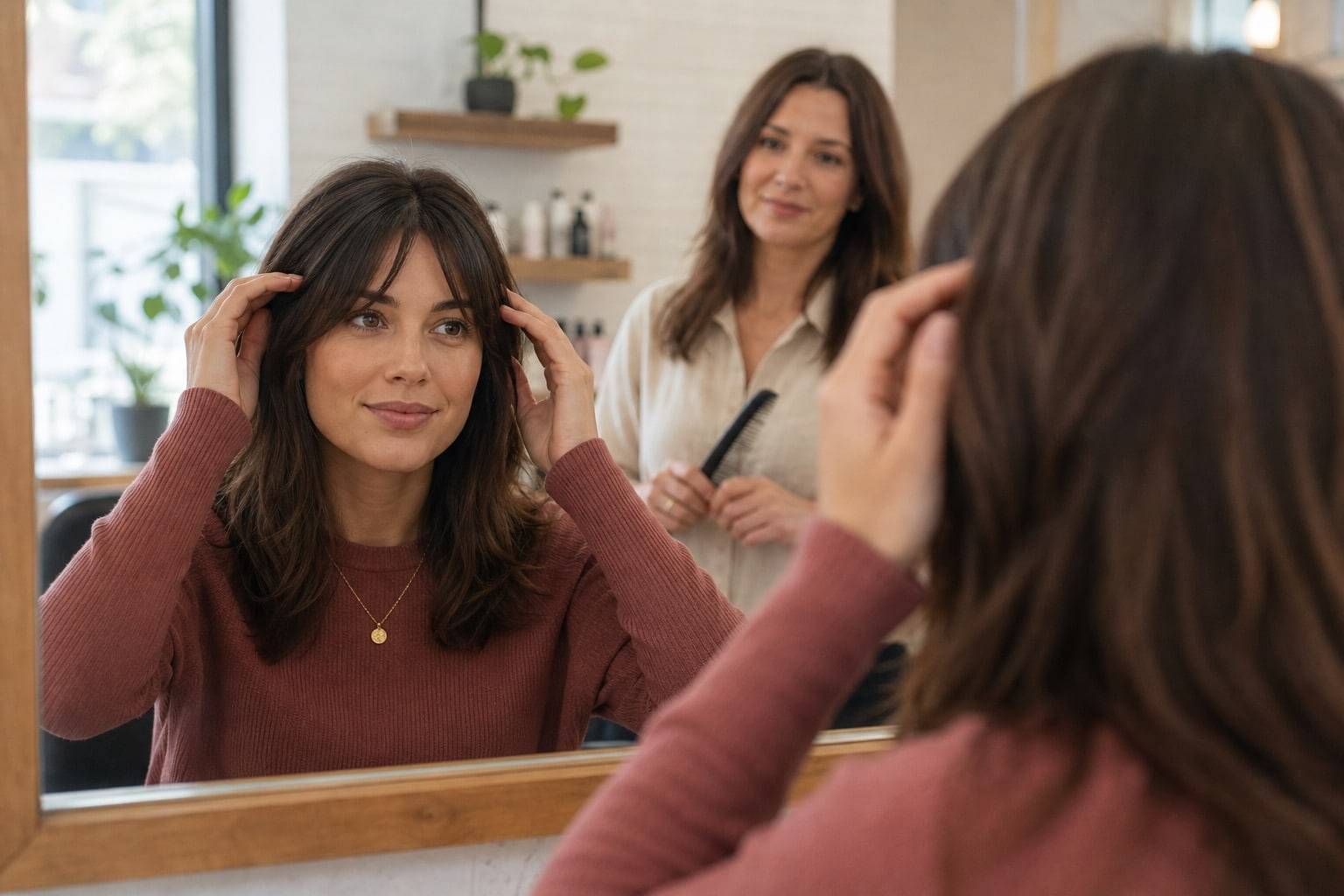
You should get bangs if they solve a specific problem: softening a high forehead, adding movement around the eyes, balancing a long face, refreshing a grown-out haircut, or making your everyday style feel intentional. You should wait if you hate daily styling, have a strong front cowlick, are growing your hair for an event, or only like bangs in highly edited photos.
The safest answer is not yes or no. Test the type of bangs first. Curtain bangs, wispy bangs, side-swept bangs, blunt bangs, and mini fringe all change the face in different ways. A preview can help you reject the wrong direction before a cut.
A practical yes/no checklist
You are a stronger yes if:
- You already like face-framing layers.
- You are bored with your current haircut but do not want to lose much length.
- You can style the front section in two or three minutes.
- You want to soften the forehead or bring attention to the eyes.
- You are choosing curtain, wispy, or side-swept bangs first.
You are a stronger wait if:
- You are cutting them because of one photo.
- You hate hair touching your face.
- Your front hairline has a strong cowlick and you do not style daily.
- You have a major event in the next two weeks.
- You want blunt bangs but do not want regular trims.
The middle answer is common: try long curtain bangs first. They give you the idea without locking you into the shortest version.
Key takeaways
- Bangs change face framing and add a daily maintenance decision.
- Curtain bangs and side-swept bangs are the safest first choices because they blend into layers as they grow.
- Blunt bangs make the strongest change, but they also need the cleanest cut, regular trims, and more styling discipline.
- Face shape helps, but hairline, cowlicks, density, texture, and morning routine matter just as much.
- Preview bangs in HairWow Try-On before cutting, then bring a clear brief to your stylist.
Definition: Bangs are shorter front sections of hair cut to fall across or around the forehead, changing how the eyes, cheekbones, forehead, and overall face length are framed.
Start with the job you want bangs to do
The most useful question is not "Do bangs look good?" It is "What do I want them to fix or change?"
If your hair feels flat around your face, bangs can add shape. If your forehead feels more exposed than you like, they can soften it. If a long haircut looks plain, face-framing bangs can make it feel styled even when the rest of your hair is simple.
But bangs are bad at some jobs. They do not automatically make thin hair look thick. They do not remove the need for styling if your front hairline grows in three directions. They do not stay perfect through sweat, sleep, wind, or humidity unless the cut and texture are working with you.
Use this quick filter:
| If you want... | Test this first | Be careful with |
|---|---|---|
| A softer forehead | Curtain bangs or wispy bangs | Heavy blunt bangs if your hair is very fine |
| More cheekbone framing | Curtain bangs, cheekbone-length pieces | Bangs that end too high and widen the face |
| A sharper fashion change | Blunt bangs or mini fringe | Cutting short before previewing |
| Easier grow-out | Long curtain bangs | Baby bangs or thick straight bangs |
| Less flatness around the face | Wispy bangs with layers | Too many short layers on frizzy hair |
Which bangs suit your face shape?
Face shape is a starting point, not a rulebook. The annoying part is that two people can both have "round faces" and still need different bangs because one has thick wavy hair and the other has fine straight hair.
Current stylist guidance treats face shape as a starting point rather than a rule. Use the options below as comparisons to preview, then decide with your hair texture, hairline, and routine in mind. The stylist-led bang guide from Who What Wear uses the same preference-first approach.
| Face shape | Options to preview first | What to compare |
|---|---|---|
| Oval | Curtain, wispy, blunt, side-swept | Maintenance and how the shortest piece frames the eyes |
| Round | Long curtain, side-swept, off-center fringe | An open center compared with a straight horizontal line |
| Square | Soft curtain, wispy fringe, curved side pieces | A softer edge compared with a clean blunt edge |
| Heart | Side-swept, curtain, light wispy fringe | Where the fringe opens around the forehead and cheekbones |
| Long or oblong | Fuller curtain, brow-length, soft blunt fringe | Brow-length framing compared with longer open pieces |
| Diamond | Curtain, side-swept, cheekbone pieces | How much volume sits near the forehead and cheekbones |
If you do not know your face shape, use the HairWow face-shape hairstyle guide before choosing the cut. Then test a few bang directions on your own photo instead of trusting a model with a different forehead, hairline, and camera angle.
Should I get side bangs or blunt bangs?
Start with side-swept bangs if you want a diagonal line and an easier path back into longer layers. Compare blunt bangs if you want fuller forehead coverage and a defined horizontal edge. A round or square face can wear either; the width of the section, its length, and your natural part change the result.
For a round face, compare the open forehead in a side sweep with where a blunt fringe ends around the cheeks. For a square face, compare a soft side edge with the sharper line of blunt bangs. Keep your usual glasses and part in mind when reviewing the preview.
Which type of bangs should you try?
Curtain bangs
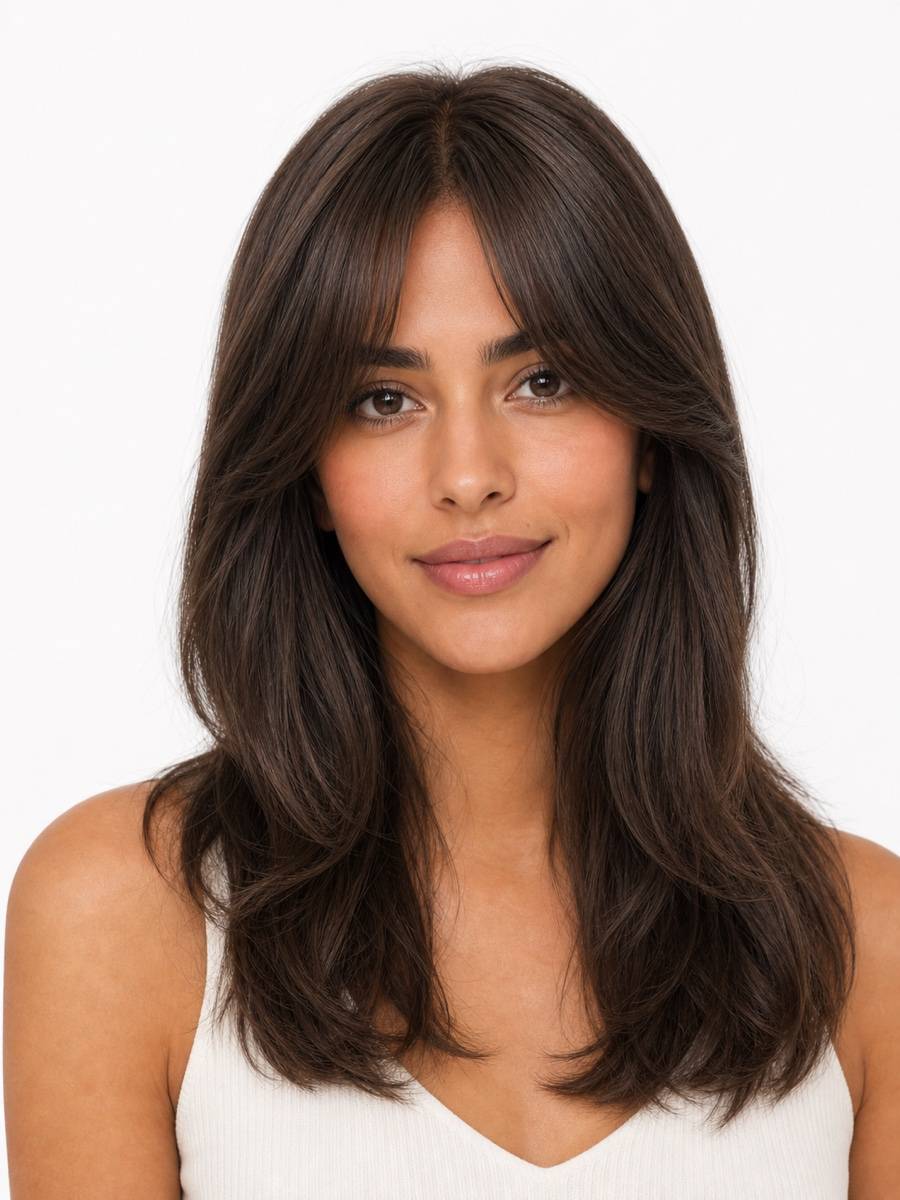
Curtain bangs are the safest first bang for many people. They part near the center or slightly off-center, open around the eyes, and blend into longer face-framing layers.
They work well if you want a visible change without feeling trapped. The grow-out is forgiving because they can become layers.
Wispy bangs
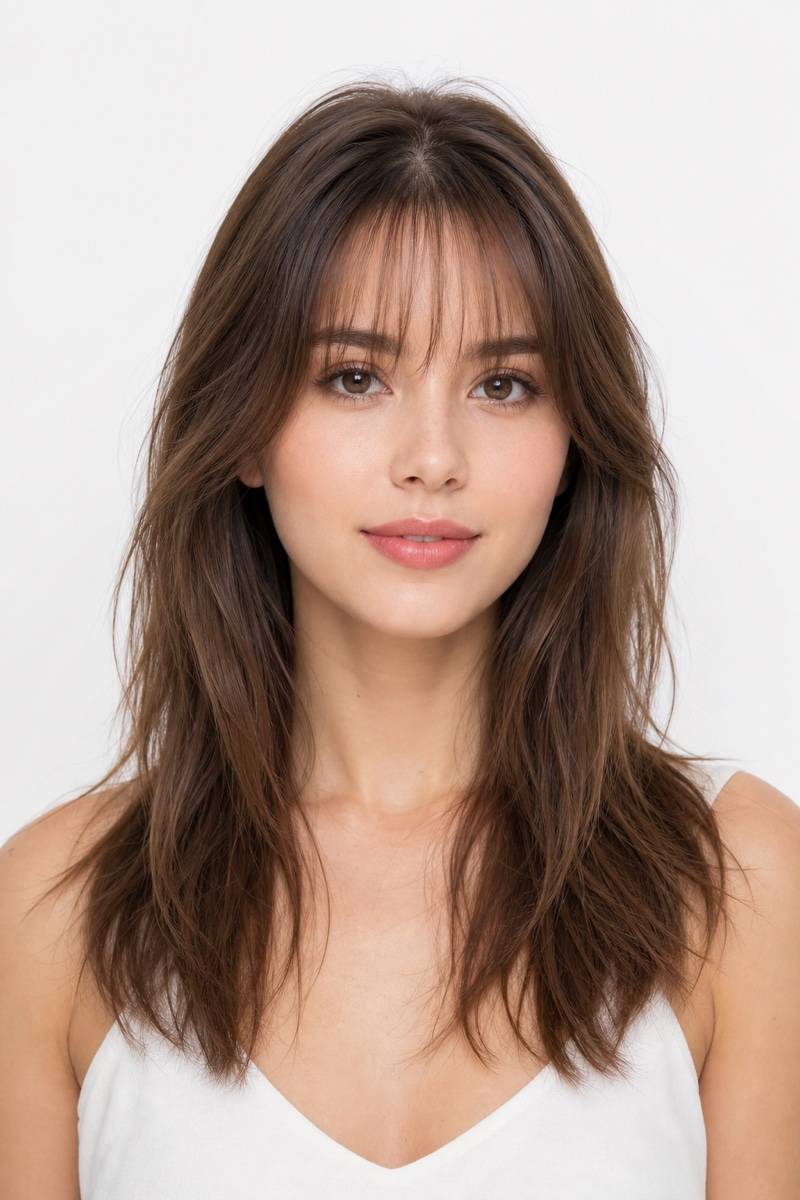
Wispy bangs are lighter and less solid than blunt bangs. They are good when you want softness without covering the whole forehead.
Fine hair can handle them better than heavy fringe, but very oily foreheads can make them separate quickly. That is not a moral failure. It is just physics and skin.
Side-swept bangs
Side-swept bangs are good if your natural part already leans left or right. They can soften a square jaw, balance a heart-shaped face, and make a long haircut feel less flat.
The risk is looking dated if the section is too thick and swoopy. Ask for movement, not a helmet.
Blunt bangs
Blunt bangs are the boldest common option. They can look clean, graphic, and expensive when the length is right. They can also look heavy if your hair is thick, puffy, or hard to smooth.
Blunt bangs are not a casual "maybe." Preview them, check the length from the front and side, and be honest about trims.
Mini fringe
Mini fringe or baby bangs can look cool, but they leave less room for correction. If they are too short, you cannot hide that with a better blow-dry.
Choose mini fringe only if you already like stronger hair choices, your stylist understands the shape, and you have tested it against your actual face.
The maintenance question people skip
Bangs are small, but they are not low-commitment. They sit where oil, sweat, skincare, hats, sleep dents, and weather all show up first.
Johns Hopkins Medicine notes that scalp hair grows about half an inch per month. Cleveland Clinic gives a similar general reference of about 1 centimeter per month. That sounds fast until a fringe is sitting one inch too short. Then it feels slow.
| Bang type | Morning styling cost | Trim sensitivity | Grow-out flexibility |
|---|---|---|---|
| Curtain | Reopen the center and reset the bend when it falls flat | Moderate | High; it can blend into face-framing layers |
| Wispy | Separate light pieces if oil or sleep makes them clump | Moderate | Medium; sparse sections can look uneven between trims |
| Side-swept | Reset the part and sweep direction | Moderate | High; it can become a longer side section |
| Blunt | Smooth the full horizontal line | High; small length changes are obvious | Low to medium through the eyebrow and eye stage |
| Mini fringe | Place the short section precisely | High; there is little correction room | Low because it starts from the shortest length |
Here is the real maintenance check:
- Will you style the front section most mornings?
- Are you willing to trim whenever the chosen length loses its shape, following your stylist's advice?
- Do you use heavy skincare or sunscreen on your forehead?
- Does your hairline split, swirl, or lift at the front?
- Do you wear glasses, hats, helmets, or headphones often?
- Do you want bangs for one event, or for everyday life?
If you answered "no" to the first two, choose curtain bangs or longer side pieces. They are easier to forgive.
Hair texture matters more than the inspiration photo
Texture changes how a reference photo translates to a real cut. Straight, wavy, curly, and coily hair can all wear bangs, but the same wet length or inspiration photo can finish differently. Ask the stylist to plan around your normal texture and to check the fringe in the state you usually wear it.
Ask how wide the bang section should be, how the cut will behave when dry, and what styling the shape needs. Those questions are more useful than copying a reference with a different density or curl pattern.
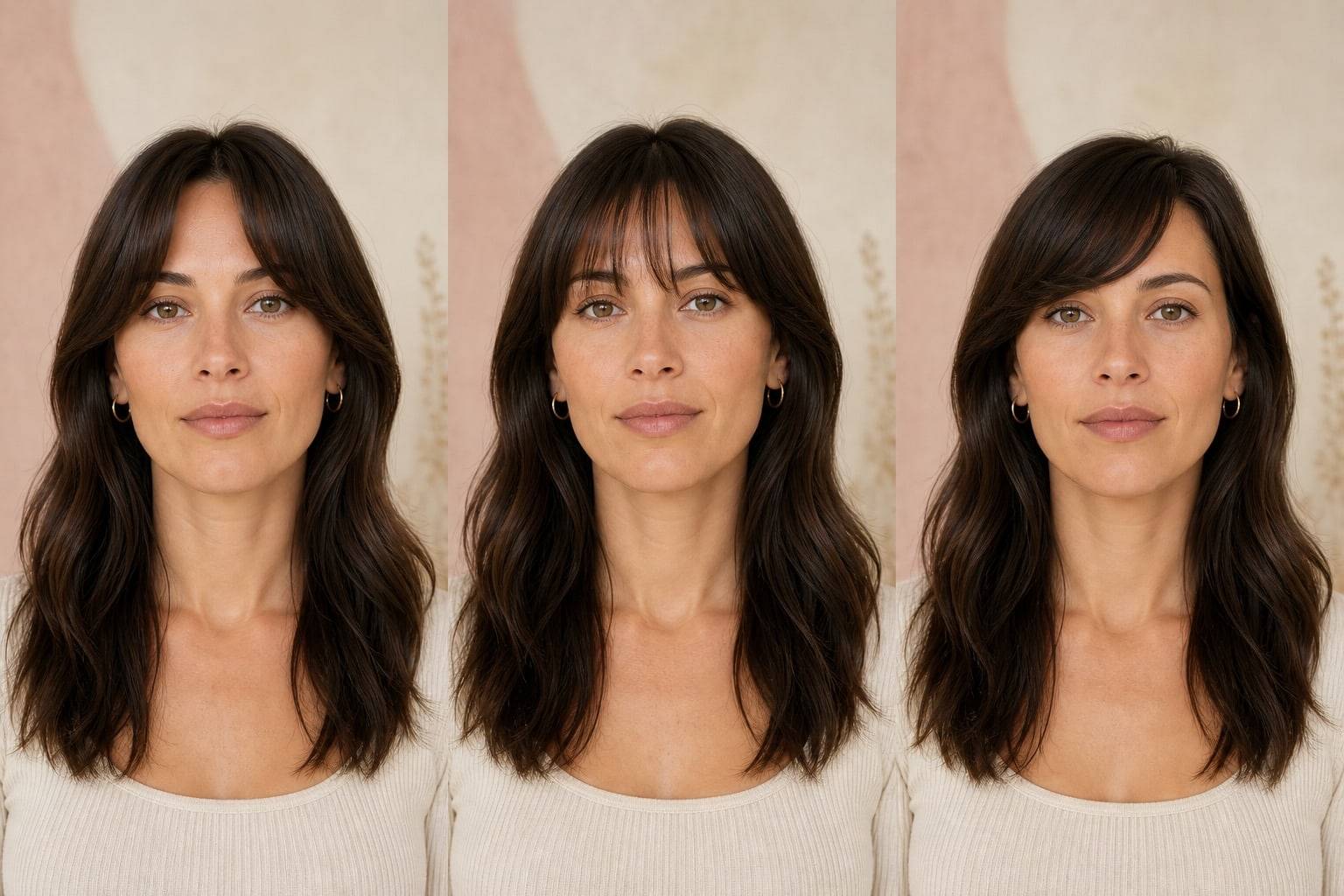
Preview bangs before you cut them
Reference photos are useful, but they hide too much. The person in the photo may have a different hairline, density, forehead height, cheekbone width, nose bridge, curl pattern, and styling tolerance.
Use HairWow Try-On like a fitting room:
- Upload a clear front-facing photo with your hair pulled back.
- Test curtain bangs, wispy bangs, side-swept bangs, and blunt bangs.
- Compare where the shortest point lands: eyebrow, cheekbone, nose, or jaw.
- Save the option that still looks like you when the rest of the hair is simple.
- Bring that saved image to your stylist with a plain-language brief.
A try-on is a visual comparison, not a haircut forecast. It cannot predict how a stylist will section the fringe, how much your hair will shrink when dry, or how the front section will react to humidity, sleep, and your normal routine. Use the preview to narrow the shape, then use a stylist to decide the cut and length.
You can also browse HairWow style ideas if you want to pair bangs with a bob, long layers, waves, an updo, or a color change. Do not change all of those at once unless you are comfortable with a bigger transformation.
What to tell your stylist
Tell your stylist exactly what kind of bangs you want. "I want bangs" leaves too much room for interpretation.
Try this:
"I want soft curtain bangs that open around my eyes and blend into the sides. Please keep the shortest pieces long enough that I can tuck them away while they grow out."
For wispy bangs:
"I want light wispy bangs, not a thick blunt fringe. Keep the section narrow so I do not lose too much density at the sides."
For blunt bangs:
"I want a clean blunt fringe, but I need it checked dry before we finish. I do not want it above my brows unless we agree on that length first."
Bring one saved try-on image and one real reference photo. The try-on shows your face. The reference shows the finish. Together, they reduce the chance of a salon-chair surprise.
FAQ
Should I get bangs if I have a round face?
Yes. Start by previewing long curtain bangs, side-swept bangs, and a straighter fringe on your own photo. Face shape is only a starting point, so compare the opening, length, and maintenance rather than treating one style as a rule.
What bangs are easiest to grow out?
Curtain bangs and longer side-swept bangs are the easiest to grow out because they turn into face-framing layers. Wispy bangs can also grow out softly if they were not cut too short. Mini fringe and blunt bangs are harder because every extra half inch changes the shape.
Are bangs a bad idea for oily hair?
Not automatically, but they need more maintenance. Bangs touch the forehead, so skincare, sunscreen, sweat, and oil can make them separate faster than the rest of your hair. If this happens to you, choose wispy or curtain bangs and keep a dry shampoo or quick rinse routine ready.
Should I cut bangs before a big event?
Only if you have enough time to adjust. New bangs can need a trim, a styling lesson, or a slight shape correction after you live with them for a few days. If the event is soon, preview the look first and consider clip-in bangs or long face-framing pieces instead.
Can curly hair have bangs?
Yes. Bring a reference that matches how you normally wear your curls and ask the stylist to check the length near its dry, styled state. A straightened reference is less useful when you plan to wear the fringe curly.
What should I do if I regret bangs?
Shift them into a side part, pin them back, or blend them into face-framing layers as they grow. Avoid cutting more at home out of frustration. If the shape is too heavy, a stylist can sometimes remove weight or soften the edges without making the bangs shorter.
Summary
Bangs are worth trying when they fit your face shape, hairline, texture, and actual morning routine. The lowest-risk path is to preview several bang types first, then start with a longer, softer version unless you are sure you want a bold fringe.
If you are still asking "should I get bangs?" do not cut from a mood board alone. Test curtain, wispy, side-swept, and blunt bangs on your own photo, save the best version, and give your stylist a specific brief. That is the difference between a fresh change and three months of pinning your hair back.