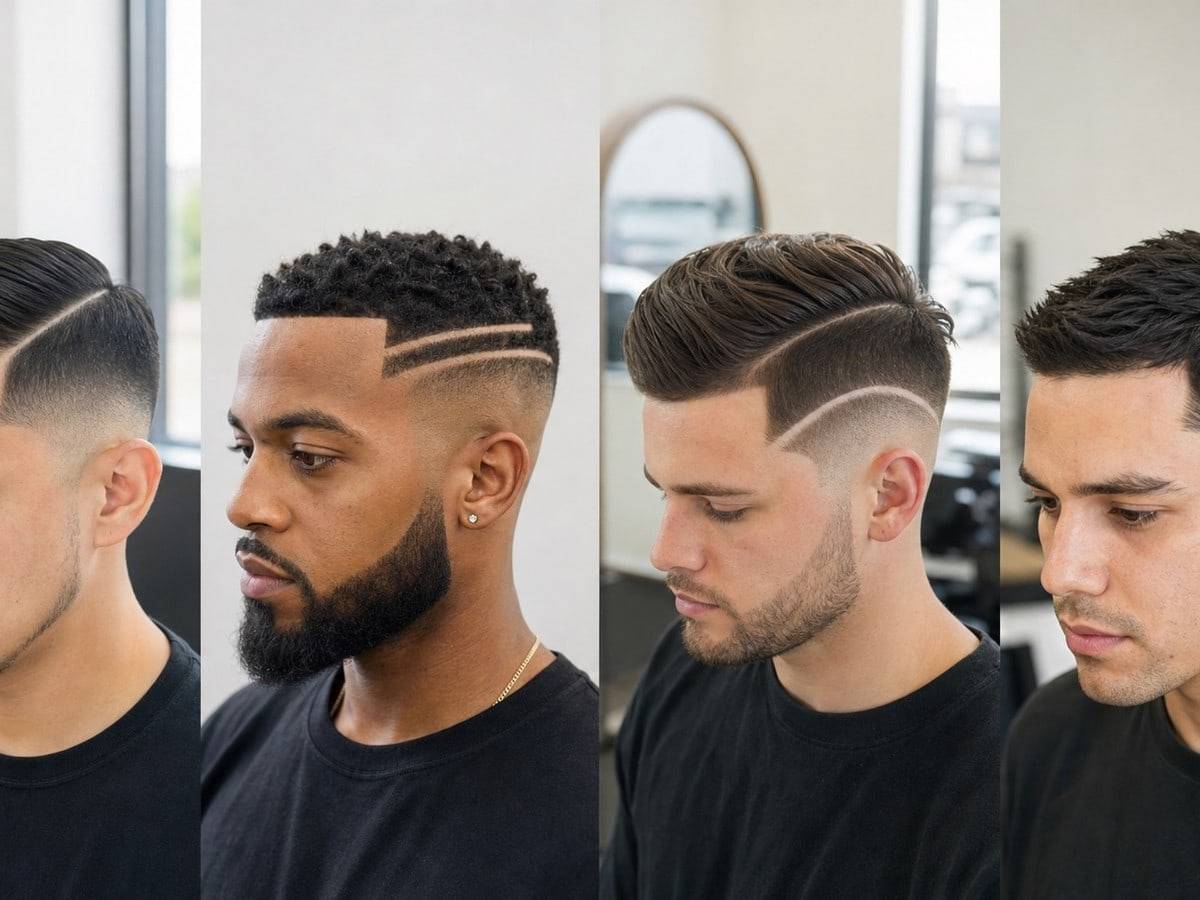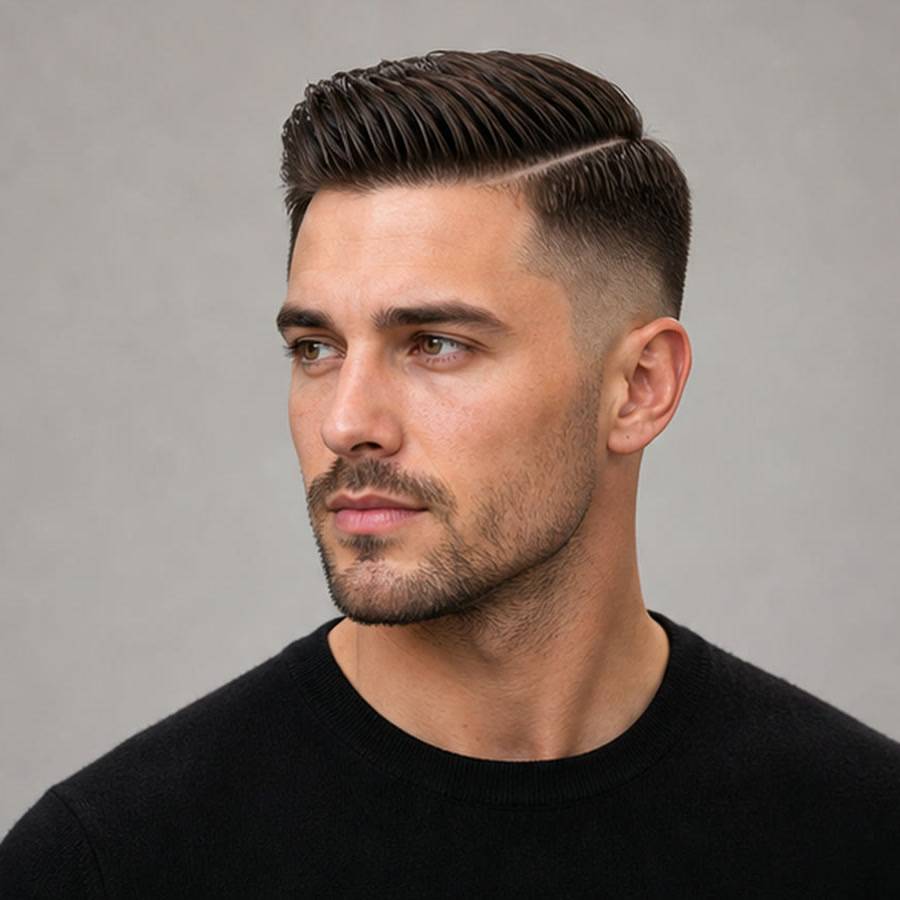
Low Fade vs Mid Fade vs High Fade: How to Choose
Compare low fade, mid fade, and high fade haircuts by face shape, hair type, maintenance, barber wording, and try-on fit before your next cut.

· 20 min read

On this page
If you are choosing between a low fade, mid fade, and high fade, the safest answer is this: choose a low fade for a cleaner natural look, a mid fade for the most balanced everyday haircut, and a high fade for the strongest contrast. The fade height changes how narrow your face looks, how much scalp shows on the sides, how often the haircut needs touch-ups, and how dramatic the cut feels from the front.
A low fade starts near the ear and neckline. A mid fade starts around the temple or middle side area. A high fade starts above the temple and removes much more side weight. The best choice depends on your face shape, hairline, hair density, top length, beard, workplace, and how sharp you want the first week to look.
Key takeaways
- A low fade is the safest first fade because it keeps more side shape and grows out softer.
- A mid fade is the best middle ground if you want the haircut to look fresh without going too aggressive.
- A high fade is best when you want a bold, athletic, high-contrast cut with a shorter side profile.
- Round faces often benefit from a mid or high fade with controlled height on top.
- Long faces usually look better with a low or mid fade because very high sides can make the face look longer.
- Curly and coily hair usually needs more planning because fade height changes the amount of visible texture.
- If you have a beard, choose fade height and beard blend together. Do not treat them as separate decisions.
- Preview the fade in HairWow Try-On before the appointment so your barber reference matches your own face, not only a model photo.
Definition: A fade is a men's haircut where the hair gradually changes from very short near the sides or neckline into longer hair above it. Low, mid, and high refer to where that transition starts on the head.
Quick comparison
Low, mid, and high fades are not just different clipper placements. They create different silhouettes.
| Fade type | Where it starts | Best for | Look | Maintenance |
|---|---|---|---|---|
| Low fade | Around the lower ear and neckline | First fades, professional looks, fuller sides, subtle cleanups | Clean, soft, controlled | Every 2 to 4 weeks |
| Mid fade | Around the temple or middle side area | Most face shapes, modern short cuts, textured tops | Balanced, fresh, visible | Every 2 to 3 weeks |
| High fade | Above the temple and high on the side | Bold short cuts, strong contrast, athletic looks | Sharp, dramatic, narrow sides | Every 1 to 2 weeks |
Use this quick rule:
- If you want "cleaner but not too different," choose a low fade.
- If you want "fresh but still wearable," choose a mid fade.
- If you want "sharp and obvious," choose a high fade.
The main risk is choosing the fade height from a photo without checking your own proportions. A high fade can look excellent on one person and too severe on another because it removes the visual width from the sides. A low fade can look polished on dense hair but too subtle if you wanted a clear transformation.
What is a low fade?
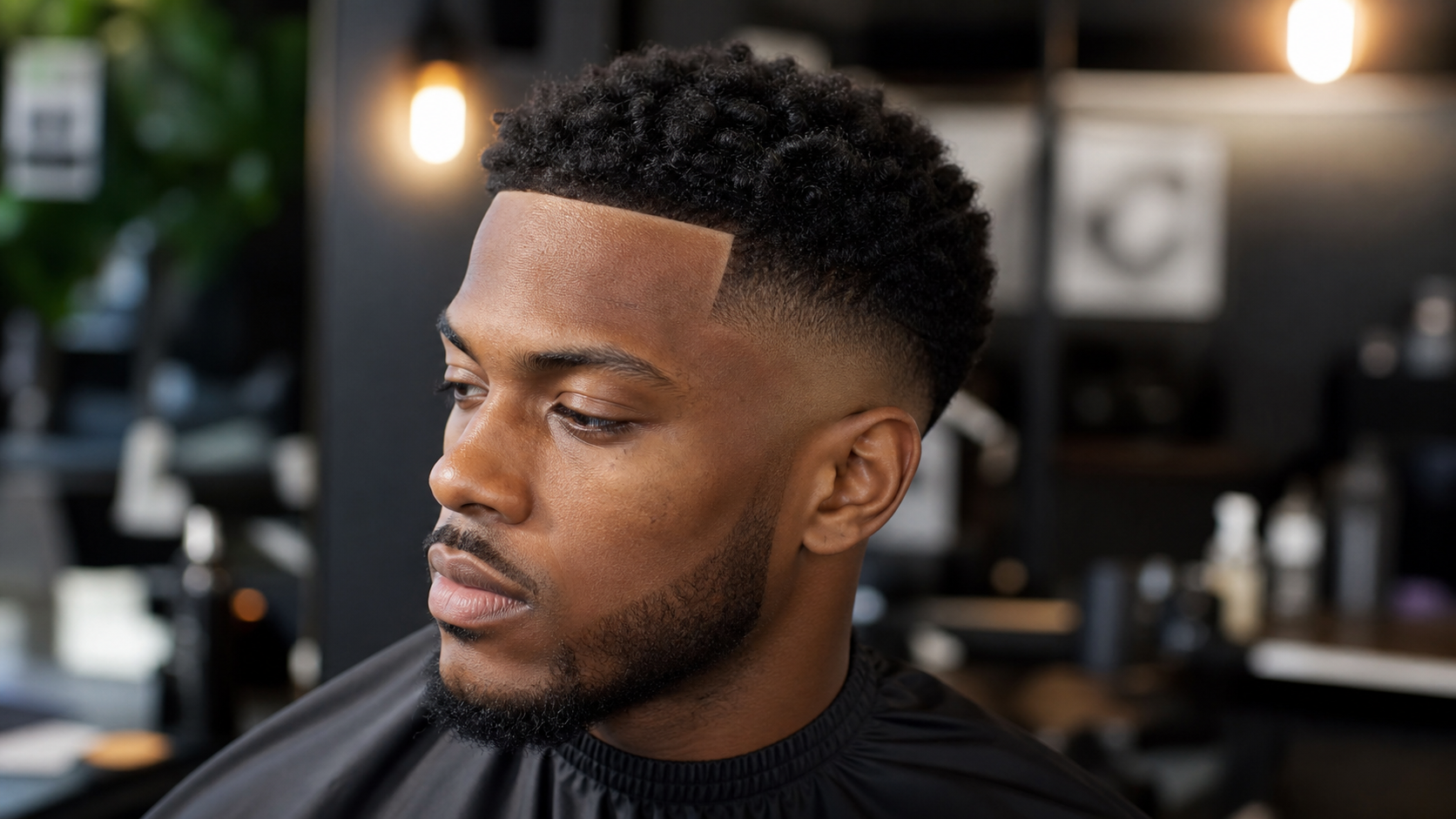
A low fade starts low on the head, usually around the lower temple, ear, sideburn, and neckline area. The shortest part stays close to the bottom edge of the haircut. More hair remains through the upper sides, so the overall shape looks fuller and more natural.
Choose a low fade if:
- You are getting your first fade.
- You want a work-safe or school-safe haircut.
- You like the top shape of your current haircut but want cleaner edges.
- You have a long, narrow, or slim face and do not want to remove too much side width.
- You wear curls, coils, waves, twists, or a beard and want easier grow-out.
A low fade works especially well with a textured crop, side part, short waves, curly top, low taper, Ivy League cut, and longer scissor-cut top. It can be skin-tight near the bottom, but it does not need to be a skin fade. You can ask for a low fade with a number 1 or 2 at the shortest point if you want a softer result.
The downside is subtlety. If you want people to notice a strong haircut change, a low fade may feel too conservative. It can also look heavy if the top and upper sides are left too bulky.
What is a mid fade?
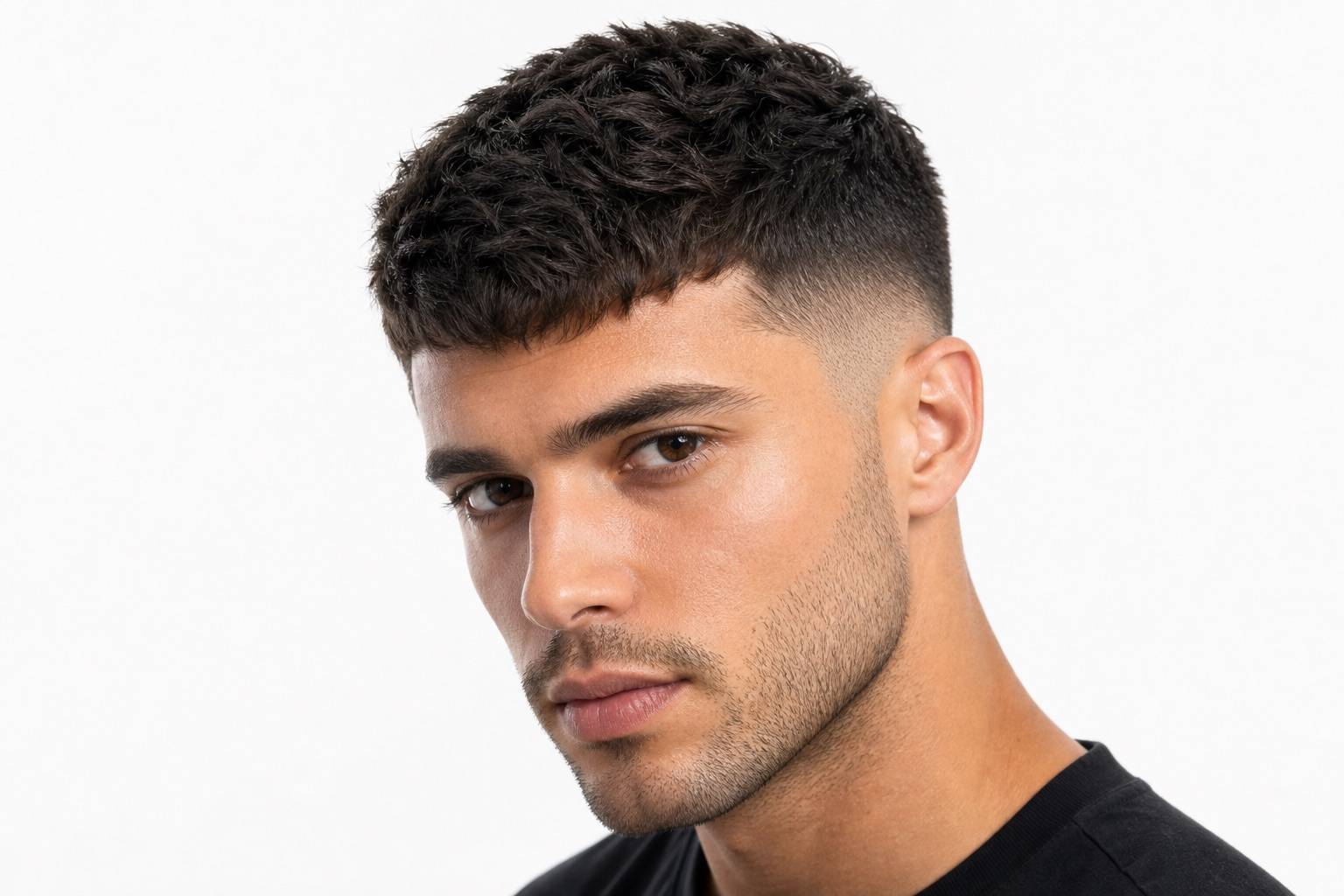
A mid fade starts around the middle of the side of the head, often near the temple area. It removes more side weight than a low fade but does not climb as high as a high fade. For most people, it is the most balanced fade height.
Choose a mid fade if:
- You want a modern haircut without going extreme.
- You want the top texture to stand out more.
- You have a round, oval, or square face and want cleaner side control.
- You like short men's cuts such as a crop, quiff, Caesar, crew cut, or comb over fade.
- You want a fade that still looks intentional after a week of growth.
A mid fade is popular because it is visible from the front and side, but it still leaves enough shape above the fade to blend with the top. It is a good default for many barbers because it works with straight, wavy, curly, and coily hair.
The downside is that "mid fade" can mean different things to different barbers. One barber may keep it below the temple. Another may push it close to a high fade. Bring a side-view reference and say whether you want the blend to stay under the temple or sit at temple height.
What is a high fade?
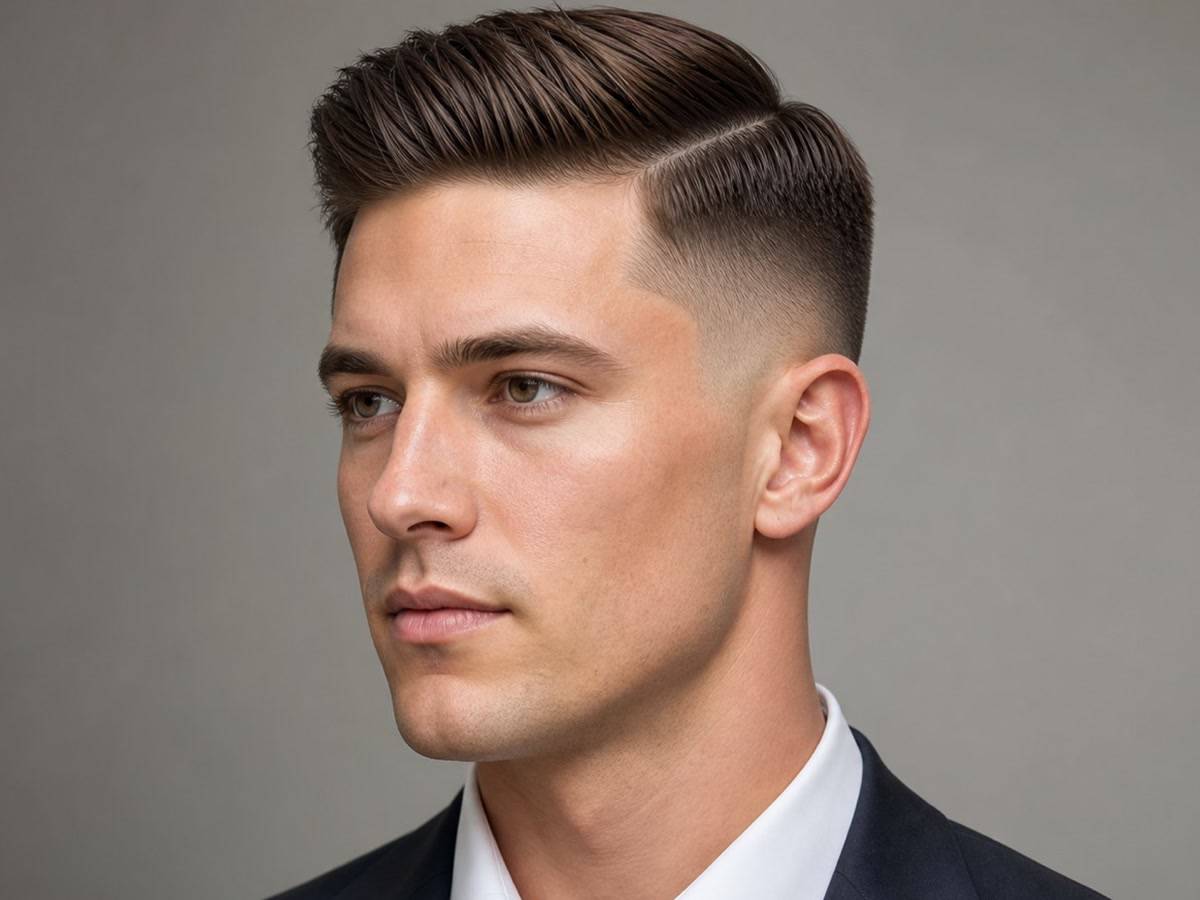
A high fade starts above the temple and removes most of the hair from the sides. The transition reaches higher toward the crown, so the top looks more separated from the sides. This creates a sharper, narrower, more athletic silhouette.
Choose a high fade if:
- You want a bold haircut with clear contrast.
- You like buzz cuts, high-and-tight cuts, crop fades, hard parts, or very short sides.
- You have thick hair and want to remove bulk from the sides.
- You want the top to look more defined.
- You are comfortable with frequent touch-ups.
High fades can look excellent when the top has enough purpose. A high fade with a messy top, hard part, buzz cut, textured crop, or short curls can feel clean and direct. It is also useful if your side hair grows out wide and makes your head shape look too round.
The downside is commitment. A high fade shows scalp faster, grows out more obviously, and can make a long face look longer if the top is also tall. If your hairline, temples, or crown density are uneven, a high fade can expose those details more than a low fade would.
Which fade should you choose?
Use your real goal, not only the name of the haircut.
| Your goal | Best fade | Why |
|---|---|---|
| "I want a cleaner version of my current haircut." | Low fade | It cleans edges without changing the whole silhouette. |
| "I want a fresh modern haircut." | Mid fade | It adds visible contrast while staying wearable. |
| "I want the sides very tight." | High fade | It removes the most side bulk. |
| "I need a conservative work haircut." | Low fade or soft mid fade | It looks groomed without reading too aggressive. |
| "My hair gets wide on the sides." | Mid fade or high fade | It narrows the side profile. |
| "I have a long face." | Low fade or low-mid fade | It keeps more side balance. |
| "I have a round face." | Mid fade | It tightens the sides while keeping enough top control. |
| "I have curly or coily hair." | Low fade, drop fade, or temple fade | It preserves texture while cleaning the edges. |
| "I want a beard blend." | Low fade or mid fade | It gives the barber more room to connect the sideburn. |
If you are unsure, start lower. A barber can take a low fade higher during the appointment, but a high fade cannot be made low again that day.
Face shape guide
Fade height changes the outline of your face. The same haircut can make one face look sharper and another face look too narrow.
Round face
A round face usually benefits from a mid fade with controlled volume on top. The fade tightens the sides, while the top can add some vertical shape. Avoid leaving the sides too bulky. Also avoid a very tall top if you do not want the haircut to look exaggerated.
Best options: mid fade, low-mid fade, textured crop fade, quiff with mid fade, short curls with drop fade.
Square face
A square face can handle most fade heights because the jawline already gives structure. A mid fade is the safest default. A high fade can look sharp if the top is not too tall. A low fade works when you want a more classic or professional finish.
Best options: mid fade, hard part fade, Ivy League fade, low fade with side part, buzz cut fade.
Oval face
An oval face is flexible. Choose based on hair texture, maintenance, and personal style. If you want a clean everyday result, go mid fade. If you want a softer result, go low fade. If you want strong contrast, try a high fade with a clear top shape.
Best options: low fade, mid fade, high fade, crop fade, comb over fade, curly fade.
Long face
A long face should be careful with high fades and tall tops. Removing too much side width can make the face look even longer. Choose a low fade or low-mid fade, and keep the top controlled rather than very high.
Best options: low fade, low taper fade, low-mid fade, side part with softer sides, textured crop with low fade.
Heart or triangle face
If your forehead is wider than your jaw, avoid making the temple area too tight unless the top and fringe balance it. A low fade, mid fade, or textured fringe can work better than a very high fade.
Best options: low fade, mid fade with fringe, textured crop, soft side part, low taper.
If you want a broader fit check, start with the face-shape hairstyle guide, then test fade presets in HairWow Try-On.
Hair type guide
Hair texture changes how a fade looks after washing, styling, and one week of growth.
| Hair type | Good fade choice | Watch out for |
|---|---|---|
| Straight hair | Low fade, mid fade, hard part fade | Very high fades can look severe if the top is flat. |
| Wavy hair | Mid fade, low fade, textured crop fade | Too much product can make the top heavy against short sides. |
| Curly hair | Low fade, drop fade, mid fade | Shrinkage can make the top look shorter after washing. |
| Coily hair | Temple fade, low fade, drop fade | Cutting too high can remove the shape that supports the top. |
| Fine hair | Low fade, soft mid fade | Skin fades may expose scalp contrast more than expected. |
| Thick hair | Mid fade, high fade | Keep enough top blending so the haircut does not look disconnected. |
For curly and coily hair, the fade should be planned around the top shape first. Decide whether you want curls, coils, waves, a sponge finish, twists, or an afro shape visible. Then choose the fade height that supports that shape.
For fine hair, avoid asking for the shortest possible skin fade unless you know you like scalp contrast. A softer low fade can make the haircut look cleaner without exposing too much density difference.
Taper vs fade: where the confusion starts
Many people ask for a fade when they really want a taper. A taper usually cleans the sideburns, around the ears, and the neckline while leaving most of the side shape intact. A fade usually removes more side hair and creates a stronger transition.
Simple version:
- Choose a taper if you want a cleaner edge-up.
- Choose a low fade if you want a subtle visible transition.
- Choose a mid fade if you want a clear modern haircut.
- Choose a high fade if you want the sides very tight.
This matters because a "low taper fade" shown on social media may look like a regular low fade to one barber and a very subtle taper to another. Use photos and words together. Tell your barber where the shortest area should start and how high the blend should climb.
For a texture-specific example, see the low taper fade for Black men guide.
What to tell your barber
Do not only say "give me a fade." Say the height, shortest guard, top length, neckline, sideburn, and finish.
Low fade barber script
"I want a low fade. Keep the fade low around the ears and neckline, do not take it too high on the sides, and leave enough weight above the fade so the haircut still looks natural."
Add this if you want it softer:
"Do not take it to skin. Keep the shortest part around a number 1 or 1.5."
Add this if you want it sharper:
"You can take the bottom to skin, but keep the blend low."
Mid fade barber script
"I want a mid fade that sits around the temple area, not a high fade. Keep the blend clean through the side and leave the top long enough to style with texture."
Add this if you want a professional version:
"Keep the top neat and avoid making the fade too aggressive above the temple."
High fade barber script
"I want a high fade with tight sides and a clear contrast against the top. Keep the top shape intentional, and do not leave a heavy ridge where the fade meets the longer hair."
Add this if you want a bolder result:
"I am comfortable with a skin fade on the sides, but I still want a smooth blend into the top."
Beard blend script
"Blend the sideburn into the beard so the fade and beard look connected. Keep the cheek line and neckline clean, but do not make the sideburn look disconnected from the haircut."
If you are adding a shaved part or side line, read the haircuts with lines on the side guide before asking for the design. The line should support the fade, not fight it.
Maintenance and grow-out
Fade maintenance depends on how short the sides are and how much contrast you want.
| Fade | Looks sharp for | Typical refresh | Grow-out feel |
|---|---|---|---|
| Low fade | 1 to 2 weeks | 2 to 4 weeks | Softer and easier |
| Mid fade | 1 to 2 weeks | 2 to 3 weeks | Noticeable but manageable |
| High fade | 5 to 10 days | 1 to 2 weeks | Obvious faster |
If you need the haircut to look sharp for a wedding, interview, photo shoot, or important event, book the cut 1 to 3 days before the event. If your scalp gets irritated easily, avoid cutting too close right before a high-pressure day.
At home, keep styling simple. A low fade can usually work with light cream, paste, or leave-in conditioner depending on the top. A mid fade often needs a little product to make the top look intentional. A high fade needs the top controlled because the sides are too short to hide uneven styling.
Skin and shaving cautions
A skin fade or very tight fade can irritate the skin if your scalp, neck, or beard area is sensitive. Razor bumps and ingrown hairs are more likely when hair is cut very close and curls back into the skin. If you often get bumps around the neck or beard line, ask for a slightly longer shortest guard and avoid repeated razor passes over the same area.
Use these practical rules:
- Do not ask for a skin fade if your neck is already irritated.
- Tell your barber if you get razor bumps or ingrown hairs.
- Avoid heavy fragrance or harsh aftershave on freshly shaved areas.
- Keep hats, helmets, and tight collars clean if they touch a fresh fade.
- If the skin burns, bleeds, or forms painful bumps, pause tight fades and consider a dermatologist's advice.
The American Academy of Dermatology has patient guidance on shaving and razor bump prevention. Those principles apply especially when a fade is taken very close around the neck, sideburns, or beard line.
How to preview the fade before you cut
Most fade regret comes from judging the haircut on someone else's head. Model photos hide your own hairline, face width, beard density, glasses, and head shape.
Use HairWow Try-On before the appointment:
- Upload a clear front-facing photo.
- Try a low fade or low taper first.
- Compare a cleaner mid-fade style.
- Try a higher-contrast fade only if the mid fade feels too subtle.
- Save the best result and bring it as a barber reference.
If your main question is whether the fade fits your face shape, use HairWow's hairstyle face-shape tool. If your main question is top length, compare related guides like French crop haircuts and men's short wavy hairstyles.
Common mistakes
Mistake 1: Asking for a high fade when you wanted a mid fade
Many high fades look like mid fades in cropped photos because the camera angle hides the side height. Show your barber a side view, not only a front view.
Mistake 2: Ignoring the top length
Fade height and top length work together. A high fade with a very tall top can look dramatic. A low fade with a very heavy top can look unfinished. Decide both before the cut starts.
Mistake 3: Choosing skin fade by default
Skin fades are clean, but they are not automatically better. If you want easier grow-out or have sensitive skin, a number 1 or 1.5 at the shortest point may be smarter.
Mistake 4: Not planning the beard
A beard can make a fade look sharper, but only if the sideburn connection is planned. Ask your barber to blend the haircut into the beard rather than finishing the haircut first and treating the beard as an afterthought.
Mistake 5: Using the wrong reference photo
If the reference has different hair density, hairline, texture, or head shape, the same fade may not translate. Use references for direction, then adjust to your own features.
FAQ
Which is better, low fade or mid fade?
A low fade is better if you want a subtle, professional, easier grow-out haircut. A mid fade is better if you want a more visible modern fade while staying wearable. If you are unsure, start with a low fade and ask the barber to raise it slightly if it feels too soft.
Is a high fade too aggressive?
A high fade is not automatically too aggressive, but it is the boldest of the three. It removes more side hair, shows scalp faster, and creates stronger contrast. It works best when you want a sharp short haircut and can maintain it every 1 to 2 weeks.
What fade is best for a round face?
A mid fade usually works best for a round face because it tightens the sides without going too extreme. Pair it with controlled height or texture on top. Avoid leaving the sides bulky, but also avoid making the top so tall that the haircut looks unbalanced.
What fade is best for a long face?
A low fade or low-mid fade is usually safer for a long face. It keeps more visual width on the sides and avoids stretching the face further. Be careful with high fades, very tall quiffs, or narrow top shapes if your face already looks long.
What should I ask for if I do not want skin showing?
Ask for a low or mid fade that does not go down to skin. Say, "Keep the shortest part around a number 1 or 1.5, not a skin fade." This gives you a clean transition while keeping the side softer and easier to grow out.
How often should I get a fade touched up?
Low fades usually need a touch-up every 2 to 4 weeks, mid fades every 2 to 3 weeks, and high fades every 1 to 2 weeks if you want them sharp. Skin fades show growth fastest because the shortest area has the most contrast.
Is a taper the same as a low fade?
No. A taper usually cleans the edges around the sideburns, ears, and neckline. A low fade creates a more visible gradient that starts low on the side. They can look similar, so use photos and tell your barber exactly how high you want the blend.
Can curly hair get a high fade?
Yes, curly hair can get a high fade, but the top shape needs to be planned carefully. A high fade removes side support, so curls on top can look more dramatic. If you want a softer grow-out, consider a low fade, drop fade, or temple fade.
Sources
- American Academy of Dermatology: How to shave
- American Academy of Dermatology: Razor bump prevention
- HairWow Try-On
- HairWow face-shape hairstyle guide
Summary
Choose a low fade if you want a cleaner, softer, safer haircut. Choose a mid fade if you want the most balanced everyday fade. Choose a high fade if you want sharp contrast and do not mind frequent maintenance. The name matters less than the placement, shortest guard, top length, beard blend, and how the haircut fits your actual face. Preview the fade first, then bring a clear front and side reference to your barber.