Haircuts With Lines on the Side: 17 Barber Design Ideas
Compare haircuts with lines on the side, including hard parts, double lines, temple slashes, curved fade lines, and barber wording before your next cut.

· 17 min read
On this page
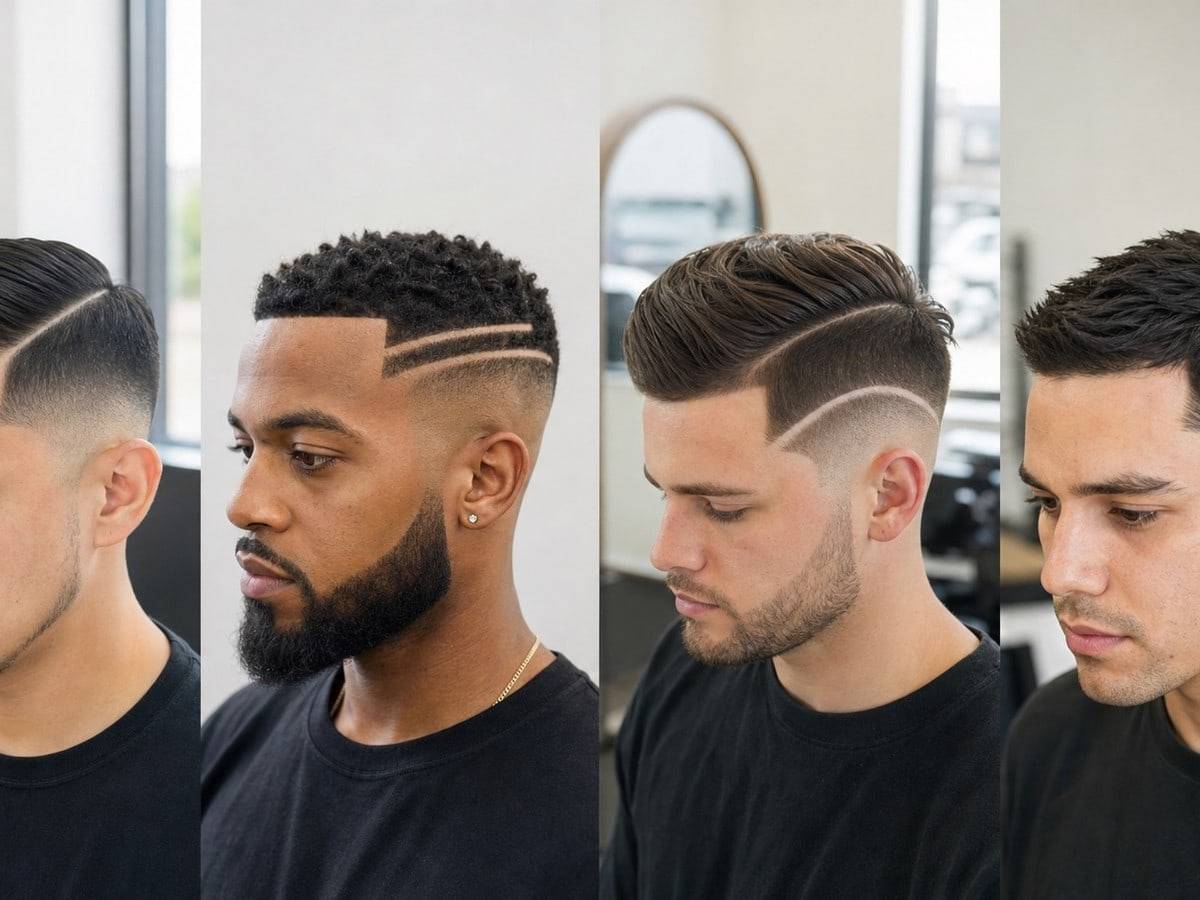
Haircuts with lines on the side work best when the shaved detail supports the whole haircut. The line should match the fade height, hair texture, head shape, beard line, and the amount of attention you want. A thin hard part can make a comb over look cleaner. Two short lines can make a simple fade feel intentional. A curved side line can look sharp from the side, but awkward if it floats too high above the fade.
The safest answer is simple: start with a clean low or mid fade, then add one thin line inside the fade. If you want a stronger look, move to double lines, a curved burst-fade line, a hard part, or a small geometric design after you know the base cut suits you.
Key takeaways
- A haircut line should sit inside the fade or along a natural part, not randomly above the short area.
- For a first side-line haircut, choose one thin temple line or a hard part fade.
- Double lines look best when the spacing is visible enough to survive one week of growth.
- Curved lines work best with burst fades, drop fades, and curly tops because they follow the head shape.
- If your job, school, or dress code is conservative, keep the line short, low, and narrow.
- Most side lines look crisp for 7 to 14 days before regrowth softens the edge.
- Preview the base fade in HairWow Try-On before the appointment so you are not judging the design only from a model photo.
Definition: A haircut with lines on the side is a haircut where a barber shaves one or more narrow lines into the fade, part, temple, sideburn area, or back-side section to create separation, direction, or a visible design.
Quick answer
If you want a haircut with a line on the side, ask for a low or mid fade with one thin shaved line near the temple or along the natural side part. Keep the line narrow, keep it inside the faded area, and show your barber whether you want a subtle everyday look or a more visible design.
Use this simple barber brief:
"I want a mid fade with one thin line on the right side. Keep the line inside the fade, around the temple area, and do not make it too wide. I want it sharp but still easy to maintain."
For two lines:
"I want two short parallel lines on the side with enough spacing that they do not blur together after a week."
The exact side matters less than fit. Put the line on the side that works with your natural part, preferred photo angle, beard connection, or stronger profile.
Start with the base haircut
The line is the accent. The fade is the structure.
If the fade is uneven, the line will not save it. If the top length fights your hair texture, the shaved detail can make the whole cut look more disconnected. Choose the base cut first, then add the line.
| Base haircut | Best line choice | Why it works |
|---|---|---|
| Low fade | One thin short line | Clean and wearable for a first design |
| Mid fade | Hard part or temple slash | Enough contrast without looking extreme |
| High fade | Double lines or small geometric detail | More open side area for a visible design |
| Textured crop | Short diagonal temple line | Adds edge without fighting the fringe |
| Comb over fade | Hard part line | Supports the direction of the top |
| Burst fade | Curved side line | Follows the arc around the ear |
| Drop fade | Back-side line | Matches the lowered fade shape |
| Buzz cut fade | One thin side line | Simple, sharp, and easy to style |
| Curly taper fade | Curved or short temple line | Keeps curl volume while cleaning the side profile |
| Beard fade | Line that matches the sideburn | Connects the haircut and facial hair |
If you are not sure which base cut suits your proportions, start with the face-shape hairstyle guide, then compare a cleaner men's preset in HairWow Try-On. Lines are useful, but they cannot fix a base shape that is wrong for your face or hair density.
17 haircuts with lines on the side
1. Low fade with one thin side line
This is the best beginner version. The line starts near the temple or slightly above the ear and stays short. It gives a clean barbered finish without making the haircut feel loud.
Ask for: "A low fade with one thin razor line on the side, not too high."
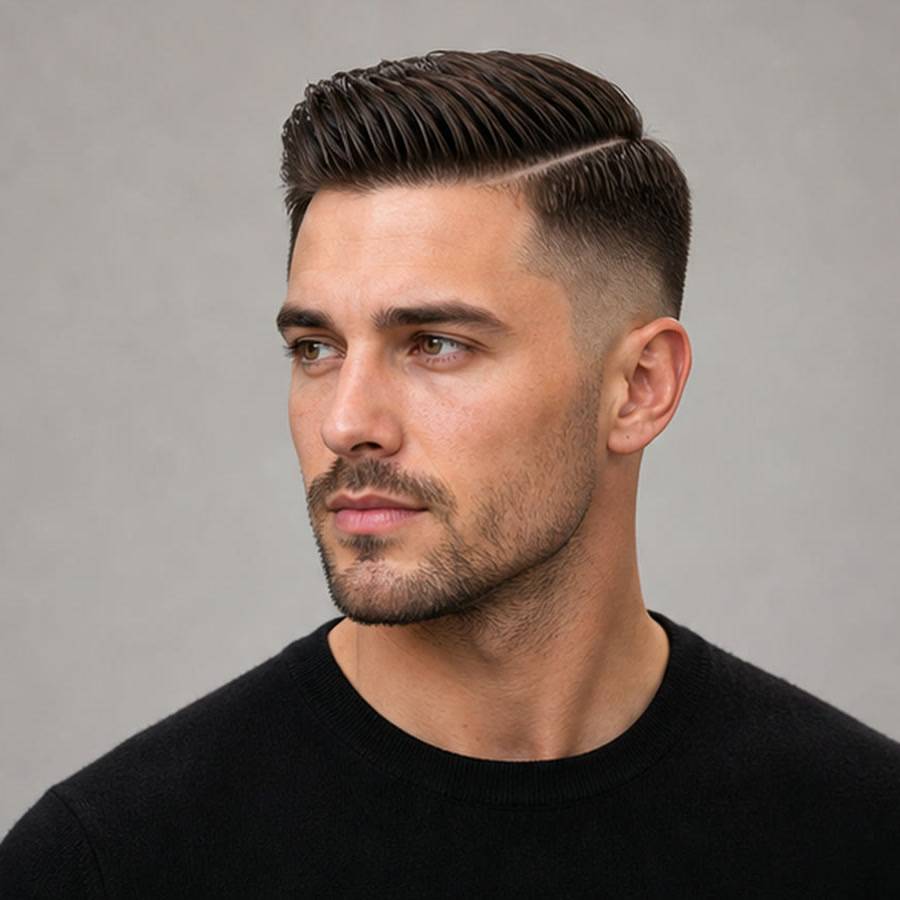
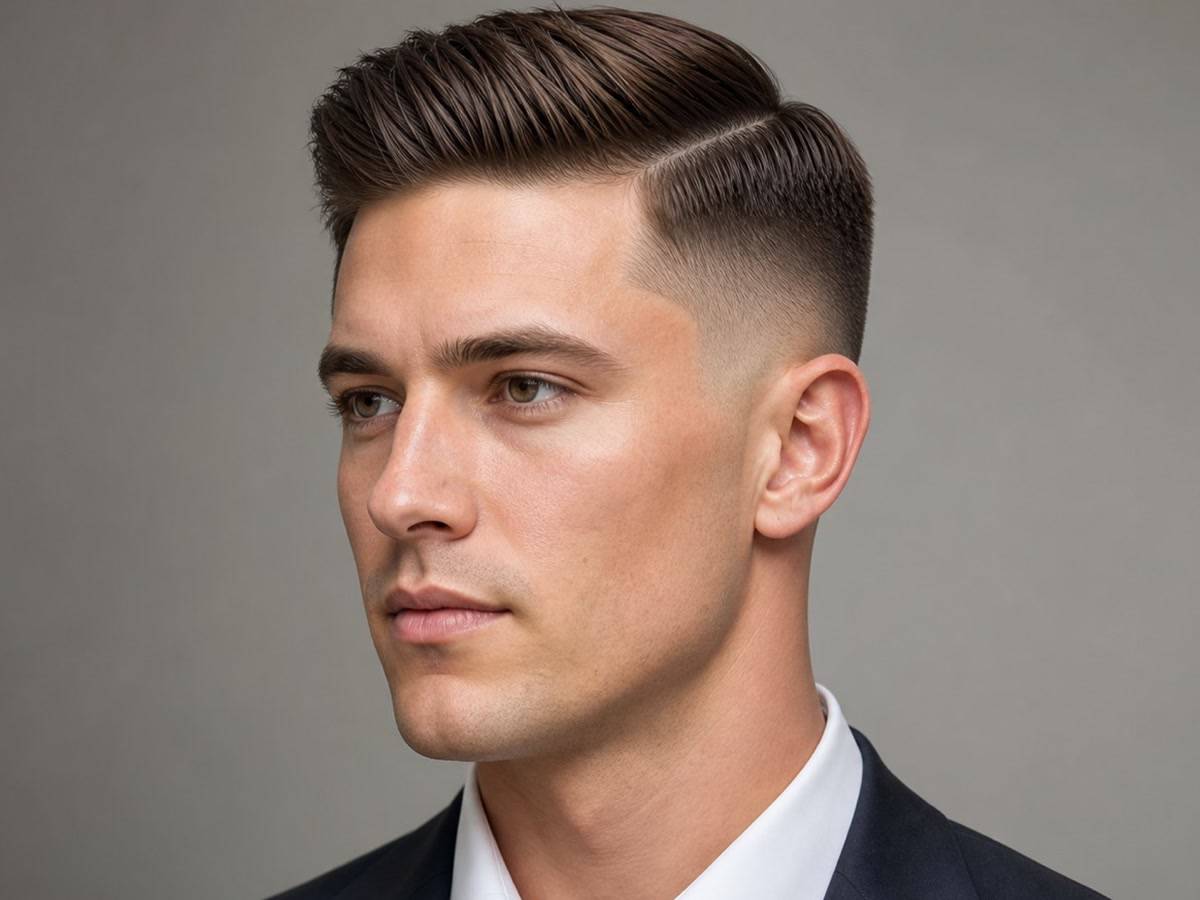
2. Mid fade with a hard part
A hard part is the classic haircut line. It works when the top naturally moves to one side, because the shaved line supports the styling direction instead of looking like an extra mark.
This is a good choice if you like a polished side part, comb over, Ivy League, or business-friendly fade.
3. Taper fade with a short temple slash
The short temple slash is modern but still controlled. It is visible from the front, so keep it narrow and avoid placing it too high.
It works well with a textured top, short waves, a neat fringe, or a low taper fade.
4. Two lines on the side of the head
Two side lines have a sportier look. The important detail is spacing. If the lines are too close, regrowth can make them blur together. If they are too far apart, the design can look busy.
Ask for: "Two thin parallel lines with a small space between them, placed inside the fade."
5. Double short temple lines
This is a cleaner version of double lines. Instead of running far back, both marks stay short near the temple. It is a good option if you want the detail visible in front-facing photos without turning the whole side into a pattern.
6. Curved fade line
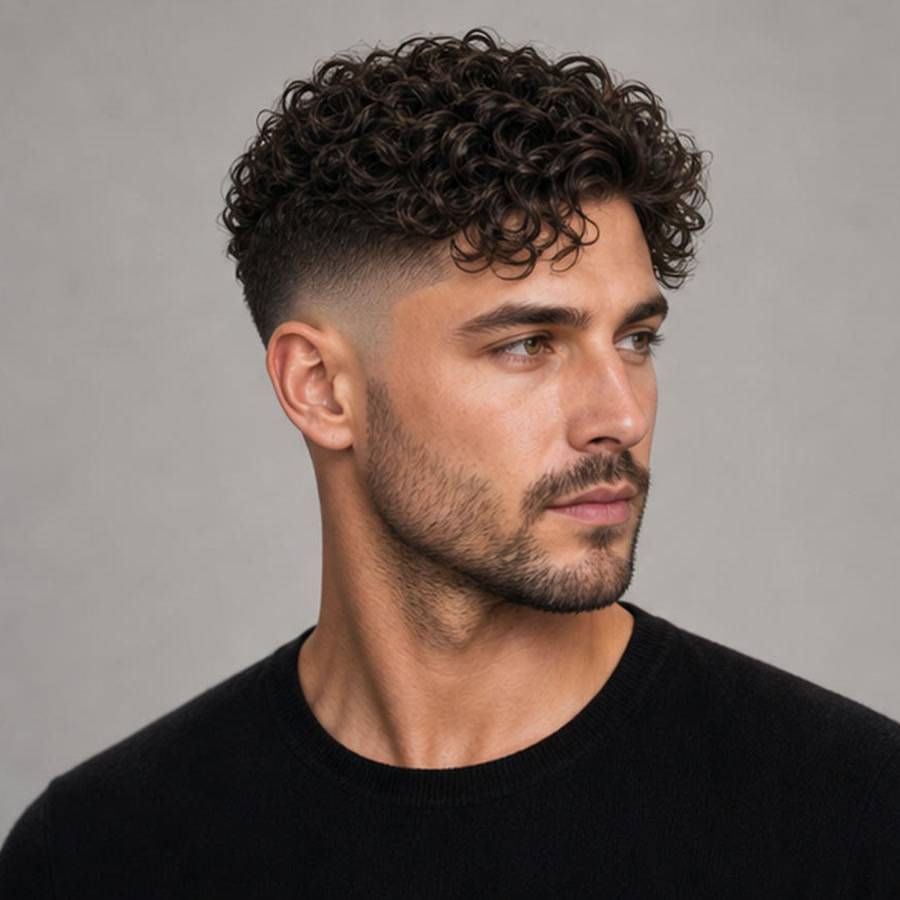
A curved line looks best when it follows the fade shape. It can work with a burst fade, drop fade, or curly taper because the haircut already has a rounded path around the ear.
Do not choose this from a front-facing photo only. You need to see the side view.
7. Burst fade with a curved side line
The burst fade curves around the ear, so a curved design feels built into the cut. This is stronger than a normal hard part but still has a clear reason to be there.
Ask your barber to keep the curve within the fade. If the line cuts too far into longer hair, the grow-out can look rough.
8. Comb over fade with a shaved part
If you like a refined look, this is one of the strongest options. The top is combed over, the side is faded, and the shaved part keeps the style deliberate.
The tradeoff is maintenance. Once the part grows in, the haircut looks less clean even if the rest of the fade still has shape.
9. Textured crop with a side line
A textured crop can look heavy if the side is plain and the top is dense. One short diagonal line near the temple adds a sharper edge without competing with the fringe.
Keep the design short. A long slash can fight the choppy top.
10. French crop with a small side line
A French crop already has a clear front shape, so the side line should be compact. Use it as a small accent, not a second focal point. If you want a more classic version, compare the French crop haircut guide before asking for a design.
11. Buzz cut fade with one razor line
Short hair makes the line more visible. A buzz cut fade with one razor line is direct, sharp, and low-effort because the top needs almost no styling.
This is a strong summer cut and a good option if you want the line to be the main detail.
12. High fade with a geometric line
A high fade gives the barber more short-hair space to draw in. A small angle, corner, or stepped line can look crisp here, but this is no longer subtle.
Bring a reference photo. This is not the kind of haircut to explain from memory.
13. Drop fade with a back-side line
A drop fade dips behind the ear, so a short line toward the back can look more natural than a straight temple slash. It shows mostly from the side and back, which makes it less distracting from the front.
14. Side line with beard blend
If you have a beard, judge the line with the sideburn and cheek line, not only the haircut. A sharp hair design can look disconnected if the beard fade is soft and rounded.
Ask for: "Blend the fade into the beard, then place the line so it matches the sideburn shape."
15. Temple fade afro with a short line
For coily hair, a clean temple fade with one short line can look sharp without removing too much volume from the top. The key is choosing a barber who understands your texture and hairline.
16. Side part line with longer hair on top
Longer hair on top can work with a shaved side line if the top has direction. If your hair sweeps to one side, the hard part can make the shape look cleaner. If your hair falls forward, the line may fight the style.
Preview this before cutting. A line that looks good on dense straight hair may not suit a thinner part or a lower hairline.
17. Subtle line for school or work
Not every side-line haircut needs to be dramatic. A very thin, short line can make the haircut look more finished while staying acceptable in stricter settings.
If you have a dress code, this is the safest version: low fade, short line, no large pattern.
How to choose line placement
Placement matters more than the number of lines.
A temple line is visible from the front and sharpens the face. A line above the ear is more subtle. A hard part line makes the top look more structured. A curved line toward the back feels more like a design.
| If you want... | Put the line... | Avoid... |
|---|---|---|
| A clean everyday haircut | Low and short inside the fade | Long designs above the fade |
| A sharper front view | Near the temple | Placing it too close to the forehead |
| A classic barber look | Along the natural side part | Cutting across the wrong part direction |
| A bolder design | Curving with a burst or drop fade | A random curve that ignores the head shape |
| A beard-connected look | Near the sideburn transition | A line that stops awkwardly before the beard |
| A school or work-safe cut | Thin, short, and above the ear | Wide double lines or large geometry |
The most common mistake is placing the line too high. That can make the design look like it is floating above the fade instead of belonging to the haircut.
Hair texture and face-shape notes
Different textures change how sharp the line looks and how quickly it softens.
| Hair type | Good line choice | Watch out for |
|---|---|---|
| Straight hair | Hard part, temple slash, double line | Very wide lines can look harsh |
| Wavy hair | Short line, curved fade, textured crop detail | Too much side length can hide the design |
| Curly hair | Burst fade line, drop fade line, temple fade | Shrinkage can change the balance after washing |
| Coily hair | Temple fade line, clean side design, beard blend | Use a barber familiar with your hairline and density |
| Fine hair | Thin hard part or low line | A wide line can expose too much scalp |
| Thick hair | Double line or high-fade design | Regrowth can make details soften quickly |
Face shape matters too:
| Face shape | Better direction | Why |
|---|---|---|
| Round | Higher temple line, textured top, mid fade | Adds a little structure and height |
| Square | Hard part, comb over fade, beard blend | Works with a strong jaw |
| Long | Low line, low fade, less height on top | Avoids stretching the face further |
| Oval | Most placements work | Focus on dress code and maintenance |
| Heart | Temple line with controlled top volume | Keeps the sides sharp without widening the forehead too much |
What to tell your barber
Do not just say "give me a line." That leaves too much open.
Give your barber five decisions:
- Base haircut: low fade, mid fade, high fade, taper, burst fade, drop fade, crop, or comb over.
- Side: left, right, or both.
- Placement: temple, above the ear, hard part, sideburn, or back-side fade.
- Width: thin, medium, or bold.
- Design level: one line, two lines, curved line, or geometric detail.
Use this first-timer brief:
"I want a clean low-to-mid fade with one thin line on the side. Keep it short, place it inside the fade, and do not make it too wide."
Use this if you want two lines:
"I want two short parallel lines near the temple. Leave enough space between them so they still look separate after a week."
Use this if you have a beard:
"Blend the sideburn into the beard first, then place the line so it does not break the connection."
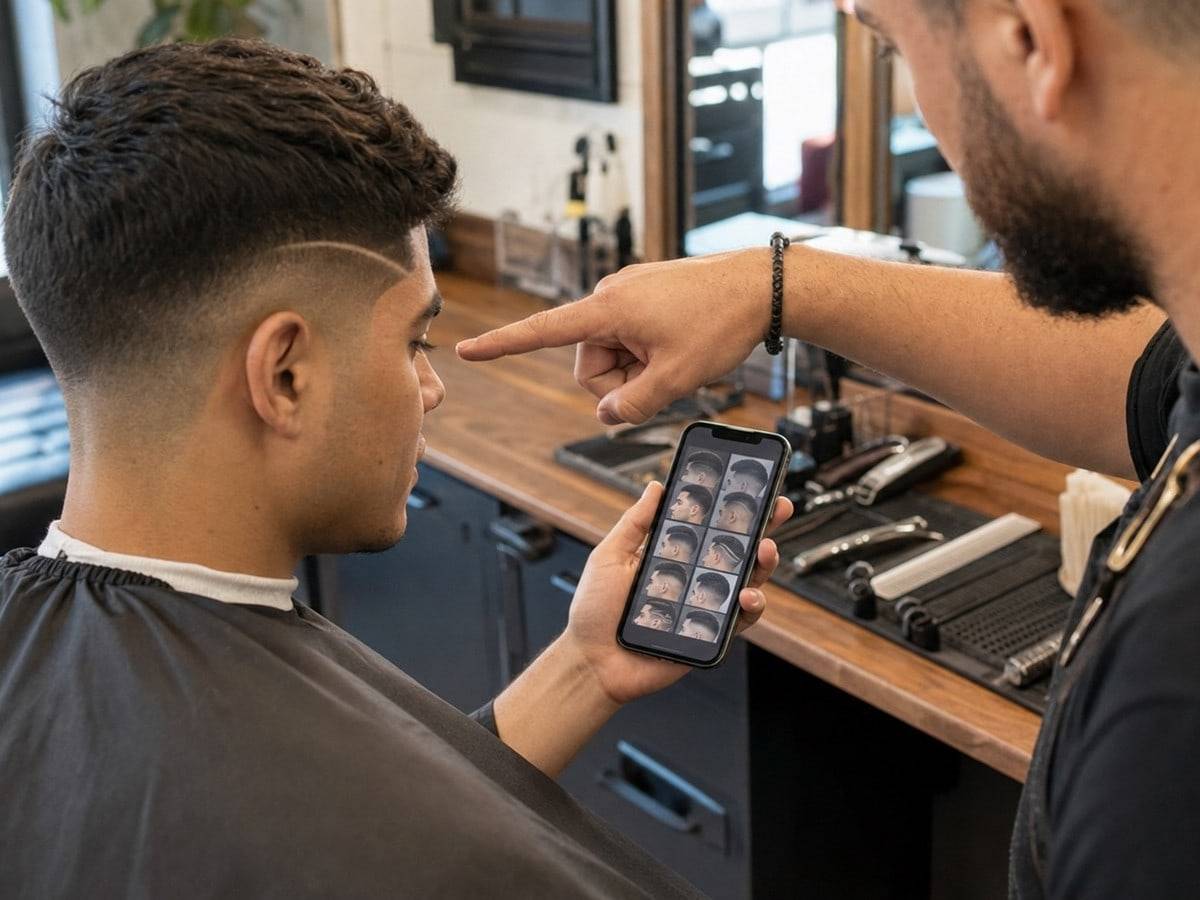
Bring two images: one for the full haircut and one for the line detail. If you only bring the design photo, the barber still has to guess the fade height, top length, beard blend, and finish.
Preview the line before you cut it
Reference photos help, but they are not enough. The person in the photo has a different head shape, hairline, hair density, beard, and side profile.
Use HairWow Try-On as a fitting room before the barber visit:
- Upload a clear photo where the sides and hairline are visible.
- Test the base cut before judging the line.
- Compare a hard part fade, temple fade, and curved fade direction.
- Save the version that still looks like you.
- Bring the saved preview plus one real barber reference.
This is especially useful when choosing between a temple slash, hard part, and curved fade line. They can look similar in search images, but they change the side profile in different ways.
How long side lines last
Most shaved side lines look sharp for about 7 to 14 days. After that, regrowth softens the contrast. If your hair is dark, dense, or fast-growing, the line can lose sharpness sooner.
For a very crisp look, plan a touch-up every 1 to 2 weeks. For a casual look, wait until the full fade needs cleanup.
At home, do not try to redraw a complex line unless you already know how to use trimmers. Cleaning one stray hair is different from recutting the whole design. A thin line can become too wide very quickly.
Skin and maintenance cautions
Side-line designs involve close clipping or shaving, so skin comfort matters. The American Academy of Dermatology's shaving guidance recommends shaving in the direction hair grows, rinsing after each pass, and replacing blades regularly to reduce irritation. Its razor bump prevention advice also emphasizes proper technique and clean tools.
That matters around the temple, nape, and beard line because those areas can get red or bumpy if the line is cut too aggressively.
Simplify or skip the design if:
- You often get razor bumps around the hairline or beard.
- You cannot schedule regular touch-ups.
- You have a strict work, school, sport, or military grooming rule.
- You are changing the top length, fade height, and beard shape in the same appointment.
- You are unsure whether the line will expose a cowlick, scar, or uneven side hairline you prefer to keep quiet.
If this is a big haircut change, keep the line simple the first time. You can add more design at the next visit.
Sources
- American Academy of Dermatology: Hair removal - how to shave
- American Academy of Dermatology: 6 razor bump prevention tips
- American Academy of Dermatology: Hair styling without damage
FAQ
Are haircuts with lines on the side still in style?
Yes, but cleaner versions look more current than oversized designs. A thin hard part, short temple slash, subtle double line, or curved fade line usually ages better than a large pattern.
What does two lines on the side of the head haircut mean?
In most barber contexts, two side lines are simply a design choice. They can look sporty, sharp, or more customized than one line. There is no single universal meaning, so judge it by the haircut, setting, and barber reference instead of assuming it signals something specific.
What is the best haircut with a line for beginners?
A low or mid fade with one thin side line is the safest first choice. It is easy to explain, easy to maintain, and does not overpower the rest of the haircut.
Should the line be on the left or right side?
Put it on the side that works with your natural part, stronger profile, beard connection, or preferred photo angle. If your hair already parts to one side, the line usually looks better when it supports that direction.
Can I get lines with curly or coily hair?
Yes. Lines can look very sharp with curly or coily hair because the fade contrast is strong. Choose a barber who is comfortable with your texture, and avoid cutting the design too high into longer curl volume.
How often do side-line haircuts need touch-ups?
For a crisp look, every 1 to 2 weeks. For a softer casual look, you can wait until the full fade needs cleanup. Double lines and hard parts usually need more frequent maintenance than one short temple line.
Can I cut the side line myself?
It is safer to let a barber do it, especially for double lines, curves, and hard parts. A line that is slightly uneven or too wide is hard to hide until the hair grows back.
What should I show my barber?
Show one photo of the base haircut, one close-up of the line detail, and ideally a HairWow preview on your own photo. The barber needs to understand the fade height, top length, side placement, and line width.
Bottom line
Haircuts with lines on the side look best when the design belongs to the fade instead of sitting on top of it. Start with the base haircut, choose line placement, preview the side profile, and give your barber a specific brief.
If you want the safest path, choose a low or mid fade with one thin line. If you want more personality, test double lines or a curved fade line in HairWow Try-On, then bring the saved reference to your barber.