Vintage Hairstyles Guide: Choose the Right Retro Era for Your Face and Hair
Compare 1920s waves, 1940s rolls, 1950s curls, 1970s layers, 1980s volume, and 1990s face-framing hair before you choose a vintage hairstyle.
· 13 min read

On this page
Vintage hairstyles are fun because they give hair a clearer point of view. A side wave can make a bob look intentional. A curled ponytail can make a simple outfit feel styled. Feathered layers can make long hair move again. The mistake is treating "vintage" as one look.
Direct answer: the most wearable vintage hairstyles today are soft 1920s-inspired waves, 1940s side waves and rolls, 1950s curled bobs and ponytails, 1970s feathered layers, 1980s volume, and 1990s face-framing layers. Choose the era by face shape, hair texture, and daily styling effort, not just by the decade you like in photos.
Before cutting, coloring, or booking a set, preview soft waves, short curls, feathered layers, glossy curls, or face-framing movement in HairWow Try-On. A preview cannot place every pin, but it can tell you whether the shape belongs on your face before you commit.
What are vintage hairstyles?
Vintage hairstyles are cuts, sets, and styling directions inspired by earlier hair eras. In practice, that can mean finger waves, brushed curls, victory-roll-inspired fronts, pageboy ends, ponytail curls, feathered layers, glossy volume, bixie shapes, curtain bangs, or face-framing layers. A modern vintage hairstyle borrows the recognizable shape while relaxing the finish so it works with current clothes and normal movement.
Key takeaways
- Vintage hair works best when you choose one era signal, not every retro detail at once.
- 1920s and 1940s looks are strongest for polished waves and event styling.
- 1950s looks are good for curled bobs, ponytails, and neat shoulder-length hair.
- 1970s and 1990s looks are easier for everyday movement because layers do much of the work.
- 1980s hair is best if you actually want visible height, curl, or volume.
- Tight pinned styles should feel secure, not painful. The American Academy of Dermatology notes that tight or repeatedly pulling hairstyles can contribute to traction-related hair loss over time.
Definition: A vintage hairstyle is a modern cut or style that borrows a clear shape from an earlier hair era, such as 1920s waves, 1940s rolls, 1950s curls, 1970s feathering, 1980s volume, or 1990s face-framing layers.
Which vintage era should you choose?
Start with the mood and maintenance level. Some vintage eras are styling-heavy. Others are mostly haircut-driven.
| Era | Modern hair signal | Best for | Effort level |
|---|---|---|---|
| 1920s | Finger waves, sleek bob, side wave | Event polish, short hair, defined cheekbones | High |
| 1940s | Side waves, brushed curls, soft roll | Vintage drama without a hard costume look | Medium to high |
| 1950s | Curled bob, ponytail, pageboy ends | Neat shape, shine, shoulder-length styling | Medium |
| 1970s | Feathered layers, shag movement, curtain fringe | Everyday softness and movement | Low to medium |
| 1980s | Volume, glossy curls, big layers | Visible height and statement texture | Medium |
| 1990s | Face-framing layers, bixie, soft blowout | Modern retro without heavy styling | Low to medium |
If you want the easiest daily version, start with 70s hairstyles for women, 90s hairstyles, or feathered layers. If you want a photo-ready event style, compare 1920s hairstyles, 1940s hairstyles, and 50s hairstyles.
Best vintage hairstyle by face shape
Face shape does not decide everything, but it gives you a useful first filter. The goal is balance.
| Face shape | Vintage direction to try | Why it works | Watch out for |
|---|---|---|---|
| Oval | Side waves, curled bob, feathered layers, 90s blowout | Most proportions can handle either polish or movement | Overbuilding a style that already suits you |
| Round | Side-parted waves, longer 70s layers, crown volume | Adds direction and length without cheek-level bulk | Very wide curls around the cheeks |
| Square | Soft brushed curls, 1940s side wave, 90s face frame | Softens jaw angles without hiding them | Hard pageboy ends at the jaw |
| Heart | 1950s ponytail curl, shoulder waves, curtain bangs | Balances a wider forehead with lower movement | High rolls that add too much forehead height |
| Long | Curled bob, 1950s pageboy, shoulder curls | Adds width and keeps the style from stretching vertically | Tall crown volume and narrow sides |
| Diamond | Side wave, soft bob, feathered layers | Keeps attention around the eyes and cheekbones | Volume only at the widest part of the face |
If you are between shapes, choose by the feature you want to adjust. To soften a forehead, try a side wave or curtain fringe. To add lower balance, try shoulder curls. To avoid widening the face, keep the strongest volume above or below the cheeks.
Vintage hairstyles by hair length
Length matters because it decides whether the style is mainly a cut, a set, or a pinning job.
| Hair length | Good vintage options | Styling note |
|---|---|---|
| Pixie or very short | Bixie, short curly crop, side wave detail | Keep the front proportional so it does not overpower the cut |
| Bob | 1920s wave, 1950s curled bob, pageboy ends | Great for polish, but needs clean shape and frizz control |
| Lob | 1940s side wave, brushed curls, 90s blowout | Flexible length for both event and everyday retro |
| Medium | 1950s ponytail curl, feathered layers, soft shag | Layers can reduce the need for heavy setting |
| Long | 70s feathering, 80s volume, half-up roll, 90s face frame | Use vintage detail near the front so the length does not feel plain |
Short hair often looks more period-correct, but long hair is easier to modernize. A long style can borrow the front, part, or layer shape while still feeling current.
12 wearable vintage hairstyles
1. Soft 1920s side wave
A soft 1920s side wave gives a bob or lob immediate polish. The modern version is less wet-looking and less rigid than a full finger-wave set.
Try it if you like short hair, clean lines, and evening styling. Skip it as a daily look if you do not want to control frizz and shape.
2. 1940s brushed waves
Brushed waves are one of the easiest vintage ideas to wear today. They give the hair structure without forcing a full costume reference.
Ask for a side part, soft wave direction, and enough movement that the style still looks good when it relaxes.
3. Small victory-roll-inspired front
A full victory roll can be dramatic. A small front roll is easier to wear with modern clothes.
This works best when your front pieces are long enough to roll and pin. If your layers are too short, try a side wave first.
4. 1950s curled bob
A 1950s curled bob gives a neat outline around the jaw and cheekbones. It can feel elegant without being severe.
Ask for bounce at the ends rather than a hard helmet shape. The cut should still work on days when it is not fully set.
5. Curled ponytail
A curled ponytail is a simple way to borrow 1950s energy without cutting your hair. The trick is a smooth base with controlled curl at the tail.
Keep the tie comfortable. A ponytail that pulls at the hairline for hours is not worth the shape.
6. Pageboy-inspired ends
Pageboy ends look best when the under-curl is controlled but not stiff. The style suits bobs, lobs, and medium hair.
Very thick hair may need internal shaping so the ends turn under instead of ballooning out.
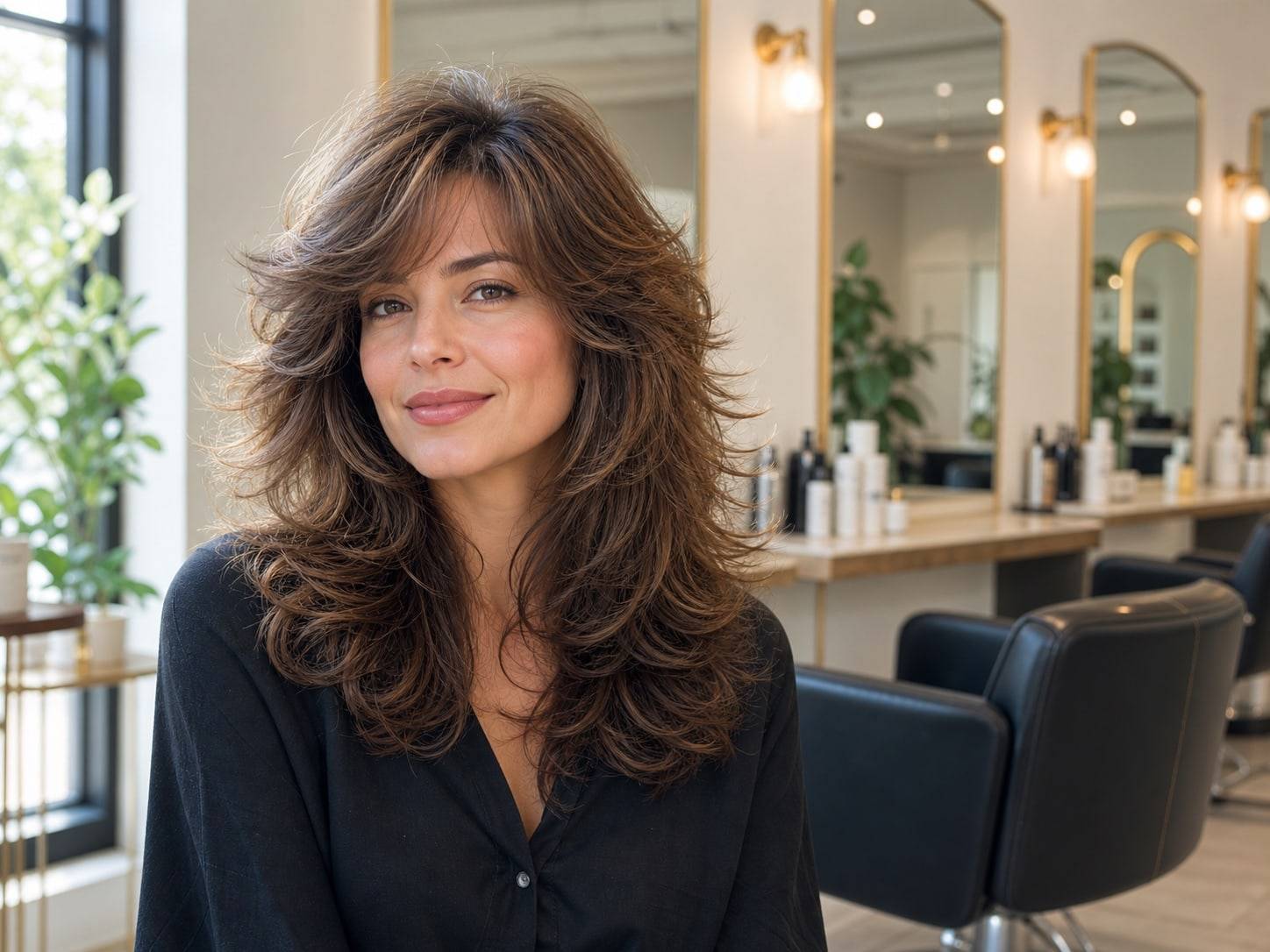
7. 1970s feathered layers
Feathered layers are one of the best vintage choices for everyday movement. They make long or medium hair feel styled even without a formal set.
Use this direction if you want retro shape but do not want pins, rollers, or a hard part.
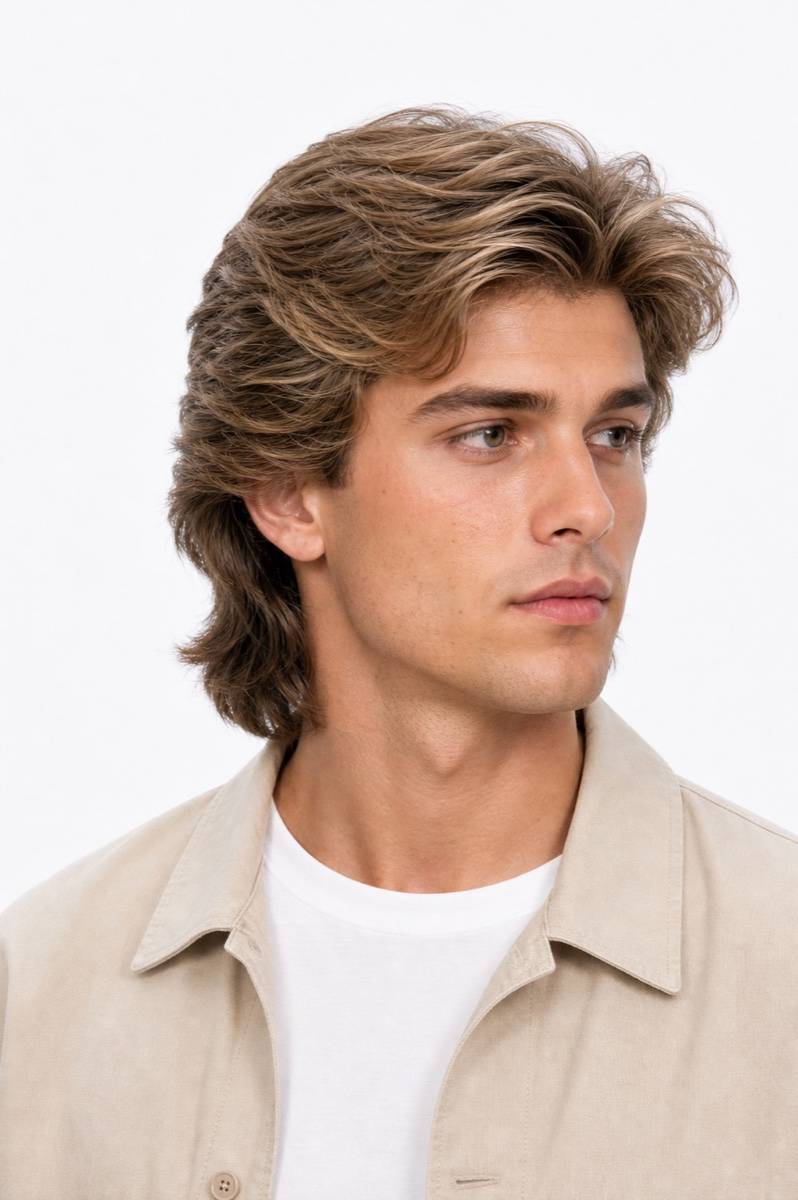
8. Soft shag
A soft shag borrows from 1970s texture but keeps the finish flexible. It works well for wavy hair and medium density.
The important part is balance. Too many short layers can make styling harder, not easier.
9. 1980s volume lift
1980s volume is best when you want the hair to be noticed. It can be crown lift, bigger curls, or layered fullness.
Modernize it by controlling the sides and keeping the finish touchable instead of crunchy.
10. Glossy curls
Glossy curls can feel 1980s or early 1990s depending on the cut. They work especially well when the curl pattern is already part of your hair.
Avoid fighting your texture into a shape it does not want. A vintage direction should help your natural pattern look intentional.
11. 1990s face-framing layers
Face-framing layers are the safest vintage-inspired choice if you want something wearable immediately. They flatter many face shapes and pair well with a blowout.
Ask where the shortest front pieces will land. Cheekbone, lip, and chin-length pieces create very different effects.
12. Bixie or short layered crop
A bixie gives a 1990s reference without the commitment of a very short pixie. It can soften the face while keeping the neck and jaw visible.
This cut depends on proportion. Preview it first if you are moving from long hair to short hair.
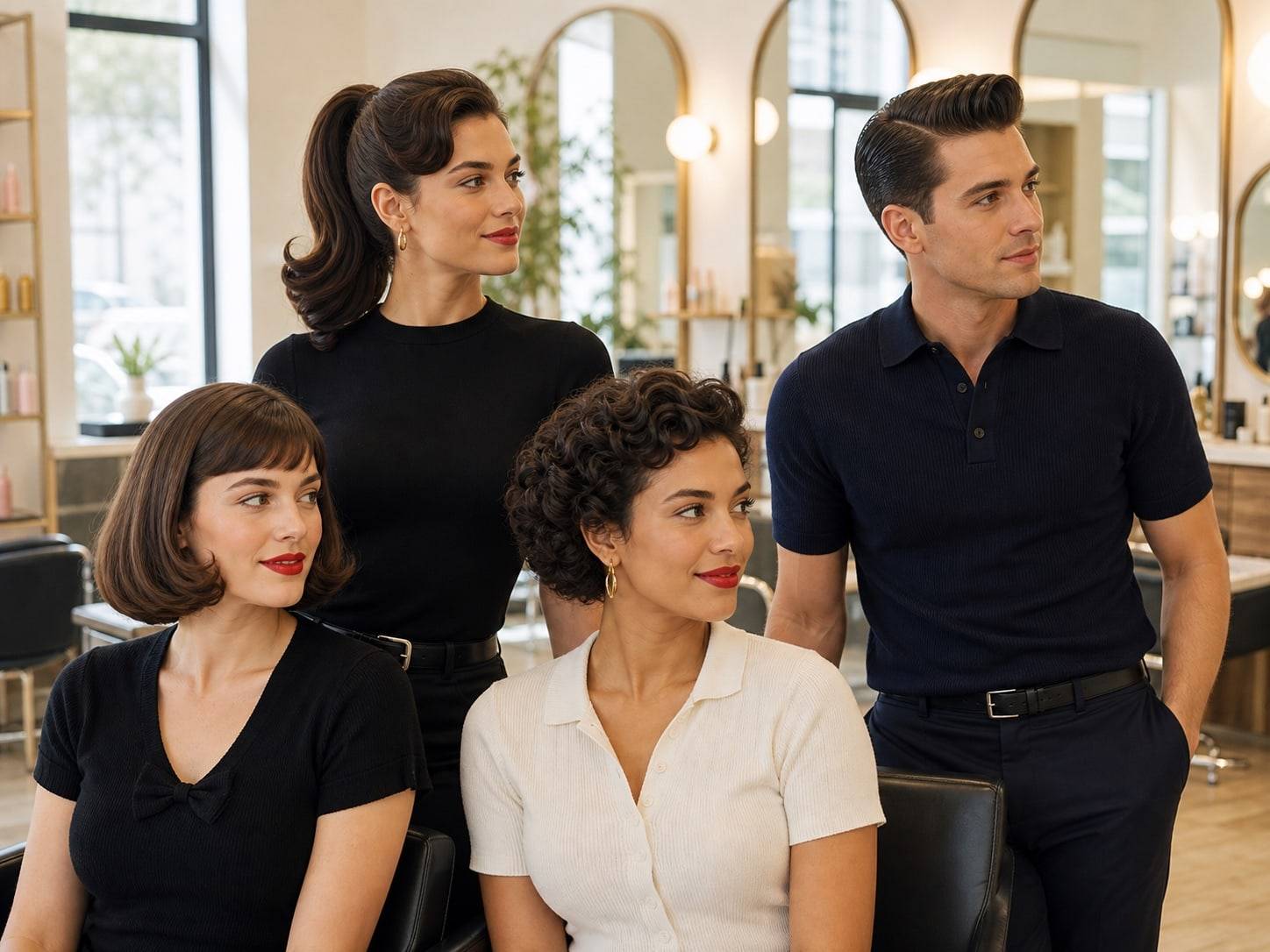
Hair texture and styling effort
Vintage hair is not only about the image. The same style can be easy on one texture and frustrating on another.
| Hair type | Better vintage option | Why |
|---|---|---|
| Fine hair | 90s face frame, soft bob, light side wave | Too much product can collapse the shape |
| Thick hair | Feathered layers, long waves, controlled curls | Removing weight matters more than adding more styling |
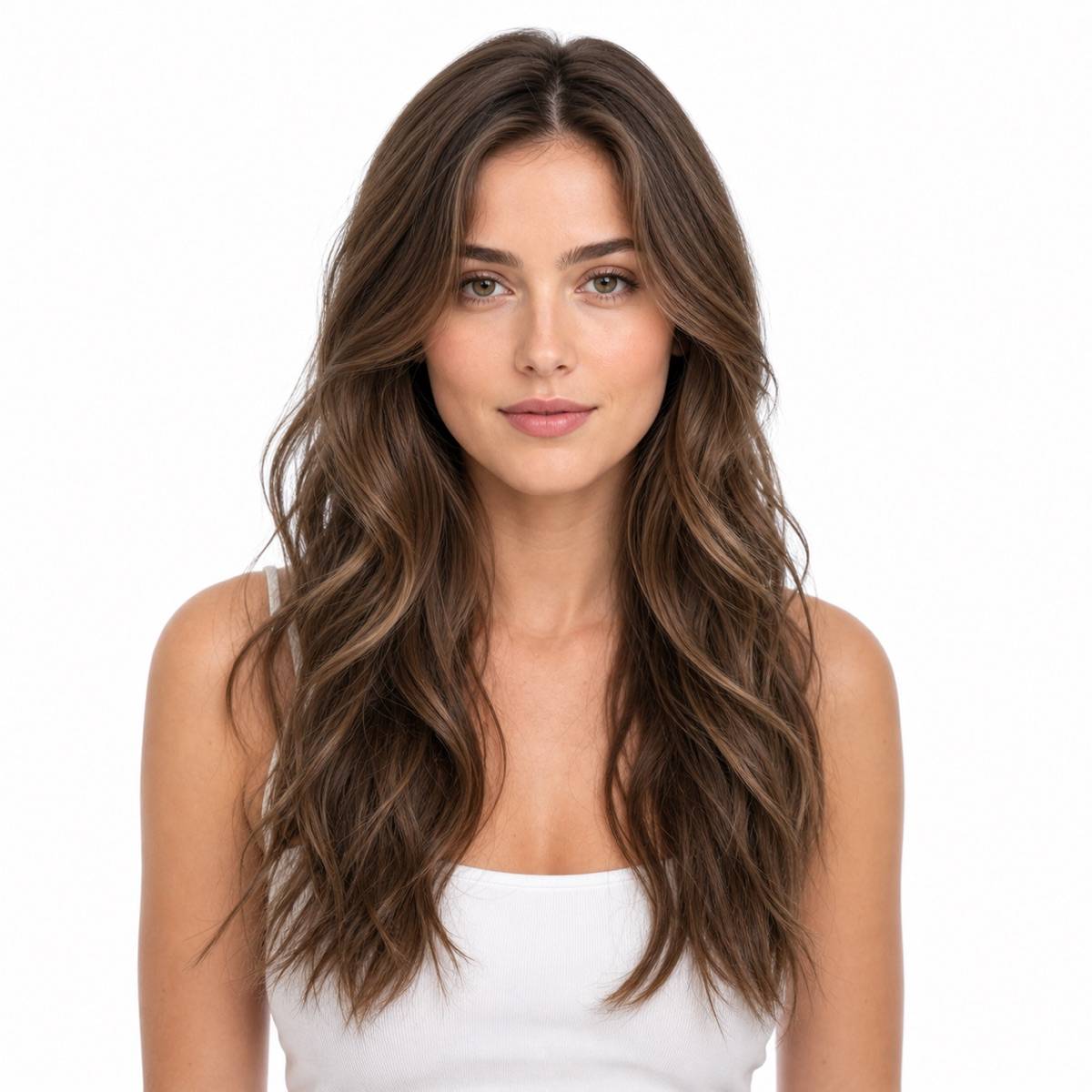
| Wavy hair | 1940s waves, 70s layers, soft shag | The natural bend supports the retro shape |
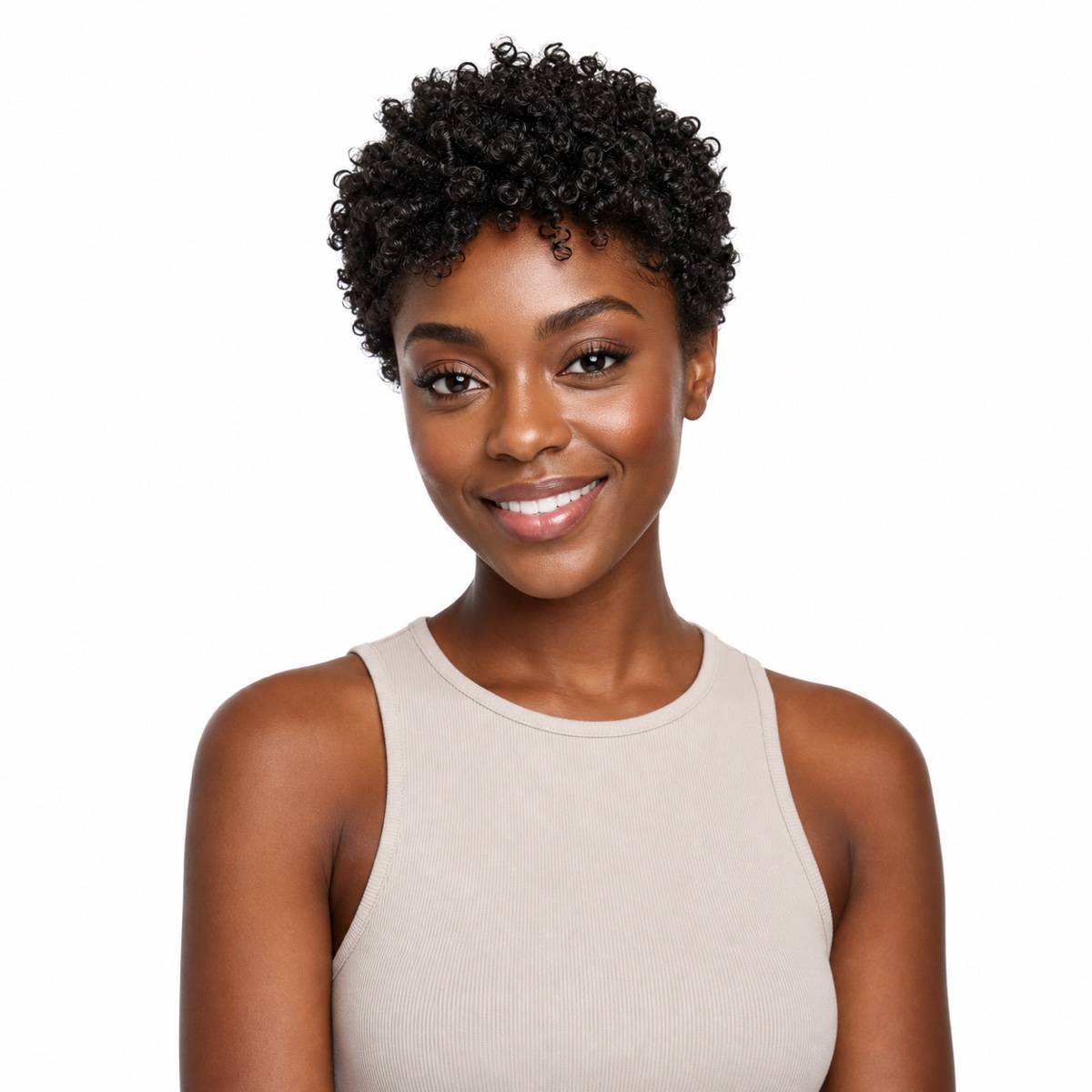
| Curly hair | Glossy curls, short curly crop, 80s volume | Work with the curl pattern instead of brushing it flat |
| Coily hair | Rounded volume, soft updo, defined vintage-inspired front | Shape and comfort matter more than copying a smooth set |
| Straight hair | Pageboy ends, 90s blowout, 1950s ponytail | The clean line is useful, but hold may require setting |
Comfort is part of the result. Cleveland Clinic describes hair follicles as structures surrounding the hair root and strand. Styles that repeatedly pull on the roots can become a problem, especially when they are tight, heavy, or worn often. If a vintage updo or ponytail hurts, loosen it.
Preview the era before you cut or set
Use try-on previews to answer one practical question at a time:
- Do I prefer polish or movement?
- Does a side wave make my face look sharper or softer?
- Does crown volume balance my face or make it look longer?
- Do shorter curls flatter my jaw?
- Would face-framing layers help my everyday hair?
Save the closest preview and bring it to your stylist with one real reference photo from the same era. The preview helps with proportion; the stylist handles the cut, set, pins, and finish.
What to ask your stylist for
Avoid saying only "make it vintage." That can mean too many things.
Try one of these:
- "I want a soft 1940s-inspired side wave, not a stiff costume set."
- "Can we use 1970s feathered movement but keep the layers easy to style?"
- "I like a 1950s curled bob shape, but I do not want the ends too round."
- "Can the front pieces frame my face like a 90s blowout?"
- "If we pin this up, can you keep the hairline comfortable?"
- "Will this cut still look good when I do not style it fully?"
If you are changing length, ask where the shortest pieces will sit and how much styling the final shape requires.
Common mistakes
Picking the era before the face shape
The decade can be appealing, but the shape still has to suit your proportions. Start with the silhouette, then choose the era.
Making the style too literal
Vintage inspiration works better when it is edited. A side wave, a curled end, or a feathered front can be enough.
Ignoring daily effort
Some vintage looks are sets, not wash-and-go cuts. If you will not roll, pin, brush, or blow-dry, choose a layer-based style.
Over-tightening ponytails and updos
A style can be secure without pulling. If your scalp hurts or your hairline feels strained, adjust the tension.
Forgetting the outfit
Hair that looks beautiful with a dress may feel too formal with everyday clothes. Check the style with the clothes you actually wear.
Sources
- American Academy of Dermatology: Hairstyles that pull can lead to hair loss
- Cleveland Clinic: Hair follicle function and structure
FAQ
What is the easiest vintage hairstyle to try first?
The easiest vintage hairstyle is usually a soft side wave, 90s face-framing layer, or 70s feathered layer. These give a clear retro signal without requiring a full pinned set.
Are vintage hairstyles only for short hair?
No. Short hair is useful for finger waves, curled bobs, and bixie cuts, but long hair can use feathered layers, half-up rolls, curled ponytails, or 90s face-framing pieces.
Which vintage hairstyle is best for everyday wear?
For everyday wear, choose 70s feathered layers, a soft shag, 90s face-framing layers, or a loose side wave. They rely more on cut and movement than on pins or a full set.
Which vintage hairstyle is best for a formal event?
For a formal event, try 1920s waves, 1940s brushed waves, a small victory-roll-inspired front, a 1950s curled bob, or a low pinned updo. These styles photograph well because the shape is deliberate.
Can vintage hairstyles damage hair?
Vintage hairstyles are not automatically damaging. The risk comes from repeated tight pulling, heavy extensions, harsh brushing, or uncomfortable pins. Keep tension low and avoid wearing tight styles too often.
Should I try on a vintage hairstyle before cutting my hair?
Yes. A virtual try-on helps you test the era, volume, face-framing point, and length before making a real haircut decision. Use the preview as a proportion check, then bring a realistic reference to your stylist.