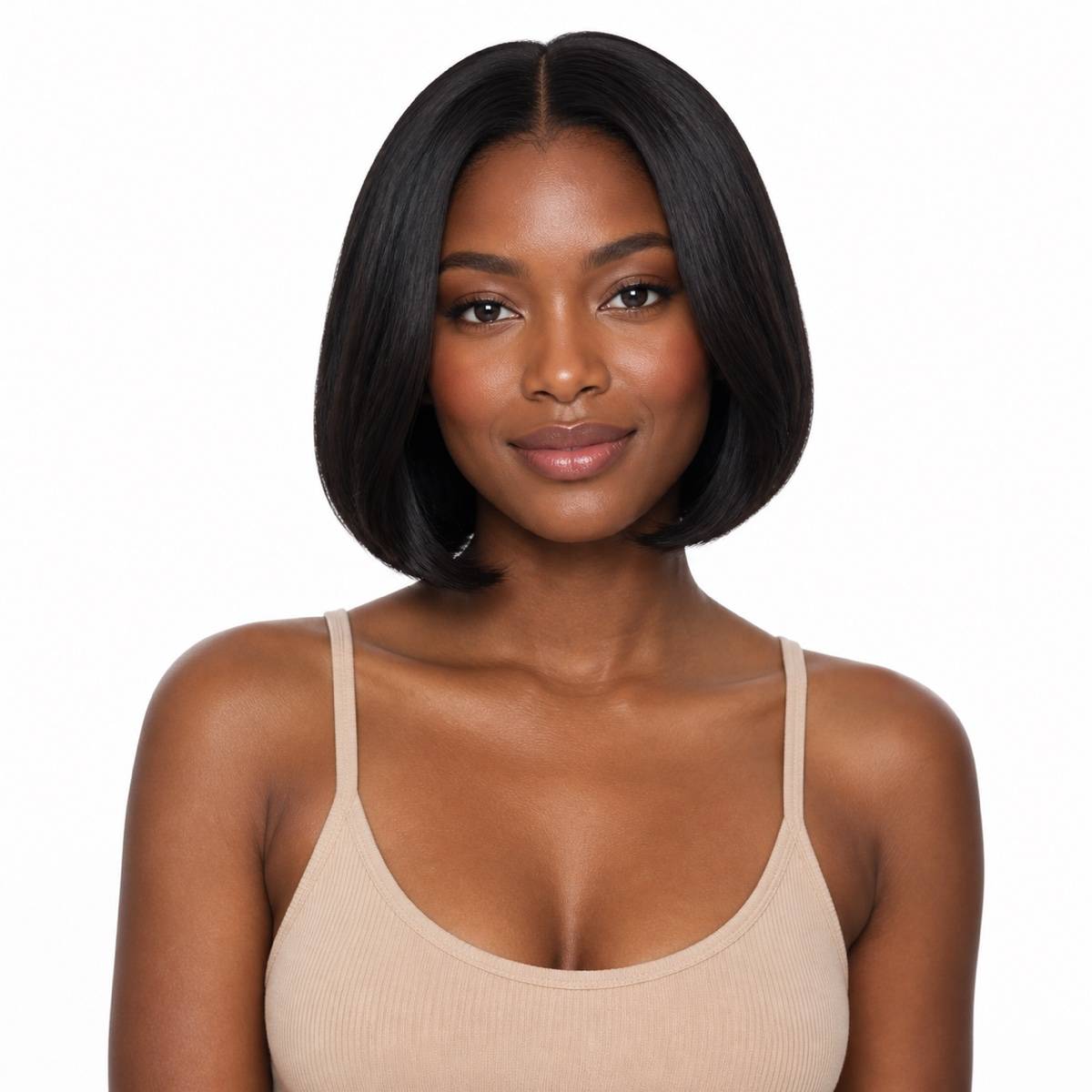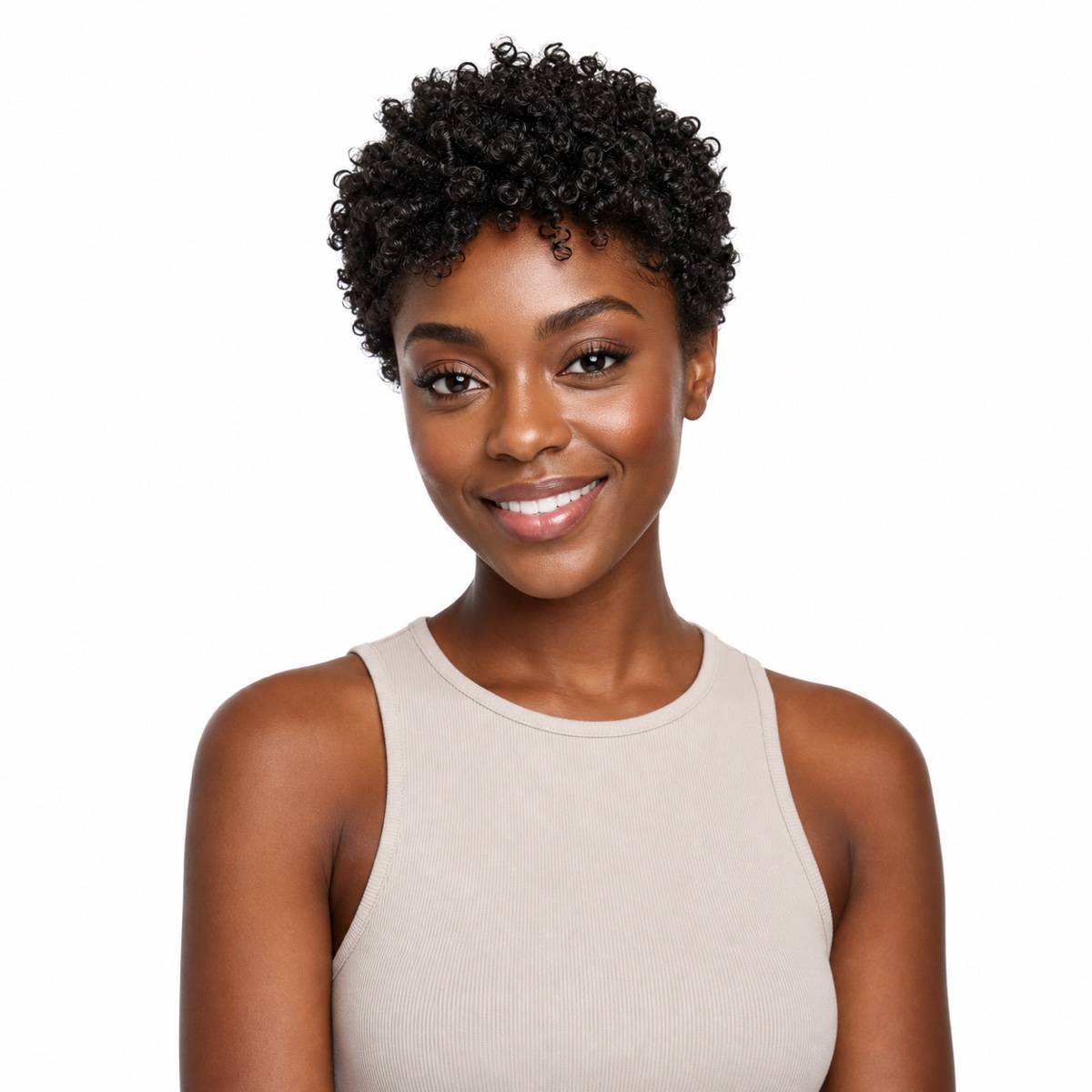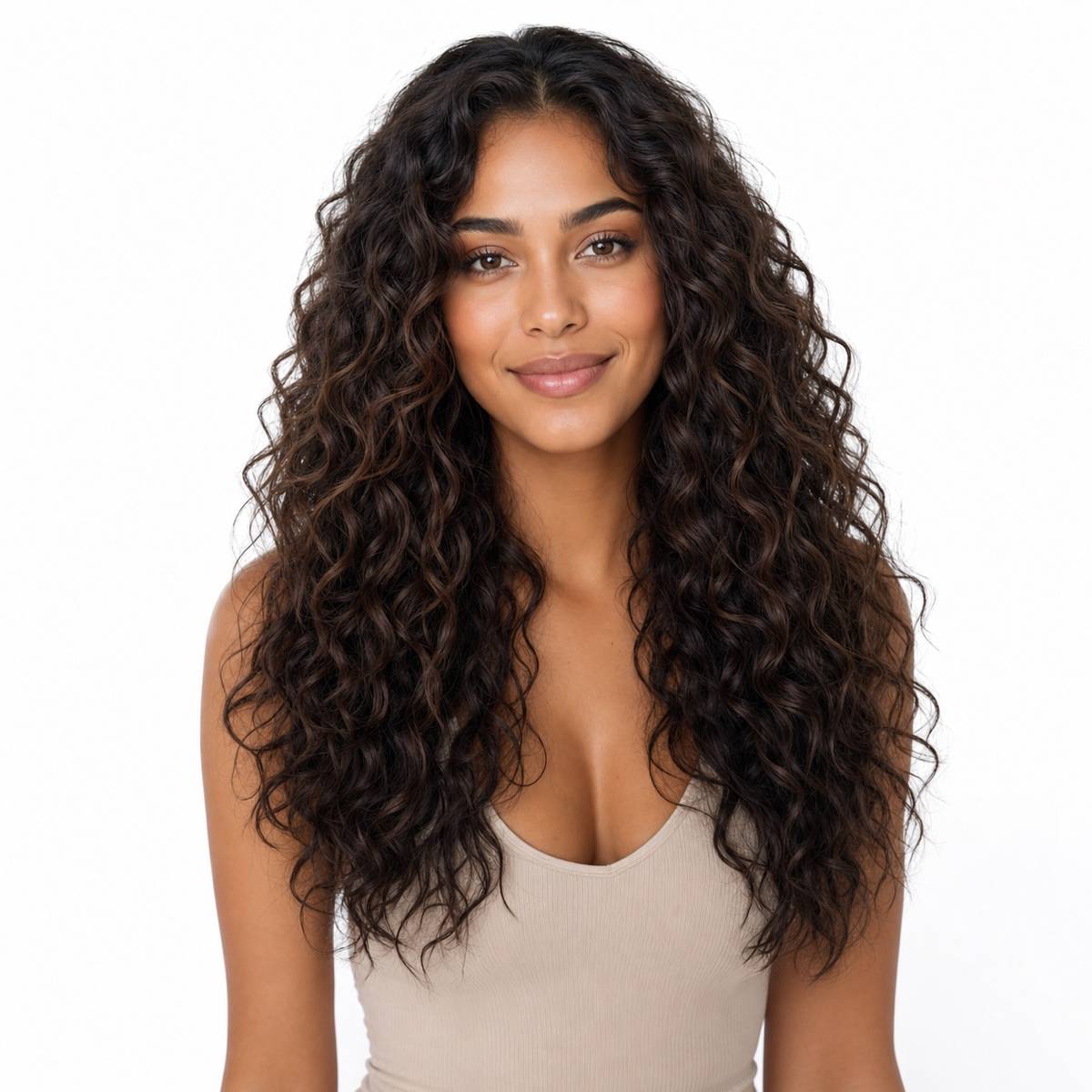
Curly Bob Haircuts: How to Choose the Right Shape for Your Curls
Compare seven curly bob shapes by dry length, curl pattern, density, face shape, maintenance, and salon wording before you make the cut.

· 18 min read

On this page
A curly bob works best when the stylist designs the dry outline, not just the wet cutting line. Start by deciding where you want the finished curls to sit—jaw, chin, neck, or collarbone—then choose the amount of layering around your crown and sides. Loose waves often suit a cleaner perimeter. Springy curls usually need more room for shrinkage and movement. Dense coils may need deliberate weight placement so the bob looks rounded or elongated instead of accidentally triangular.
The safest first choice is a jaw-to-neck-length layered curly bob with enough front length to adjust after drying. If you want a sharper change, compare a French bob, rounded bob, asymmetrical bob, or bob with bangs. Preview the overall silhouette before the appointment, but let your stylist adapt the cut to your real curl pattern, density, growth direction, and shrinkage.
Key takeaways
- Choose the bob by its finished dry length. Wet length can be misleading when curls spring upward.
- A clean, low-layer bob keeps a stronger perimeter; a layered bob creates movement and reduces a heavy triangle shape.
- Fine curls usually need a fuller edge. Dense curls usually need thoughtful internal shape, not aggressive thinning everywhere.
- Face-shape advice is only a proportion guide. Your part, curl volume, glasses, and preferred styling routine can matter just as much.
- Bring front, side, and back references. A single front-facing photo does not explain the nape, crown, or layer placement.
- A virtual preview can help with outline and length, but it cannot predict exact shrinkage or how your natural curls will clump.
- If you regularly straighten your hair, tell the stylist whether the bob must work curly, straight, or both.
What is a curly bob?
Definition: A curly bob is a short-to-medium haircut whose finished outline sits between the jaw and collarbone, with the perimeter and layers shaped around the hair's natural curl pattern. The important measurement is where the hair lands when dry, not where a stretched or wet strand reaches.
"Curly bob" describes a family of cuts, not one fixed template. Two people can both ask for a chin-length bob and leave with very different results. One may have a clean, rounded edge with minimal layering. The other may have shorter crown layers, more side movement, and a softer perimeter. Both can be correct if the shape matches the person's curls and routine.
That is also why copying a straight-hair bob reference can go wrong. A sharp line visible on straight hair may break into a softer, less predictable outline when curls contract and separate. Bring references with a curl pattern and density reasonably close to yours whenever possible.
Quick curly bob decision table
| Curly bob shape | Best when you want | Works especially well for | Main risk to discuss |
|---|---|---|---|
| Rounded chin-length bob | A classic, balanced outline | Loose curls to medium curls with even density | Too much side weight can widen the shape. |
| Layered jaw-length bob | Movement and lighter sides | Springy curls or dense hair | Short crown layers can create more height than expected. |
| Curly French bob | A short, cheekbone-focused look | Loose curls, compact curls, confident fringe wearers | Shrinkage can move the cut above the intended line. |
| Collarbone curly lob | A lower-risk first bob | Anyone nervous about losing length | It can read as medium hair rather than a true bob. |
| Soft stacked curly bob | Lift at the back with a longer front | Fine-to-medium density curls | Too much graduation can create a bulky shelf. |
| Asymmetrical curly bob | A directional, editorial shape | Curls that already fall more strongly to one side | The difference can look accidental if it is too subtle. |
| Curly bob with bangs | More focus around the eyes | People comfortable styling a fringe on refresh days | Bangs can spring shorter and need separate maintenance. |
Seven curly bob shapes to compare
1. Rounded chin-length curly bob
This is the clearest version of the cut: a rounded outline, a visible perimeter, and enough internal shape to keep the sides from becoming a solid block. It is a good starting point if your curls are fairly consistent across the head and you want the bob to look intentional without lots of short layers.
Ask for the finished shape to sit around the chin or just below it. If your curls are fine, keep more weight at the edge. If your hair is dense, ask the stylist to shape the interior while preserving the outside line. The goal is fullness with movement, not a perfectly circular helmet.
2. Layered jaw-length curly bob
A layered curly bob trades a crisp edge for movement. Shorter pieces around the crown can create lift, while longer layers through the sides keep the shape from stacking too wide near the jaw. This direction is especially useful when dense curls form a triangle in a one-length cut.
The annoying part is that "add layers" is too vague. Ask where the shortest crown layer will land when dry, how the stylist will protect the perimeter, and whether the face-framing pieces will spring above your cheekbones. You want a planned silhouette, not random thinning.
3. Curly French bob
A curly French bob usually sits near the jaw or above it and often includes a fringe or soft pieces around the forehead. It puts more attention on the eyes, cheekbones, and neck. The cut can feel playful and polished, but it leaves less room to correct a length that dries too short.
Choose this shape when you already enjoy wearing short curls and do not need every strand to reach a ponytail. Ask for a conservative first pass around the front. Your stylist can refine the line after the curls settle, while replacing unexpected lost length takes months.
4. Collarbone curly lob
The curly lob is the practical bridge between medium hair and a bob. It keeps more weight and gives you a better chance of tying some hair back, but still creates a clear shorter outline. It is often the best first move when you are unsure how much your curls will shrink after removing length and damaged ends.
Ask for the longest dry pieces to graze the collarbone, then decide whether the front should remain slightly longer. A center part creates balance; a side part can add lift and make one side look fuller. Compare both parts before committing to the final face framing.
5. Soft stacked curly bob
A stacked bob uses shorter layers at the back to build a rounded profile. On curls, the stack should usually be softer than it would be on straight hair. A hard shelf of short layers can make the back puff while the sides hang separately.
This shape can help fine or medium-density curls look fuller at the crown. Ask for a side-view reference and discuss the nape. A very short nape changes the grow-out and may expose more of the neck than you expect, especially once the back curls spring upward.
6. Asymmetrical curly bob
An asymmetrical bob leaves one side longer or shifts the visual weight through the part and face framing. It works well when your curls already behave differently on each side. Instead of forcing perfect symmetry, the cut turns that difference into the design.
Make the choice visible enough to look deliberate. A one-inch difference may disappear inside a dense curl pattern; a stronger length change or distinct side part may read more clearly. Ask how the back connects the two sides so the haircut does not look uneven from behind.
7. Coily bob with controlled volume
A coily bob can be rounded, tapered slightly at the nape, or left fuller at the sides. The right choice depends on whether you want a compact shape or a larger halo. Density matters: removing too much interior weight can create gaps, while leaving every section one length can concentrate volume low on the head.
Ask the stylist to show where the outline will sit after your normal wash-and-style routine. If your coils have mixed patterns, identify the sections that contract the most. Those areas may need extra length rather than automatic matching to a stretched guide.
Choose a curly bob by face shape
Face shape does not determine whether you are "allowed" to wear a bob. It helps you decide where the cut should add height, width, or softness. Test the outline with your normal part and glasses, if you wear them.
| Face shape | Curly bob direction | Adjustment worth testing |
|---|---|---|
| Round | Layered jaw-length bob or collarbone lob | Keep some length below the widest part of the cheeks; avoid all the volume landing at cheek level. |
| Square | Rounded bob or soft curly lob | Add movement near the jaw instead of a hard, wide corner. |
| Oval | Most bob lengths | Choose by curl behavior and maintenance; both short French bobs and longer lobs can work. |
| Long | Chin-length rounded bob or curly bob with bangs | Side volume and a fringe can balance vertical length; avoid extreme crown height if you do not want more length visually. |
| Heart | Chin-length bob with soft lower volume | Keep enough shape around the jaw and avoid concentrating every short layer at the temples. |
| Diamond | Soft layered bob with cheekbone-aware framing | Place the widest part slightly above or below the cheekbones rather than directly on them. |
If you are stuck between two lengths, use HairWow's face-shape hairstyle guide as a second opinion, then compare the actual outlines on your photo. The useful question is not "Which bob matches my label?" It is "Where should this cut place volume around my face?"
Choose by curl pattern and density
Curl labels can be helpful shorthand, but they do not tell the whole story. Two people with similar-looking curls can have different density, strand thickness, growth patterns, damage, and styling habits. Those differences change the cut.
Loose waves and loose curls can support a cleaner bob edge, but the shape may flatten at the crown. A few long layers or a part change can add lift without destroying the perimeter. Springy curls usually need more length allowance and a clear plan for crown layers. Coils often benefit from shape decisions made on dry or styled hair so the outline reflects how the hair is actually worn.
Density changes the strategy:
- Fine or low-density curls: protect the perimeter, limit aggressive thinning, and avoid too many short disconnected layers.
- Medium-density curls: you have the widest range; decide whether you prefer a clean edge or a more layered silhouette.
- Dense curls or coils: plan where volume should remain, remove weight selectively, and check the back as carefully as the front.
A peer-reviewed review of curly hair biology describes curl as the result of a complex fibre and follicle system, not one simple category. That is a useful reality check: a reference photo can guide the silhouette, but it cannot guarantee identical curl behavior on another person's head.
Plan for dry length and shrinkage
There is no honest universal shrinkage percentage for every curly bob. The result depends on curl pattern, humidity, damage, products, how much weight is removed, and the way the hair is dried. Measure your own hair instead of relying on a social-media number.
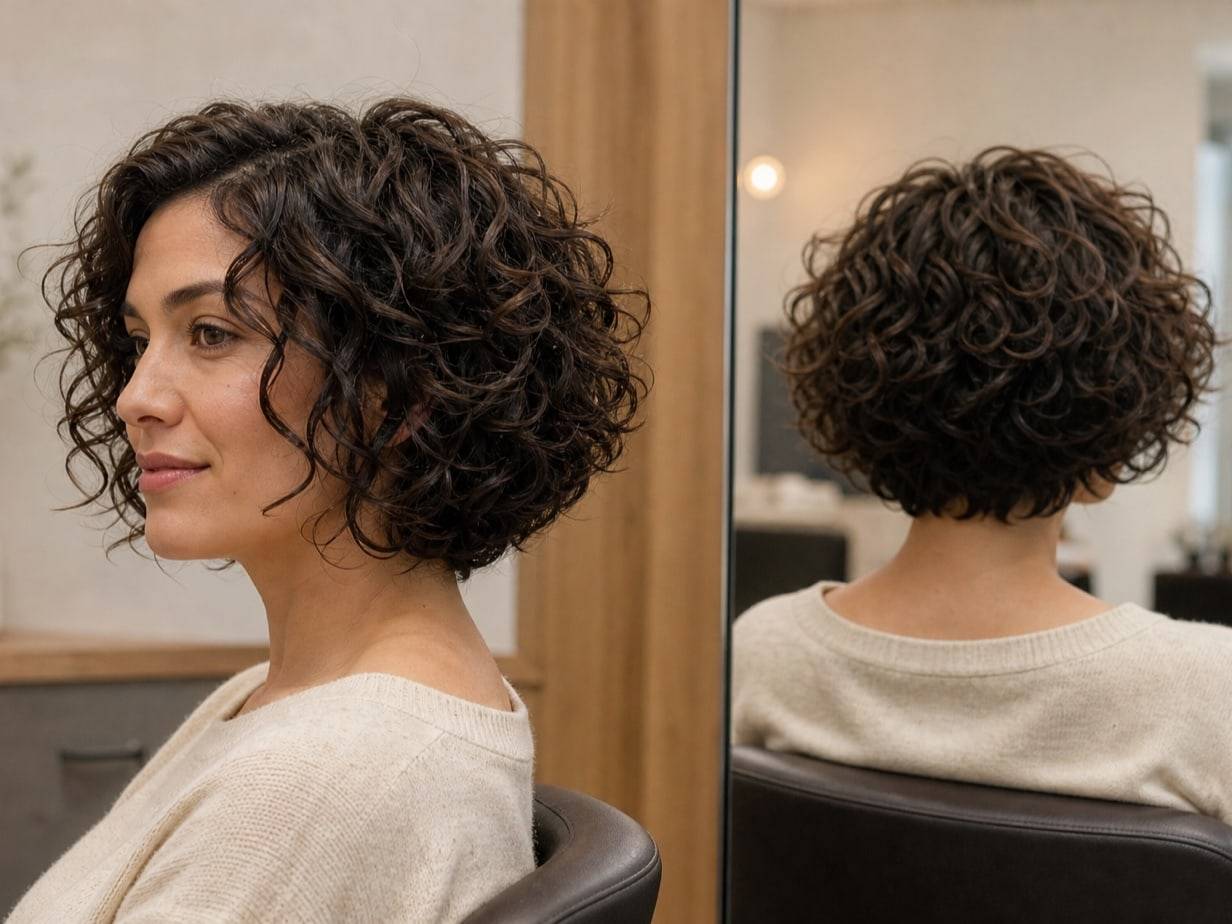
Before the appointment, style your curls normally and take three photos: front, side, and back. Mark the dry line you want—jaw, chin, neck, or collarbone. At the salon, show the stylist where your curls sit dry and how far a representative curl stretches when wet. Ask whether the first cut will leave a small adjustment margin.
Hair grows gradually, so an unexpectedly short bob is not a quick correction. NCBI's InformedHealth overview gives a general scalp-hair growth rate of about 1 centimetre per month, while individual growth varies. That makes a slightly conservative first cut sensible when you are uncertain.
What to tell your stylist
Bring fewer references, but make them better. One front view, one side view, and one back view are more useful than twenty nearly identical inspiration photos. Choose references with a similar curl pattern and density when possible.
Use this five-part brief:
- Dry length: "I want the finished curls to sit around my [jaw / chin / neck / collarbone]."
- Perimeter: "Keep the edge [full and clean / soft and broken / rounded / slightly longer in front]."
- Layers: "I want [minimal layers / crown lift / long layers / face framing], but I do not want the sides to become thin."
- Part and fringe: "I normally wear a [center / side] part, and I want the front to [stay long / open around my face / include bangs]."
- Routine: "I usually [air-dry / diffuse / switch between curly and straight], and I can spend about [five / ten / fifteen] minutes styling."
Then ask three practical questions:
- Where will the shortest crown layer land when dry?
- How will the nape connect to the sides and front?
- Can we check the shape after the curls settle before taking more length?
The American Academy of Dermatology recommends gentle detangling for curly and coily hair, including working on wet, conditioned hair with fingers or a wide-toothed comb. If the salon plans to brush your curls dry, use high heat, or repeatedly pull through tangles, ask how that step supports the intended result.
Maintenance after the cut
A curly bob does not have to be high maintenance, but short shapes expose changes sooner. A crisp French bob or stacked nape will lose its geometry faster than a collarbone lob. Book the next trim based on when the outline stops behaving, not an arbitrary calendar rule.
On wash day, apply product in sections so the back gets as much attention as the front. Air-dry or diffuse according to your usual routine. The AAD notes that excessive heat can damage hair and advises lower heat and less frequent hot-tool use. That matters with a bob because the ends are part of the visible shape; rough, dry ends can make a clean perimeter look frizzy or uneven.
On non-wash days, refresh only what needs help. A small amount of water and product around the front may be enough. If the crown has flattened, lift the roots rather than coating every curl again. At night, a loose pineapple, braid, bonnet, or low-friction pillowcase may help preserve the shape, depending on your length and curl pattern.
If you notice sudden shedding, scalp pain, bald patches, or breakage that does not improve with gentler handling, treat that as a hair or scalp concern rather than a haircut problem and speak with a board-certified dermatologist.
Where HairWow fits
HairWow is most useful before the haircut, when you are comparing outlines. Use the free hairstyle try-on to test a shorter rounded shape against a longer curly option. Browse the women's hairstyle category for nearby lengths, then save the preview that gives you the clearest salon direction.
A good try-on session answers three questions:
- Do I like the face framing at this length?
- Do I prefer volume near my jaw, higher at the crown, or lower near the shoulders?
- Does the side profile feel balanced with my face and neck?
It does not predict your exact curl clumps, density, shrinkage, cowlicks, or how a stylist will execute the layers. Treat the result as a visual brief. Pair it with photos of your current hair and the five-part wording above.
For related decisions, compare the middle part bob guide, the long front, short back bob guide, and the curly hair routine guide. Those pages cover part placement, angled bob geometry, and day-to-day curl care in more detail.
Common mistakes to avoid
Choosing only from the front. The back determines whether a bob looks rounded, stacked, tapered, or heavy. Always review a back reference.
Using "thin it out" as the whole brief. Weight removal can help dense curls, but uncontrolled thinning can create gaps, frizz, or weak ends. Describe the shape you want instead.
Copying a straight bob exactly. A straight, one-length line may not remain visible once curls contract. Use a curly reference for the finish, even if a straight reference helps explain the geometry.
Ignoring your normal part. A bob cut for a center part can sit differently when flipped to the side. Tell the stylist how often you change it.
Testing a new cut and a new routine on the same day. If possible, keep familiar products for the first wash. That makes it easier to judge the haircut rather than three new variables at once.
Frequently Asked Questions
Does a curly bob work for a round face?
Yes. A jaw-length layered bob or collarbone curly lob can work especially well when the widest volume does not sit directly at the fullest part of the cheeks. Keep some vertical line around the front, then test whether you prefer lift at the crown or length below the chin. Your part and glasses can change the balance too.
Should a curly bob have layers?
It depends on density and the desired outline. Layers can add movement and move volume away from the bottom, which helps some dense curls avoid a triangle shape. Fine or low-density curls may look fuller with fewer layers and a stronger perimeter. Ask where the shortest layer will land dry before approving it.
What is the safest curly bob length for a first cut?
A neck-to-collarbone curly lob is usually the lower-risk starting point because it leaves room to refine the shape after drying and may preserve some tie-back ability. If you already wear short curls comfortably, a jaw-length bob can be reasonable. Start slightly longer when your shrinkage is unpredictable.
Can fine curly hair wear a bob?
Yes. Fine curls often benefit from a clean perimeter that makes the ends look fuller. Avoid assuming that more layers always create more volume; too many short pieces can reduce density at the edge. A soft rounded bob or lightly layered lob is often easier to control than a heavily stacked shape.
How do I stop a curly bob from looking triangular?
Ask the stylist to redistribute weight instead of thinning every section equally. Long internal layers, carefully placed crown lift, or a slightly shorter back can change the outline while preserving the perimeter. Styling also matters: root lift and even product application can prevent all the volume from collecting near the ends.
Should a curly bob be cut wet or dry?
Both approaches can work. A wet cut gives the stylist a controlled technical guide; a dry or curl-by-curl check shows the worn shape and individual contraction. Many successful services combine methods. The important point is that the stylist understands your curl behavior and checks the final outline in a state close to how you wear it.
Sources
- American Academy of Dermatology: 6 curly hair tips from dermatologists
- American Academy of Dermatology: Hair styling without damage
- NCBI Bookshelf / InformedHealth.org: What is the structure of hair and how does it grow?
- Proceedings of the Royal Society A via PubMed Central: The what, why and how of curly hair: a review
Summary
Choose a curly bob by the dry outline you want, then work backward through length, perimeter, layers, density, part, and styling time. A rounded chin bob gives a classic shape; a layered jaw-length bob adds movement; a collarbone lob lowers the commitment; French, stacked, asymmetrical, and coily variations make the direction more specific.
Preview the silhouette, bring front-side-back references, and give your stylist a concrete brief. Leave enough room for the curls to settle before taking more length. The best curly bob is not the trendiest photo—it is the cut that still makes sense after your normal wash day.