Middle Part Bob Guide: Will the Center Line Suit You?
See whether a middle part bob suits your face shape, hair texture, and daily styling habits before you ask for the cut.

· 12 min read

On this page
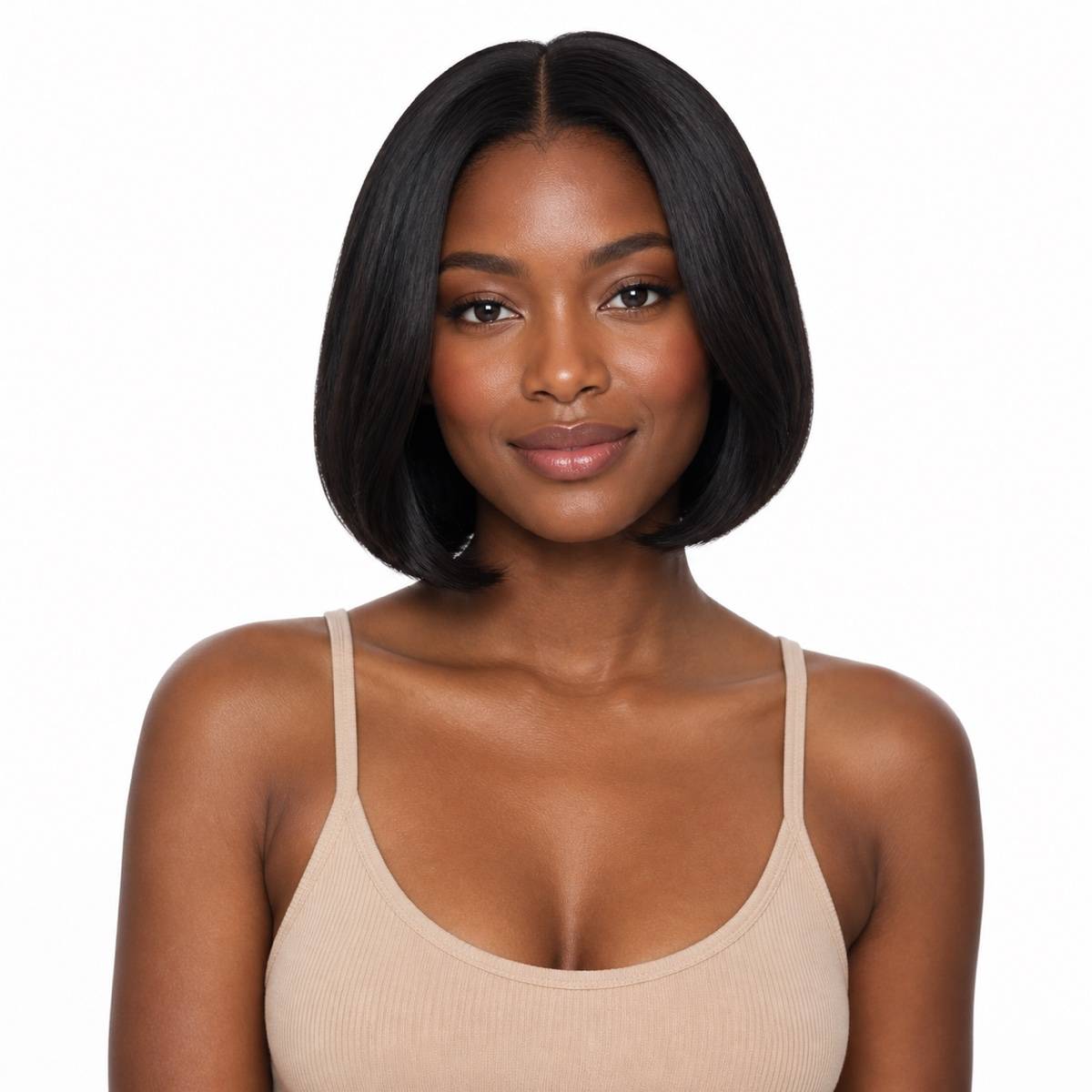
A middle part bob can look clean, expensive, and easy. It can also feel harsh if the length, weight line, or part placement does not match your face and hair texture. The cut is simple on paper: a bob worn with a center part. The decision is not simple, because a center part draws attention to symmetry, cheekbones, jaw shape, and how the hair falls on both sides of the face.
The short answer: a middle part bob works best when the length and edge are adjusted to your face shape and styling habits. If you want sharp structure, choose a blunt or slightly angled bob. If you want softness, choose a layered bob, a collarbone bob, or a bob with light face framing. Before cutting, preview the outline on your own photo in HairWow's hairstyle try-on, then bring your favorite angle and length notes to your stylist.
Key Takeaways
- A middle part bob is not one haircut. The best version depends on length, edge shape, layering, texture, and how flat or full you want the sides to look.
- Round and square faces often need a little length below the chin or a softer front edge. Oval faces can usually wear the widest range of middle part bob lengths.
- Fine hair usually benefits from a cleaner blunt line. Thick hair usually needs hidden weight removal or soft layers so the bob does not form a triangle.
- Curly and wavy hair can wear a middle part bob, but the dry shape matters more than the wet salon length.
- If you rarely use heat tools, avoid a bob that only looks right after flat ironing. Pick a version that behaves with your normal routine.
What Is a Middle Part Bob?
A middle part bob is a bob haircut divided near the center of the head, with the hair falling evenly on both sides. The length can sit at the jaw, chin, neck, or collarbone. The ends can be blunt, softly beveled, angled forward, layered, or textured.
The middle part changes the visual effect of the bob. A side part creates asymmetry and can add lift at the front. A middle part creates balance, which is why the cut can look modern and polished. That same balance can also make small details more visible: uneven density, a cowlick, a strong jawline, or one side that flips out.
That is why the question is not simply "Can I wear a middle part?" The better question is "Which middle part bob gives my face and hair the right amount of structure?"
Which Middle Part Bob Should You Choose?
Use the table below as a starting point, then adjust the exact length with your stylist.
| Middle part bob type | Best for | Watch out for | Salon wording |
|---|---|---|---|
| Blunt middle part bob | Fine to medium hair that needs a fuller edge | Can look severe on very square or very long faces | "Keep the perimeter clean and blunt, with minimal layering." |
| Soft layered bob | Thick, wavy, or dense hair that needs movement | Too many short layers can make the shape puff out | "Keep the bob outline, but remove weight through soft internal layers." |
| Angled bob | People who like a longer front and a sharper profile | A steep angle can exaggerate a long chin or thin ends | "Slightly longer in front, shorter at the back, not too stacked." |
| French bob with middle part | Petite features, cheekbone focus, low-effort texture | Can feel too short if you rely on ponytails | "Chin-length or just below, soft ends, natural texture." |
| Collarbone bob | Anyone nervous about going too short | Can become more of a lob if the back is too long | "Collarbone-grazing, center part, enough length to tuck or wave." |
| Curly middle part bob | Waves and curls that have balanced volume | Shrinkage can make the final length much shorter | "Cut for my dry curl shape and keep the sides balanced." |
If you are choosing between a classic bob and a more dramatic long-front shape, compare this guide with our long front, short back bob guide. The long-front version gives more angle; the middle part version gives more symmetry.
Face Shape Notes
Face-shape advice should never be treated like a rulebook. It is a way to decide where the bob should sit and how much softness to add around the front.
| Face shape | Strong middle part bob choice | Why it works | Adjustment to ask for |
|---|---|---|---|
| Oval | Chin, jaw, or collarbone bob | Balanced proportions can handle most lengths | Choose based on texture and upkeep, not just face shape. |
| Round | Chin-to-collarbone bob with a clean vertical fall | The center line and longer sides can visually lengthen the face | Avoid a very wide, cheek-level triangle shape. |
| Square | Soft layered bob or slightly longer front | Softness around the jaw keeps the cut from looking boxy | Ask for a less severe edge near the corners of the jaw. |
| Heart | Chin-length or collarbone bob | Adds visual balance around the jaw and lower face | Avoid too much width high at the temples. |
| Long | Jaw-to-chin bob with controlled volume | Width around the sides can balance length | Avoid an ultra-flat, very long lob with no side shape. |
| Diamond | Cheekbone-softening bob | Lets the center part frame the cheekbones without widening too much | Keep the sides soft and avoid bulky ends at the cheekbone. |
If you are unsure, use HairWow's face-shape hairstyle flow before your appointment. The goal is not to label your face perfectly. The goal is to see whether the bob should be blunt, soft, short, or slightly longer.
Hair Texture Matters More Than the Trend Photo
The same middle part bob can behave very differently on fine straight hair, dense straight hair, loose waves, or curls.
Fine hair usually looks fuller with a stronger perimeter. If your hair collapses quickly, too many layers can make the bob look thinner at the ends. Ask for a clean line, light beveling, and styling advice that does not depend on heavy products.
Thick hair usually needs weight control. A blunt bob on dense hair can look beautiful, but only if the interior is shaped well. Ask your stylist to remove bulk without shredding the bottom line. If you have a lot of hair at the nape, discuss how the back will sit when it grows out.
Wavy hair needs a shape that works when air-dried. A middle part bob can look effortless with waves, but the shortest layers should not spring too wide around the cheeks unless that is the look you want.
Curly hair needs dry-shape thinking. The wet salon length may not be the real finished length. If your curls shrink, ask your stylist to cut with shrinkage in mind and to show where the bob will sit dry.
How Short Should the Bob Be?
Length is the biggest commitment. If you are nervous, start slightly longer. You can always cut more at the next appointment.
| Length | Visual effect | Best when | Maintenance level |
|---|---|---|---|
| Jawline | Sharp, editorial, face-focused | You want a bold change and do not need to tie it back | High |
| Chin | Classic bob shape with strong face framing | You want a clear bob without going ultra short | Medium-high |
| Neck | Clean but more forgiving | You want shape with a little more movement | Medium |
| Collarbone | Softer, safer, easier to style | You are transitioning from long hair or want tie-back options | Low-medium |
Cleveland Clinic explains that scalp hair grows about 1 centimeter per month. That is why even one inch too short can feel like a long wait. If you are unsure, preview the jawline, chin, and collarbone versions first, then cut in stages.
What to Ask Your Stylist For
Bring photos, but do not rely on photos alone. A useful salon brief describes the length, part, edge, weight, texture, and daily styling limit.
Try this wording:
I want a middle part bob that works with my natural texture. I like the center part and balanced shape, but I do not want the sides to feel too bulky. Please keep the length around [jaw/chin/neck/collarbone], adjust the front for my face shape, and show me how it will sit when I style it normally.
Then add specifics:
- "I want a blunt edge" or "I want a softer edge."
- "I need enough length to tuck behind my ears."
- "I do not want daily flat ironing to be required."
- "Please avoid thinning the ends too much."
- "If my part is not perfectly centered, place it where my hair naturally splits."
That last point matters. A middle part does not have to be mathematically perfect. If your cowlick or growth pattern fights the exact center, a slightly off-center part can still read as a middle part while being easier to wear.
How to Preview the Cut Before You Commit
A middle part bob is a visual decision, so use a visual workflow.
- Upload a clear photo in HairWow hairstyle try-on.
- Try a classic bob first so you can judge the short outline.
- Compare a softer layered option if the blunt version feels too strong.
- Try a longer wavy or collarbone-length direction if you want a safer transition.
- Save the best preview and bring it to your stylist with notes about length, part, and edge.
Do not use a try-on result as a technical haircut blueprint. Use it as a shared reference. Your stylist still needs to adapt the cut to density, curl pattern, growth direction, and how you actually style your hair.
Care and Styling Without Overworking the Hair
The easiest middle part bob is the one that suits your real routine. If the cut only looks good after 25 minutes of hot tools, it may not be the right version for daily life.
For a sleek finish, dry the roots in the direction you want the part to fall, then smooth the ends with a brush or low-heat tool. For waves, apply a light leave-in or curl cream, scrunch gently, and let the cut keep some natural movement. For thick hair, ask your stylist where to place product so the sides do not expand too much. For fine hair, use less product than you think; heavy cream can flatten the perimeter.
Hair-health guidance from the American Academy of Dermatology repeatedly points to gentle handling, heat awareness, and choosing habits that reduce damage. See its guidance on healthy hair tips, styling without damage, and hair habits that can damage hair. This matters because a bob puts the ends and face-framing pieces on display.
Common Mistakes
The first mistake is cutting too short because the inspiration photo is styled perfectly. If the model has a different hair density, curl pattern, or face length, your version may need a different finish.
The second mistake is asking for a blunt bob when your hair needs weight control. Blunt does not have to mean heavy. A stylist can keep the edge clean while shaping the interior.
The third mistake is forcing an exact center part when your hair naturally splits slightly off-center. A wearable part beats a perfect line that collapses after ten minutes.
The fourth mistake is ignoring the grow-out. If you want a style that still looks good after eight weeks, avoid a length that only works when freshly trimmed.
Middle Part Bob FAQ
Does a middle part bob make your face look longer?
It can. The center line and vertical sides can visually lengthen the face, especially when the bob sits below the chin. If your face already feels long, choose more side movement, a jaw or chin length, or soft waves so the shape adds width.
Is a middle part bob good for round faces?
Yes, if the length and sides are controlled. A chin-to-collarbone bob with a clean fall can make the face look more balanced. Avoid a very wide cheek-level bob if you do not want extra roundness.
Can curly hair wear a middle part bob?
Yes. The key is cutting for the dry curl shape, not just the wet length. Ask for balanced sides, enough internal shape, and a length that accounts for shrinkage.
Is a blunt or layered middle part bob better?
Choose blunt if you want a stronger edge and have fine to medium hair. Choose layered if your hair is thick, wavy, curly, or needs more movement. Many people do best with a clean perimeter and subtle internal shaping.
How often should a middle part bob be trimmed?
Most bobs need a trim every six to eight weeks to keep the line crisp. Softer collarbone bobs can often stretch longer. Very blunt jawline bobs show grow-out faster.
What if my middle part never stays centered?
Use your natural split as the starting point. A slightly off-center middle part can look intentional and will usually behave better than a forced exact center.
Sources
- American Academy of Dermatology: Tips for healthy hair
- American Academy of Dermatology: Hair styling without damage
- American Academy of Dermatology: 10 hair care habits that can damage your hair
- Cleveland Clinic: Hair follicle function and structure
- NCBI Bookshelf: Physiology, Hair