Wavy Hair Fringe Hairstyles: Curtain, Wispy, Side, and Shag Options
Compare wavy hair fringe hairstyles by wave pattern, face shape, density, styling effort, shrinkage, and salon wording before cutting bangs.

· 13 min read

On this page
Wavy hair fringe can look soft, effortless, and face-framing when the cut respects the bend of the hair. The risk is that waves do not sit like straight hair. A fringe that looks below the brow when wet can spring upward when dry, split around a cowlick, or become too heavy if too much hair is pulled forward.
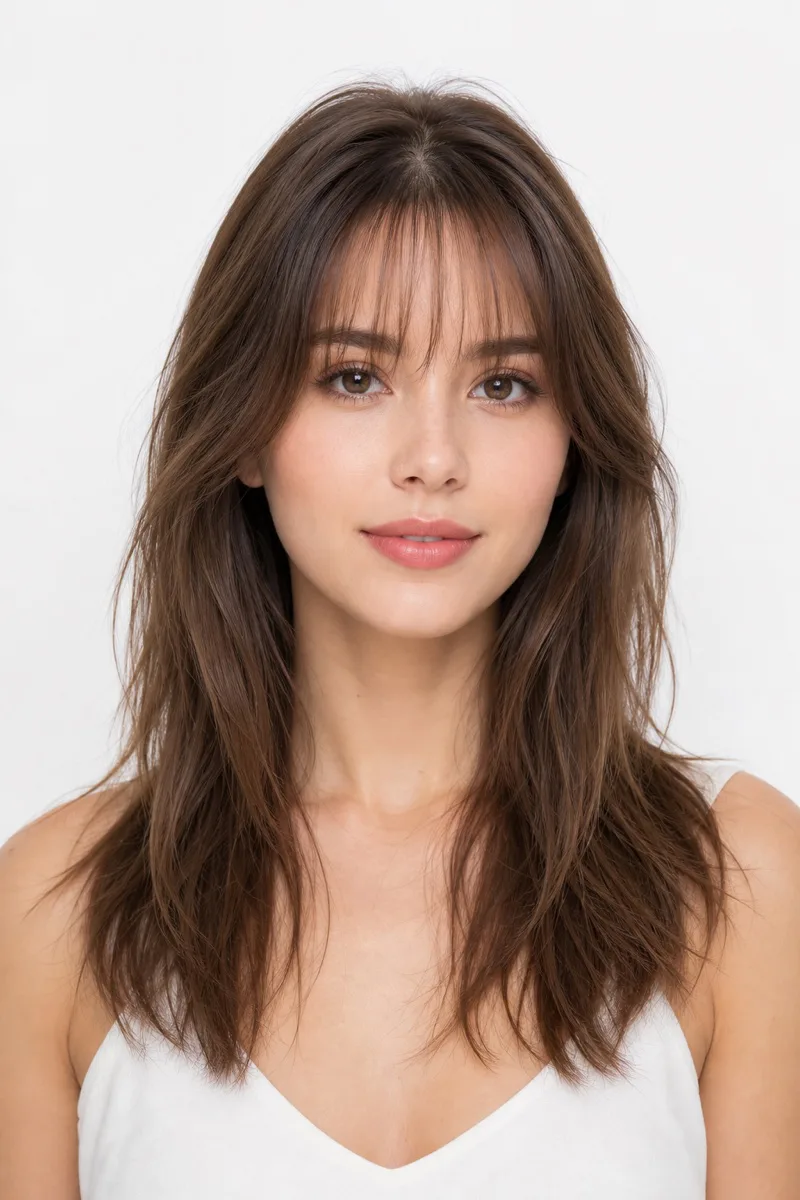
The safest answer for most people with wavy hair is a curtain fringe or long cheekbone fringe. Both keep the shortest pieces long enough to blend into layers if you change your mind. Wispy fringe works when the front section is fine to medium density. A shag fringe works when you want texture to be part of the style. Blunt bangs can work on waves, but they need a more deliberate routine.
Before cutting the front pieces, compare the length in HairWow's AI hairstyle try-on. A fringe changes the way your eyes, forehead, cheekbones, and jawline read. Previewing it first helps you decide whether you want a soft opening, a side sweep, a full bang line, or a grown-out face frame.
Key takeaways
- Curtain fringe is the lowest-risk wavy fringe because it opens in the center and grows out softly.
- Wavy bangs should usually be cut dry or nearly dry so the stylist can see shrinkage and bend.
- Fine wavy hair needs a lighter fringe so the sides do not look thin.
- Thick wavy hair can handle a shag or bottleneck fringe, but the weight must be removed carefully.
- Cowlicks, uneven shrinkage, and a strong front hairline are reasons to start longer.
- The first salon brief should name length, density, parting, and how much forehead you want visible.
- The American Academy of Dermatology recommends gentle handling and limiting damaging heat habits, which matters when fringe is styled every day.
Definition: A wavy hair fringe is the shorter front section of a haircut, shaped to fall with a natural wave pattern around the forehead, brows, eyes, or cheekbones instead of sitting as a perfectly straight line.
Quick answer
Choose curtain fringe if you want the most forgiving wavy bangs. Ask for a dry cut, a soft center split, and side pieces that reach the cheekbones. Keep the shortest center point a little longer than your ideal final length because waves can shrink after drying.
For a first appointment, use this brief:
"I want soft curtain fringe for wavy hair. Please cut it dry or nearly dry, keep the center long enough to sit around my brows, and blend the sides into my layers so it grows out softly."
If your hair is thick, add:
"Please remove weight without thinning the ends into frizz."
If your hair is fine, add:
"Please keep the fringe airy so it does not take too much density from the sides."
Best wavy fringe hairstyles
| Fringe style | Best for | What to ask for | Maintenance |
|---|---|---|---|
| Curtain fringe | First-time bangs, soft face framing | Center-opening fringe with cheekbone side pieces | Trim every 6 to 8 weeks |
| Long cheekbone fringe | Low-maintenance change | Front pieces that start near the cheekbones and blend into layers | Trim every 8 to 10 weeks |
| Wispy wavy fringe | Fine to medium waves | Light, see-through ends with no heavy bang triangle | Trim every 4 to 6 weeks |
| Side-swept fringe | Round, heart, or square faces | Diagonal fringe that follows your natural part | Trim every 5 to 7 weeks |
| Shag fringe | Medium to thick waves | Broken texture that connects to shag layers | Trim every 6 to 8 weeks |
| Bottleneck fringe | Oval, long, or heart faces | Shorter center with longer curved sides | Trim every 5 to 7 weeks |
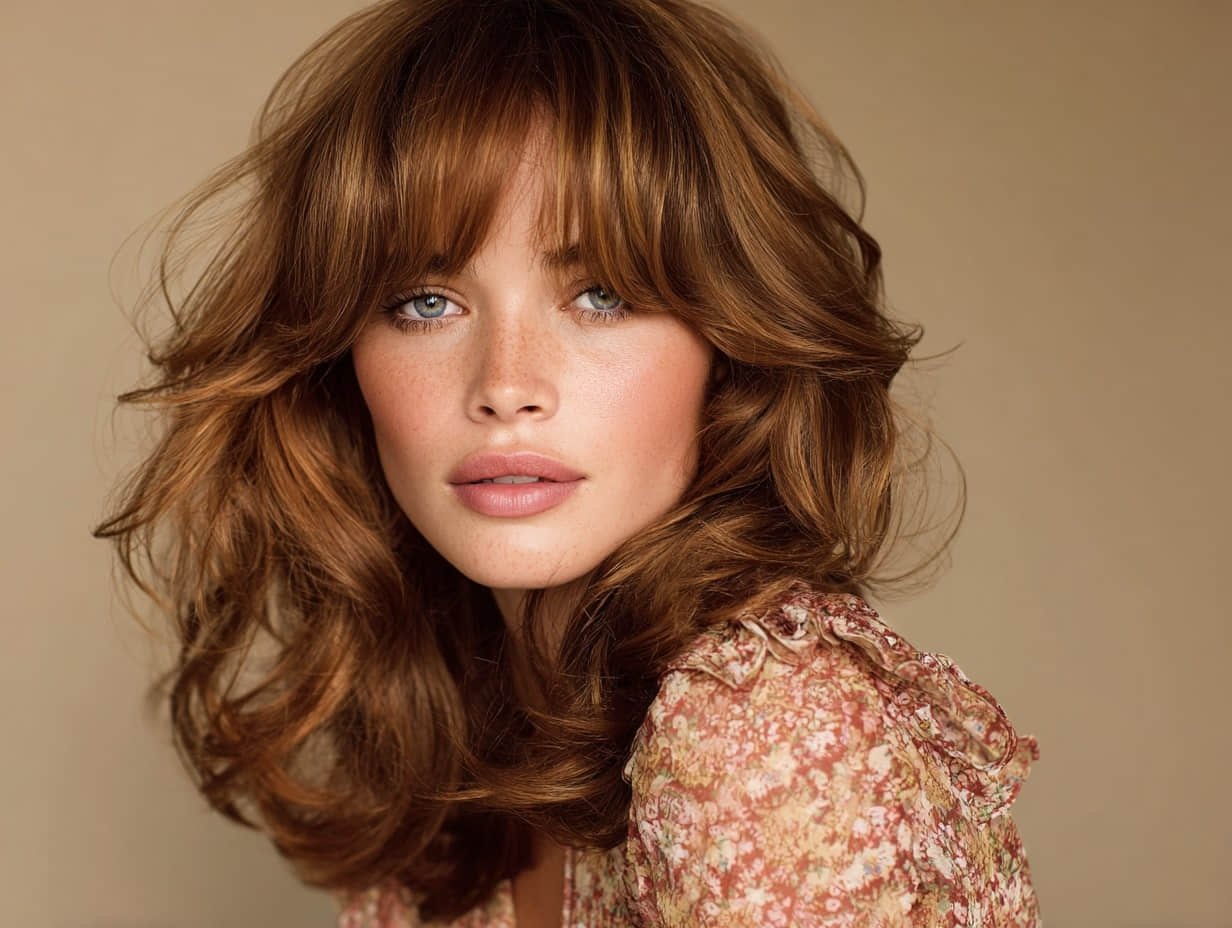
| Bardot fringe | Soft retro volume | Long parted bangs with face-framing movement | Trim every 6 to 8 weeks |
| Wavy bob fringe | Chin to collarbone cuts | Light fringe that does not overpower the bob | Trim every 4 to 6 weeks |
| Curly-wavy fringe | Strong wave pattern or loose curls | Dry curl-by-curl shaping through the front | Trim as shape changes |
| Micro wavy fringe | Bold short fringe | Short textured fringe with visible wave | High upkeep |
| Blended face frame | Fringe without full bangs | Short front layer, not a solid bang line | Low upkeep |
Which fringe fits your face shape?
Face-shape advice is a starting point. The best fringe also depends on forehead height, hairline growth pattern, density, and where your waves bend.
| Face shape | Strong wavy fringe options | Why it works | Adjustment to request |
|---|---|---|---|
| Round | Curtain fringe, side fringe, long cheekbone fringe | Diagonal or opened lines reduce the feeling of width | Keep the center open and avoid a very round bang curve |
| Square | Wispy fringe, shag fringe, bottleneck fringe | Broken texture softens the forehead and jaw relationship | Avoid a heavy straight line unless you want strong contrast |
| Long | Fuller curtain fringe, Bardot fringe, brow-length fringe | More front coverage can balance vertical length | Do not add too much crown height with styling |
| Heart | Side fringe, cheekbone fringe, bottleneck fringe | Longer sides balance the forehead and narrower chin | Keep side pieces soft around the cheekbones |
| Oval | Most fringe shapes | Balanced proportions can handle different silhouettes | Choose by texture and maintenance |
| Diamond | Curtain fringe, soft side fringe, wavy shag fringe | Movement can soften cheekbone width | Avoid bulky weight right at the cheekbones |
If face shape is the main question, compare this with the HairWow face-shape guide, then preview two fringe densities in try-on.
Match the fringe to your wave pattern
Wavy hair is not one texture. Loose bends, S-waves, and curl-adjacent waves all behave differently at the front hairline.
| Wave pattern | Best fringe direction | What to avoid |
|---|---|---|
| Loose 2A waves | Curtain, cheekbone, or side fringe | Over-layering the front until it looks stringy |
| Medium 2B waves | Bottleneck, shag, or Bardot fringe | Cutting wet and discovering the center jumps up |
| Strong 2C waves | Curly-wavy fringe or long shag fringe | A blunt line that fights the wave pattern |
| Mixed waves and curls | Dry-shaped curtain or curl-by-curl fringe | Thinning shears through the ends if they cause frizz |
| Fine wavy hair | Wispy fringe or blended face frame | Pulling too much hair from the crown into the fringe |
| Thick wavy hair | Shag fringe, bottleneck fringe, long side fringe | Leaving the bang triangle too dense and puffy |
The goal is not to force every strand forward. The goal is to shape the pieces that naturally want to live around the face.
How to ask your stylist
Bring more than one photo and explain how your hair behaves on normal days. Photos help with mood, but the stylist still needs practical boundaries.
Use this checklist:
- "Cut the fringe dry or nearly dry so we can see the real wave."
- "Keep the first version longer than the final idea."
- "Blend the side pieces into my layers so the grow-out is soft."
- "Keep the fringe light enough that it does not steal density from the sides."
- "Please do not stretch the waves straight before choosing the length."
- "Show me where the shortest point will sit after my hair dries."
- "I want movement, not a thick straight bang line."
If you have a cowlick, say that before the cut starts. A cowlick does not rule out fringe, but it changes the parting and the shortest safe length.
What to avoid with wavy fringe
The most common mistake is cutting the fringe too short on wet hair. Wet waves stretch. When they dry, the front can jump higher than expected. The second mistake is making the bang triangle too deep. Pulling too much hair forward can leave the sides thin and make the fringe puffy.
Be careful with:
- Heavy blunt bangs if you do not want daily styling.
- Very short fringe if your front waves shrink unevenly.
- Razor work on fragile or frizz-prone ends.
- Dry brushing after the fringe has already formed waves.
- Strong heat every morning without protection or recovery days.
- Bangs cut from a forced middle part if your natural part is strong.
The AAD recommends gentle hair handling and avoiding damaging heat habits. That advice becomes more important with fringe because front hair is handled, misted, brushed, or heat-styled more often than the rest of the haircut.
Styling routine for wavy bangs
Start simple. Mist the fringe, apply a tiny amount of leave-in spray or light curl cream, and pinch the front into two or three loose wave groups. Let it air dry when possible. If the roots collapse or separate in the wrong place, use a round brush or your fingers for a brief low-heat reset.
For second-day fringe:
| Problem | Quick fix | Avoid |
|---|---|---|
| Fringe splits too wide | Mist the root, redirect with fingers, let it dry in place | Coating the whole fringe in heavy cream |
| Ends look frizzy | Use a pea-size amount of lightweight cream on the ends | Brushing dry waves flat |
| Fringe sits too high | Stretch only the center slightly while damp | Pulling every piece straight |
| Roots look oily | Use dry shampoo at the root, then shake out | Adding more styling product |
| Side pieces flip out | Mist and clip them toward the cheekbone for a few minutes | Hot-tooling the same front pieces daily |
If the fringe only looks good after aggressive heat styling, the cut is probably too short, too heavy, or not following your natural wave pattern.
Curtain, wispy, or side-swept: which is safest?
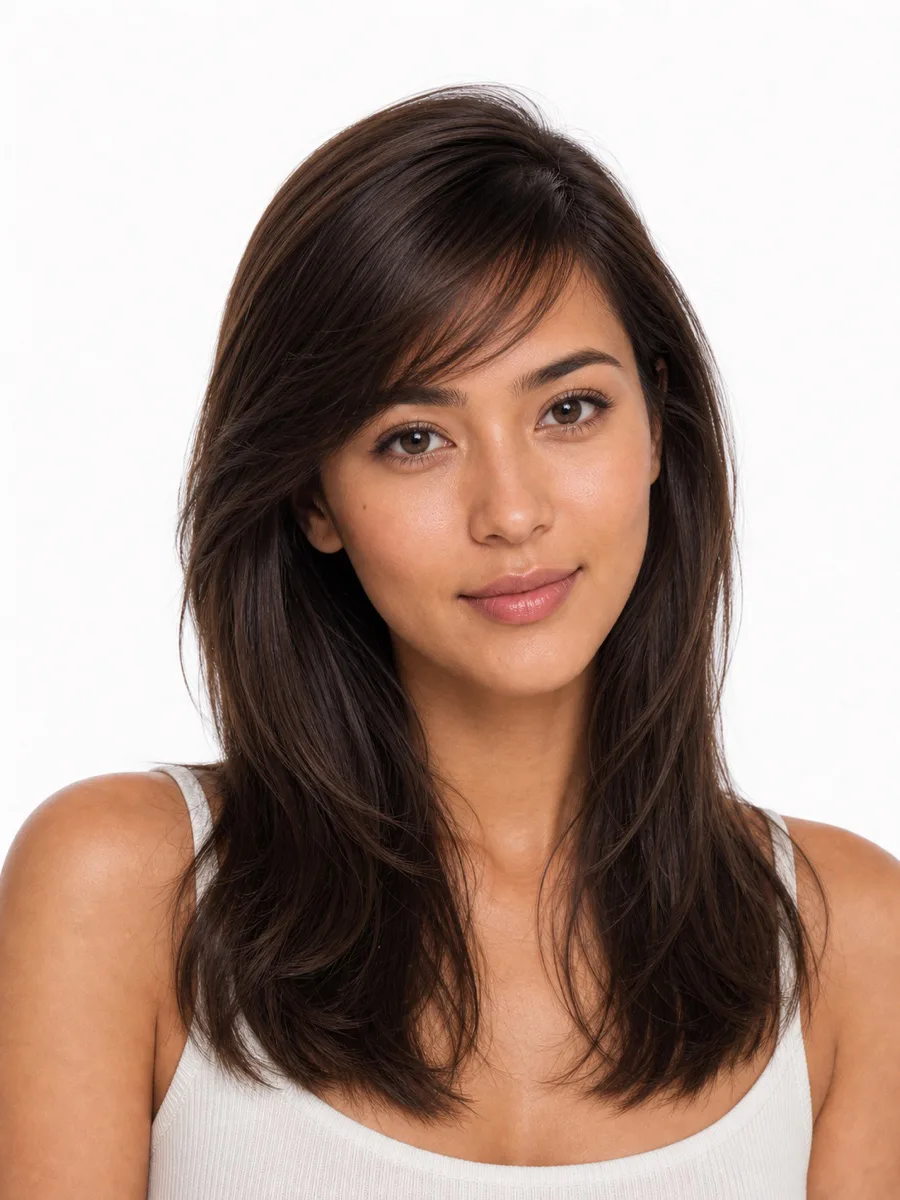
For most people, curtain fringe is safest because it can be worn open, swept, or grown into face-framing layers. Wispy fringe is safest for fine hair because it avoids a dense bang wall. Side-swept fringe is safest if your hair naturally parts to one side or if you want face framing without committing to a center-opening look.
Choose by risk:
| If you are worried about... | Start with... | Why |
|---|---|---|
| Regretting bangs | Long cheekbone fringe | It grows into layers quickly |
| Daily styling | Curtain fringe | It can split naturally |
| Thin-looking sides | Wispy fringe | It uses less hair |
| A round face | Side or curtain fringe | It adds diagonal movement |
| A cowlick | Longer side-swept fringe | It works with a stronger part |
| Too much forehead coverage | Bottleneck fringe | It opens around the center |
Try it before the appointment
Use HairWow Try-On as a fringe fitting room. Upload a clear front-facing photo, then compare a soft curtain shape, a wispy bang, and a side-swept bang. Look at three details: whether your eyes feel more open, whether the cheekbones look balanced, and whether the side pieces make your face look wider or softer.
Save the best preview and bring it to the stylist with the salon brief above. The preview is not a technical cutting map. It is a communication tool that helps you describe density, parting, and the visual effect you want.

When to wait
Wait or start with longer face framing if your front hairline is recovering from breakage, your hair is very dry from bleach or heat, or you are not ready for regular trims. A fringe is small, but it sits in the most visible part of the haircut.
Run Hair Analyze first if the front pieces are breaking, frizzing, or thinning more than the rest of your hair. A care issue can make any fringe look harder to maintain than it should.
FAQ
Are bangs good for wavy hair?
Yes, bangs can be good for wavy hair if they are cut for shrinkage and natural bend. Curtain fringe, cheekbone fringe, and shag fringe are usually more forgiving than a heavy blunt line.
Should wavy fringe be cut wet or dry?
Dry or nearly dry is safer because it shows the real length, parting, and wave pattern. Wet cutting can work for the main shape, but the final fringe length should be checked dry.
What is the easiest wavy fringe to maintain?
Curtain fringe or long cheekbone fringe is easiest because it can split naturally and grow into layers. Very short or blunt fringe usually needs more styling and trims.
Can I have wavy fringe with fine hair?
Yes, but keep it light. A wispy fringe or blended face frame usually works better than a deep, heavy bang triangle because it preserves density at the sides.
Can thick wavy hair have bangs?
Yes. Thick wavy hair can support shag fringe, bottleneck fringe, and Bardot fringe, but the stylist should remove weight carefully so the ends do not puff or frizz.
What should I say to my stylist before cutting wavy bangs?
Say how your hair dries, where it naturally parts, how much daily styling you will do, and whether you want the fringe to grow out into layers. Ask for the first cut to stay longer than the final idea.
Sources and style notes
- American Academy of Dermatology: Tips for healthy hair
- American Academy of Dermatology: How to stop damaging your hair
- NCBI Bookshelf: Hair cosmetics and hair care
These sources inform the care guidance around heat, breakage, gentle handling, and product use. The fringe recommendations are HairWow editorial guidance based on face-framing proportions, wavy-hair styling behavior, salon wording, and try-on use cases.
Summary
The best wavy hair fringe looks like it belongs to your natural texture. Start with curtain, cheekbone, or wispy fringe; cut it dry or nearly dry; keep the first version longer; and preview the shape before scissors touch the front section.