Pixie Haircuts for Thick Hair: Tapered, Textured, and Bixie Options
Compare pixie haircuts for thick hair by density, wave pattern, face shape, grow-out risk, and styling effort before cutting short.

· 13 min read

On this page
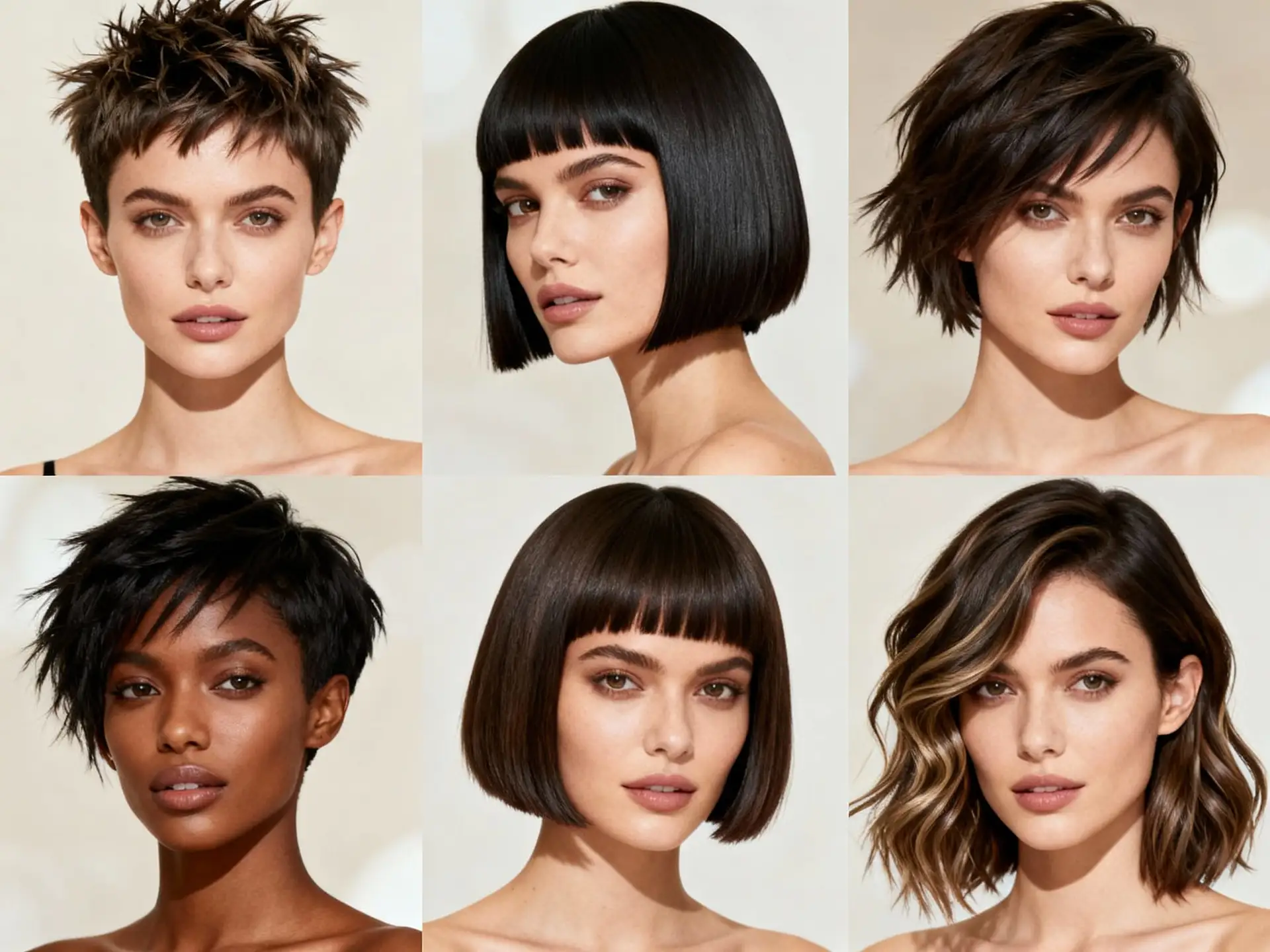
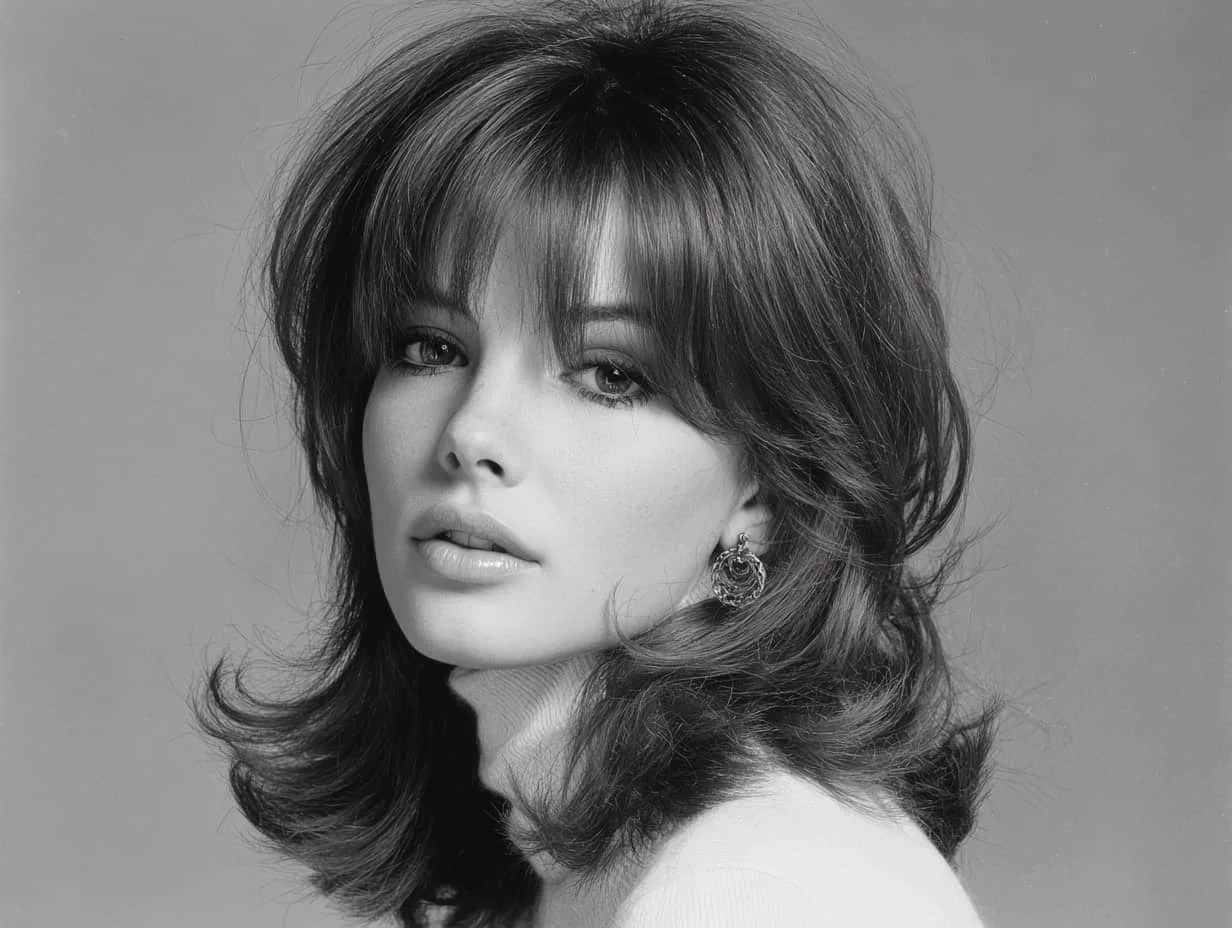
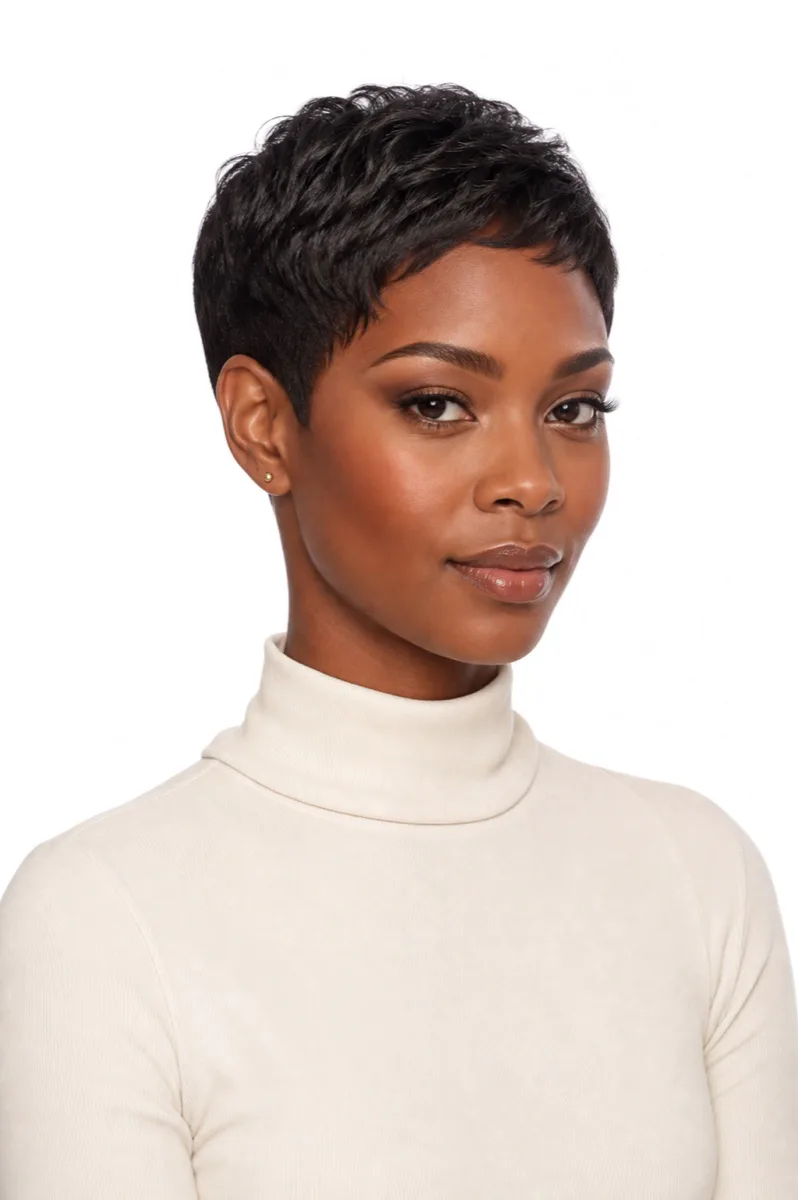
Pixie haircuts can work very well on thick hair, but the cut has to manage density before it manages length. The safest thick-hair pixie is usually a long textured pixie, tapered pixie, or bixie because those shapes remove weight without turning the top into a stiff rounded cap.
The risk is not that thick hair is "too much" for a pixie. The risk is cutting the outside short while leaving the inside too heavy. That creates the helmet shape people worry about. A good pixie for thick hair uses internal layering, soft tapering around the nape and ears, and enough top length for movement.
Before cutting from medium or long hair to a pixie, preview the short outline in HairWow Try-On. Thick hair keeps more volume after the cut than many people expect, so compare a softer pixie, a shorter tapered version, and a curly or wavy option before choosing the final salon brief.
Key takeaways
- Thick hair usually needs internal weight removal, not just a shorter outline.
- A long pixie or bixie is the safest first short cut because it leaves room to adjust.
- Tapered sides and a tapered nape can control bulk without making the cut look severe.
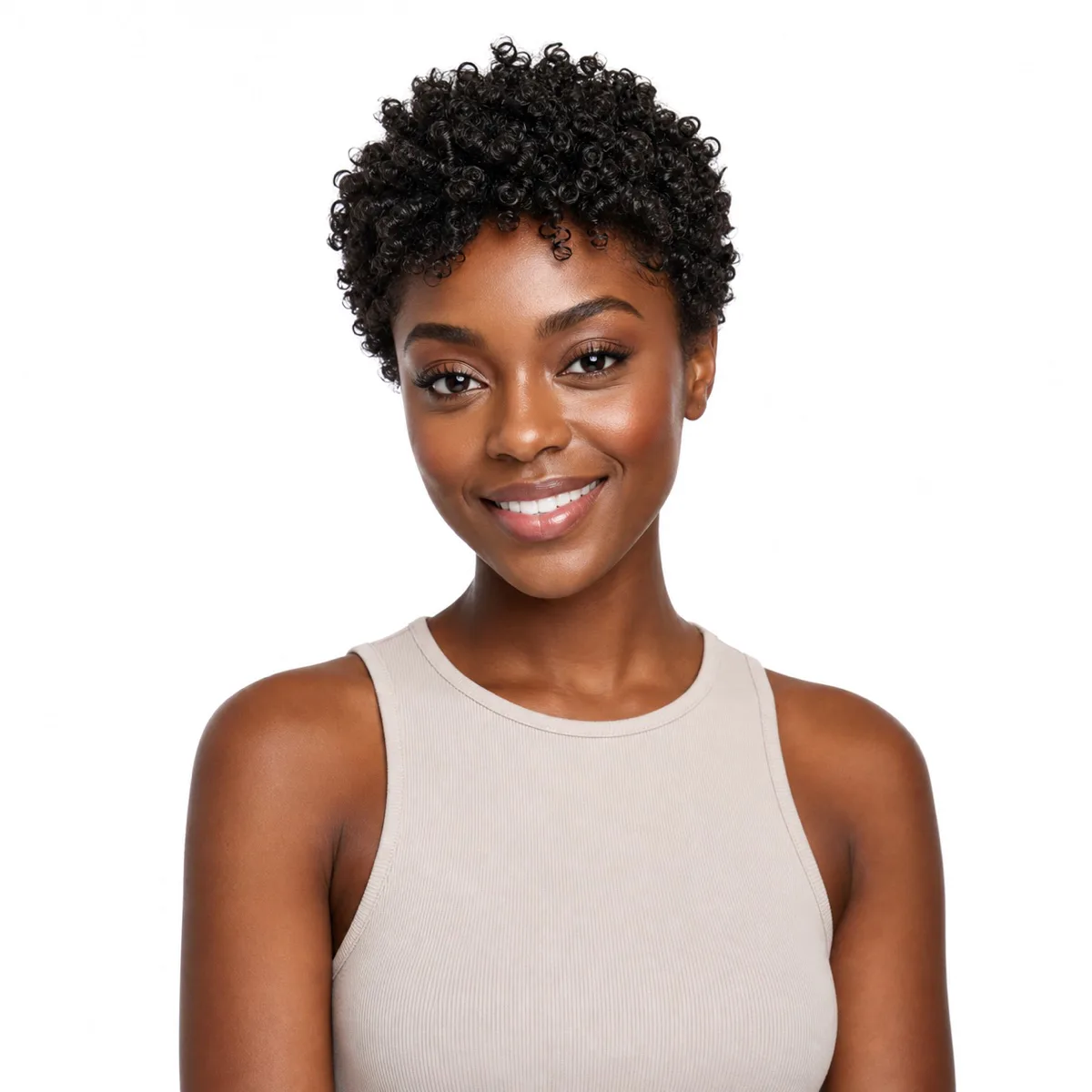
- Curly, coily, or strongly wavy thick hair should keep enough top length for the pattern to form.
- Undercut pixies can help very dense hair, but they change the grow-out.
- Bring side and back references, not only front-facing inspiration photos.
- The AAD recommends gentle handling and limiting damaging heat habits, which matters when short thick hair is styled often.
Contents
- Quick answer
- Best pixie haircuts for thick hair
- Choose by density and texture
- Face-shape notes
- What to ask your stylist
- Styling thick pixie hair
- When to wait
- FAQ
Definition: A pixie haircut for thick hair is a short cut shaped to control density through internal layering, tapering, texture, and length placement so the hair sits close without looking bulky or losing all movement.
Quick answer
If you have thick hair and want a pixie, start with a long textured pixie or bixie. Ask your stylist to remove weight internally, keep enough length on top for movement, taper the nape softly, and avoid a solid round cap shape. If your hair is very dense at the sides, ask about a hidden undercut or stronger taper, but only if you are comfortable with the grow-out.
Use this salon wording:
"I want a pixie that controls thick hair without making the top look round. Please remove weight internally, keep movement through the top and fringe, taper the nape and sides softly, and show me how it sits without heavy product."
If your hair is wavy or curly, add:
"Please cut with my shrinkage and wave pattern in mind. I want the top long enough for the texture to form."
Best pixie haircuts for thick hair
| Pixie style | Best for | Why it works on thick hair | Main risk |
|---|---|---|---|
| Long textured pixie | First short cut, thick straight or wavy hair | Keeps softness while removing weight | Can still puff if the crown is left too heavy |
| Tapered pixie | Dense sides, heavy nape, clean neckline | Controls bulk around ears and back | Too tight can feel harsh if the top is not balanced |
| Bixie | Bob-to-pixie transition, nervous first-timers | Keeps a little bob softness with shorter control | Can become shapeless if not layered well |
| Side-swept pixie | Round, heart, or square faces | Adds diagonal movement and softens the forehead | Long fringe can get heavy if not texturized |
| Undercut pixie | Very thick straight or wavy hair | Hides weight removal underneath the top layer | Grow-out can be obvious |
| Shaggy pixie | Thick wavy hair, textured personal style | Turns volume into intentional texture | Can look messy if the outline is not clean |
| Curly pixie | Thick curls or strong waves | Keeps curl shape visible with shorter sides | Shrinkage can make the cut shorter than planned |
| Piecey crop | Straight thick hair | Breaks up the surface with separation | Too much wax can make it stiff |
| Soft feminine pixie | Oval, square, or heart faces | Keeps edges light around temples and neck | Needs precise trimming to avoid bulk |
| Pixie with fringe | Higher forehead or strong cheekbones | Balances the face and gives styling options | Fringe can separate or puff without shaping |
The best option is usually the one that solves your real problem. If your hair expands at the sides, choose tapering. If the top feels heavy, choose internal layering. If you are afraid of going too short, choose a bixie or long pixie first.
Choose by density and texture
Thick hair is not one thing. Two people can both have thick hair and need opposite pixie shapes because the strand size, wave pattern, and growth direction are different.
| Hair type | Better pixie direction | What to avoid |
|---|---|---|
| Thick straight hair | Piecey crop, tapered pixie, long textured pixie | A blunt heavy top with no separation |
| Thick wavy hair | Shaggy pixie, side-swept pixie, long pixie | Cutting too short before seeing dry shrinkage |
| Thick curly hair | Curly pixie with length on top | Wet cutting that ignores curl spring |
| Very dense sides | Tapered sides or hidden undercut | Leaving the side panels solid and square |
| Heavy nape | Tapered nape, soft undercut, cleaned neckline | A bulky back that grows out immediately |
| Coarse thick hair | Internal layering and soft edge work | Overusing thinning shears through the ends |
| Fine but dense hair | Long pixie or bixie with light movement | Removing so much weight that the ends look sparse |
Internal weight removal should not mean shredding the ends. If your hair frizzes easily, ask your stylist how they plan to remove bulk. Point cutting, slide cutting, razor work, thinning shears, and undercutting all create different finishes. The tool matters less than whether it fits your texture.
Face-shape notes
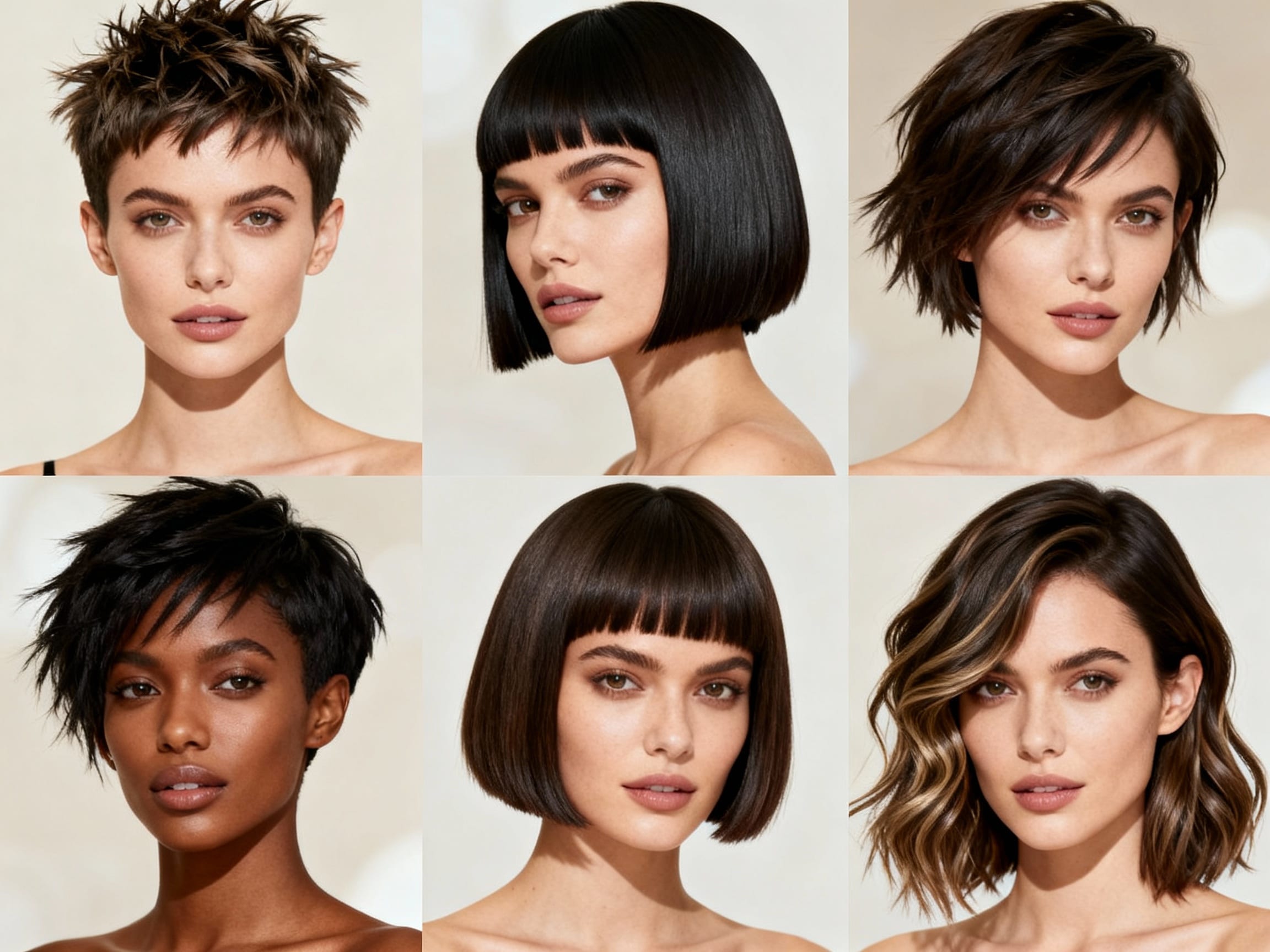
Face-shape advice is useful only when it is paired with density. A pixie that flatters a round face on fine hair can look too wide on thick hair if the sides are left full.
| Face shape | Strong pixie options | Adjustment for thick hair |
|---|---|---|
| Round | Side-swept pixie, tapered pixie, long textured pixie | Keep the sides controlled and add a little height or diagonal movement |
| Square | Soft feminine pixie, shaggy pixie, longer fringe | Break up hard lines around the temples and jaw |
| Long | Bixie, fuller fringe pixie, low-volume crop | Avoid too much crown height |
| Heart | Side fringe pixie, long pixie, tapered nape | Keep softness near the forehead and cheekbones |
| Oval | Most pixie shapes | Choose by texture and maintenance rather than face shape alone |
| Diamond | Long pixie, side-swept pixie, textured crop | Avoid adding bulk directly at the cheekbones |
If face shape is your main concern, compare the short-hair result with the HairWow face-shape guide. A pixie changes the balance between forehead, cheekbones, ears, and jaw more than a shoulder-length cut does.
What to ask your stylist
Bring references that show the front, side, and back. Thick pixies often look good from the front and then fail at the ears or nape because those zones were not planned.
Use this checklist:
- "Please remove weight inside the cut, not just at the ends."
- "Keep enough length on top for movement."
- "Taper the nape and sides so they do not puff out."
- "Do not make the top a solid round cap."
- "Show me how much product this cut will need on a normal day."
- "If you use thinning shears or a razor, please keep the ends from looking frizzy."
- "I want the cut to grow into a bixie or short bob, not into a bulky mushroom shape."
For a first pixie, ask your stylist to leave the shortest version for the second appointment. You can always remove more length after living with the shape for two weeks. You cannot put back the side length if the first cut goes too tight.
Styling thick pixie hair
Use less product than you think. Thick short hair can become stiff quickly because product has nowhere to disappear. Start with a pea-size amount of matte paste, light cream, or flexible styling balm. Warm it between your hands, then work it through the mid-lengths and ends instead of coating the roots.
For straight thick pixies:
- Mist or lightly dampen the top.
- Blow-dry in the direction you want the hair to sit.
- Add a small amount of paste only where pieces need separation.
- Use your fingers, not a hard brush, for the final shape.
For wavy or curly thick pixies:
- Apply a small amount of curl cream while damp.
- Scrunch the top into the direction of the wave.
- Air dry or diffuse on low.
- Separate only a few pieces once dry.
AAD hair-care guidance emphasizes gentle handling and avoiding habits that repeatedly damage hair. That is relevant here because short thick hair is often restyled at the front, crown, and sides every morning. If the cut only works with high heat and strong product every day, the shape may need adjustment.
Taper, undercut, or layers?
These terms are often mixed together, but they solve different problems.
| Technique | What it does | Best when | Watch out for |
|---|---|---|---|
| Taper | Gradually shortens hair around nape or sides | The outline gets bulky quickly | Too high can look like a fade instead of a soft pixie |
| Undercut | Removes hidden weight underneath | Hair is extremely dense or hot at the sides | Grow-out can look disconnected |
| Internal layers | Removes weight inside the top and sides | Hair forms a heavy cap | Bad placement can create frizz or holes |
| Point cutting | Softens edges and breaks up surface | Ends look too blunt | Too much can make the shape look fuzzy |
| Longer fringe | Adds face framing and styling options | You want softness or a safer first cut | Heavy fringe needs careful thinning |
If you are not sure, start with tapering and internal layers before choosing a visible undercut. A hidden undercut can be useful, but it is a stronger commitment than people expect.
Grow-out plan
A thick-hair pixie should have a grow-out plan from day one. Without one, the sides and back can become bulky before the top has enough length to turn into a bixie or bob.
Ask for:
- A nape shape that can be cleaned every 4 to 6 weeks.
- Side length that can either stay tapered or grow into a short bob.
- A top section that is not cut so short it sticks up through the grow-out.
- A fringe plan, especially if you want to move from pixie to bixie.
Most people need a cleanup before they need a full reshape. Trimming the nape and sideburns can make a growing pixie look intentional while the top catches up.
When to wait
Delay a pixie if your hair is breaking at the crown, recovering from heavy bleach, or shedding more than usual. A pixie exposes the surface of the hair, so breakage and uneven density can become more visible. Run Hair Analyze first if you need to understand dryness, frizz, or damage before cutting.
You may also want to wait if:
- You are cutting short for a major event in the next two weeks.
- You only like pixies in highly styled photos.
- You hate seeing your ears or neckline.
- You need a style that can be tied back for work or sport.
- You are not ready for trims every 4 to 8 weeks.
A better first step may be a bixie, short bob, or long layered cut. You still get a shorter shape, but you keep more styling and grow-out flexibility.
FAQ
Is a pixie cut good for thick hair?
Yes, a pixie cut can be good for thick hair when the stylist removes weight internally and shapes the sides, nape, and top separately. A bad thick-hair pixie is usually too solid, too round, or too short in the wrong places. A long textured pixie, tapered pixie, or bixie is safer for a first cut.
What pixie cut is best for very thick hair?
For very thick hair, start with a tapered pixie, long textured pixie, or pixie with a hidden undercut. These options control density around the ears and neckline while leaving movement on top. Avoid a blunt cap shape unless you want a deliberately graphic look and are ready for regular trims.
Should thick hair be thinned for a pixie?
Thick hair often needs weight removal, but that does not always mean aggressive thinning shears. The stylist may use internal layers, point cutting, slide cutting, tapering, or a small undercut depending on your texture. If your hair frizzes easily, ask how the weight will be removed before the cutting starts.
Is a bixie better than a pixie for thick hair?
A bixie is often better for a first short cut because it keeps more softness and gives you more room to adjust. It can remove weight and shorten the shape without exposing the ears and neckline as much as a true pixie. If you love it, you can go shorter at the next appointment.
How often should thick pixie hair be trimmed?
Most thick pixie cuts need a cleanup every 4 to 8 weeks. The nape and sides may need attention sooner because dense hair can grow out bulky. If you are growing it into a bixie, ask for small shape cleanups rather than a full short-pixie reset every visit.
What should I preview before cutting a pixie?
Preview the front, side volume, fringe direction, and neckline. Thick hair can look good from the front but still feel too wide at the sides. In HairWow Try-On, compare a textured pixie, a curl-friendly short cut, and a longer layered backup before deciding how short to go.