Haircut for Face Shape: How to Choose a Cut That Works
Choose a haircut for your face shape with a practical decision table, texture checks, stylist wording, and AI try-on notes before you cut.

· 16 min read

On this page
The best haircut for your face shape is the cut that balances your strongest proportions while still working with your hair texture, density, styling routine, and personal taste. Face-shape rules are useful, but they are not magic. A round face does not automatically need long hair. A square jaw does not mean you must hide your jaw. The useful question is more specific: which length, part, fringe, layer, and volume placement makes your face look intentional?
Use this guide as a decision shortcut before you book the appointment. If you already know your shape, jump to the table. If you are unsure, pull your hair back, take a straight-on photo, compare your forehead, cheekbone, jaw, and face length, then test two or three realistic options in HairWow's face-shape hairstyle guide or the try-on flow. Seeing the cut on your own photo is often more useful than judging it on a model with different bone structure.
Key takeaways
- Face shape helps you decide where to place length, width, fringe, layers, and volume.
- Oval faces usually have the widest range, but hair texture and maintenance still matter.
- Round faces often benefit from height, diagonal lines, and cuts that avoid adding width at the cheeks.
- Square faces can wear strong cuts well, but softer texture around the jaw makes the result easier to live with.
- Heart and diamond faces usually need careful fringe and cheekbone balance.
- Long faces often look better with side volume, bangs, waves, or lengths that do not stretch the face further.
- The safest workflow is: identify shape, choose two haircut families, preview them on your own photo, then bring specific wording to your stylist.
What does "haircut for face shape" mean?
A haircut for face shape is a cut chosen around facial proportions: where your face is widest, how long it reads visually, how strong the jawline is, and where hair can add or reduce width, height, softness, or structure.
That definition matters because face-shape advice gets shallow fast. "Round faces need long layers" or "oval faces can wear anything" sounds helpful until you sit in the salon chair. A real haircut has more variables:
| Haircut variable | What it changes visually | Why it matters |
|---|---|---|
| Length | Where the eye stops on the face, neck, or shoulders | A jaw-length bob can sharpen or widen the jaw depending on the shape |
| Part | Direction and asymmetry | A side part can break up width; a center part can lengthen or emphasize symmetry |
| Fringe | Forehead length and eye focus | Bangs can shorten a long face or crowd a short forehead |
| Layers | Movement and weight removal | Layers can soften a square jaw or make fine hair look thinner if overdone |
| Volume | Height, width, or cheekbone emphasis | Crown height lengthens; side volume widens |
| Texture | Softness or structure | Waves blur edges; blunt lines sharpen them |
The goal is not to "fix" your face. It is to choose a shape that makes the cut look deliberate on you.
How to find your face shape
You do not need a perfect measurement system. You need enough information to avoid choosing blindly.
- Pull your hair fully off your forehead and jaw.
- Take a straight-on photo in soft light. Avoid wide-angle selfie distortion if you can.
- Compare four areas: forehead, cheekbones, jaw, and face length.
- Notice the jawline: rounded, angled, tapered, or narrow.
- Decide which description is closest. Many people are a blend, so pick the dominant shape and the secondary trait.

| Face shape | Quick signs | Secondary traits to note |
|---|---|---|
| Oval | Face is longer than wide, jaw is gently rounded, proportions feel balanced | Forehead height, hairline, cheekbone width |
| Round | Similar width and length, soft cheeks, curved jaw | Whether the chin is short or more defined |
| Square | Forehead, cheekbones, and jaw feel similar in width; jaw is angular | Whether the face is short-square or longer-square |
| Heart | Forehead or cheekbones are wider than the jaw; chin narrows | Widow's peak, forehead height, pointed chin |
| Long / oblong | Face length is clearly greater than width; sides look straighter | Whether the forehead or chin creates most of the length |
| Diamond | Cheekbones are widest; forehead and chin are narrower | Jaw softness, cheekbone prominence |
If you still cannot tell, that is normal. Use the closest two shapes and preview both haircut strategies. For example, a "round-heart" face may need both cheek softening and forehead balance.
Best haircut by face shape
Use the table first, then read the notes. The table gives the haircut family. The notes explain where people usually get the details wrong.
| Face shape | Good haircut families | Be careful with | Try-on priority |
|---|---|---|---|
| Oval | Long layers, bobs, pixies, shags, curtain bangs, side parts | Very heavy fringe that hides the face; volume that overwhelms fine features | Compare short vs medium length |
| Round | Long layers, collarbone cuts, asymmetrical bobs, side-swept bangs, textured pixies with height | Blunt chin-length bobs with no angle; flat center-part cuts that add cheek width | Check cheek width and crown height |
| Square | Soft layers, textured lobs, side parts, waves, curtain fringe, rounded pixies | Harsh jaw-length blunt cuts if you do not want jaw emphasis | Compare blunt vs soft edges |
| Heart | Lobs, chin-to-collarbone layers, side bangs, curtain bangs, waves at the jaw | Extra height at the crown; heavy straight-across fringe on a short forehead | Check forehead and chin balance |
| Long / oblong | Bobs, lobs, full or curtain bangs, waves, side volume, shoulder cuts | Extreme long straight hair; tall volume on top with tight sides | Check whether the cut shortens the face visually |
| Diamond | Side parts, chin-length bobs, textured lobs, soft fringe, layers around the jaw | Excess width at the cheekbones; tight slicked-back styles | Check cheekbone and chin balance |
Oval face shape
Oval faces usually handle the widest range of cuts because the face is already longer than it is wide and the jaw is not overly sharp. That does not mean every cut works equally well.
If you have fine hair, avoid layers that start too high and remove too much density. Try a blunt bob, soft lob, or long layers that begin below the cheekbone. If your hair is thick, you can use more internal layering so the cut does not sit like a helmet. If you want bangs, curtain bangs are the easiest first test because they can be adjusted shorter or longer without committing to a heavy fringe.
Try in HairWow: compare a bob, a long wavy style, and a pixie before deciding whether you want the change to come from length or shape.
Round face shape
A round face often has soft cheeks and similar face length and width. The usual haircut goal is to create some vertical movement or diagonal line so the face does not read wider than it is.
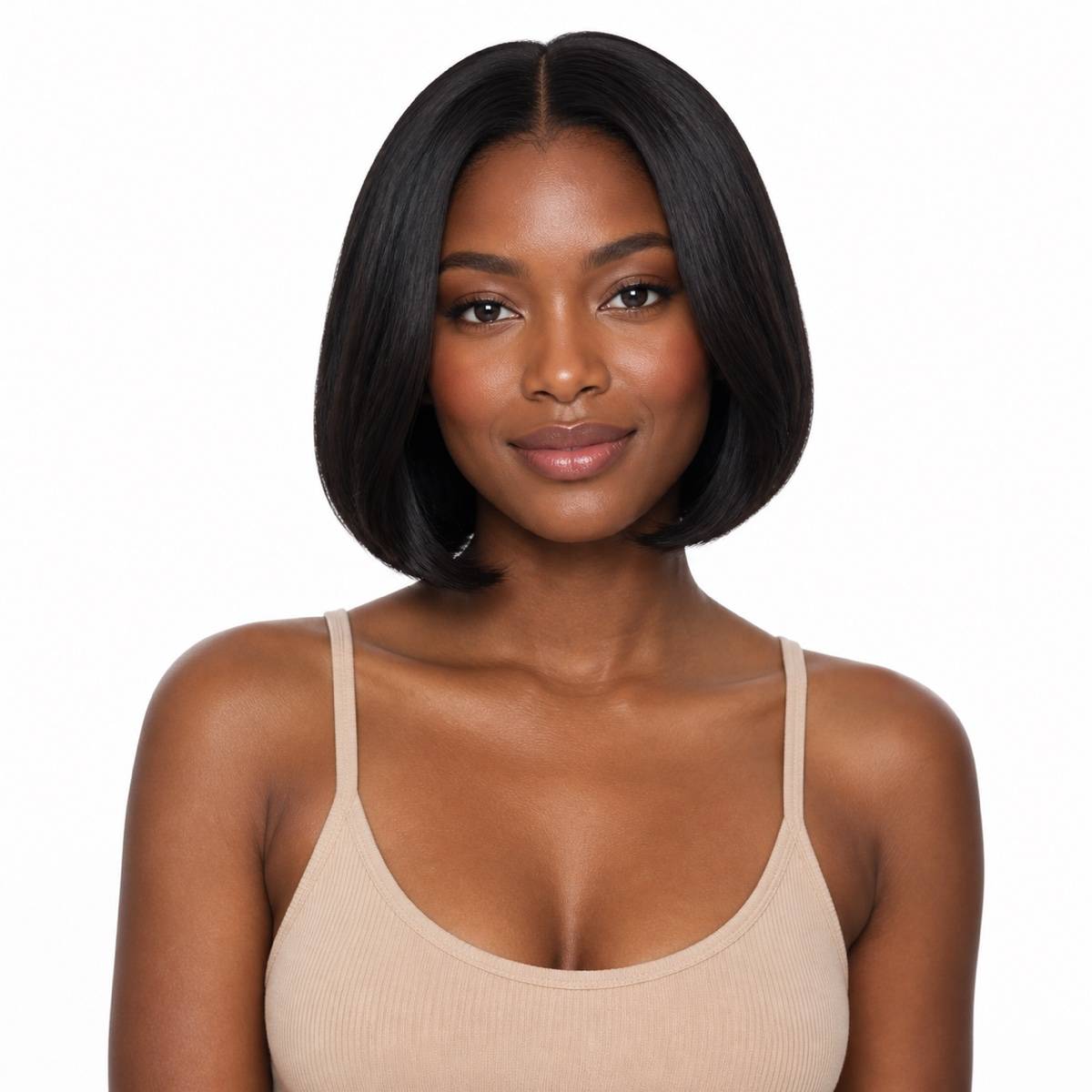
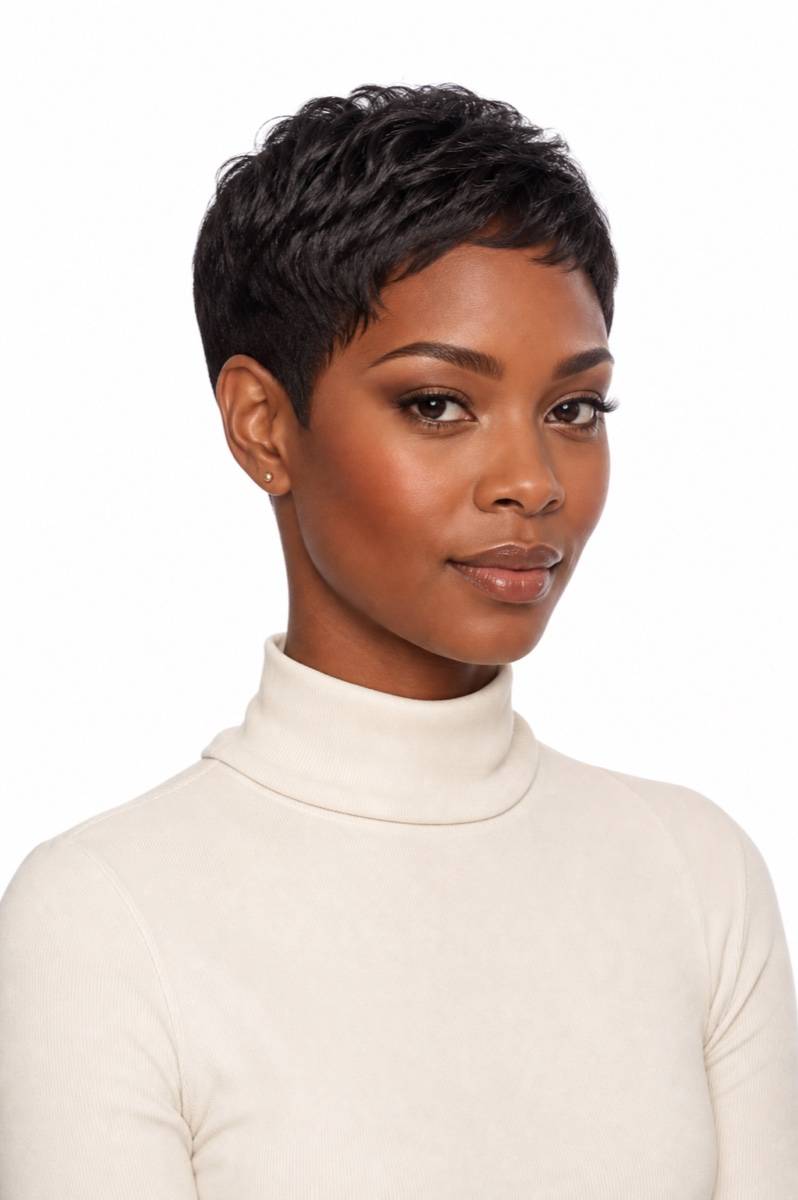
Good options include long layers, collarbone cuts, side-swept bangs, off-center parts, and pixie cuts that keep lift at the top instead of width at the cheeks. A chin-length blunt bob can work if it has an angle or texture, but a rounded bob that ends exactly at the fullest cheek area can make the face look wider.
A better shortcut: when previewing, compare where the widest point of the haircut lands. If the widest point sits at the cheek, the cut may feel too round. If it sits at the collarbone, crown, or below the jaw, the face usually looks more balanced.
Square face shape
A square face has a strong jaw and a more angular outline. Some people want to soften that. Some people want to lean into it. Both are valid, but the haircut needs to be honest about the goal.
For a softer look, try waves, feathered layers, curtain fringe, side parts, or a textured lob that falls below the jaw. For a stronger look, a blunt bob, crop, or sleek side part can look excellent, but it will call attention to the jaw. The mistake is choosing a sharp jaw-length cut while expecting it to soften the jaw.
If your hair is curly or wavy, ask for dry-shape awareness. Curly hair can spring up and change the visual endpoint of the cut, especially around the jaw.
Heart face shape
Heart-shaped faces usually have more width around the forehead or cheekbones and a narrower chin. The cut should avoid adding too much weight at the top unless you intentionally want that dramatic shape.
Lobs, side bangs, curtain bangs, chin-length layers, and soft waves usually work well because they bring attention downward. A pixie can also work if the fringe does not stack too much volume on top. If you have a short forehead, skip very heavy bangs and try a softer curtain shape first.
Preview note: check the side view, not just the front. Heart shapes can look great from the front but feel top-heavy from the side if the crown and fringe are too full.
Long or oblong face shape
A long face usually benefits from visual width and less vertical stretch. That is why bobs, lobs, bangs, waves, and side volume often work better than very long straight hair.
Full bangs can shorten the face, but they require maintenance and do not suit every hairline. Curtain bangs are a softer option. Shoulder-length cuts with movement can add width without feeling bulky. If you prefer long hair, add waves or face-framing layers so the hair does not create one long vertical line.
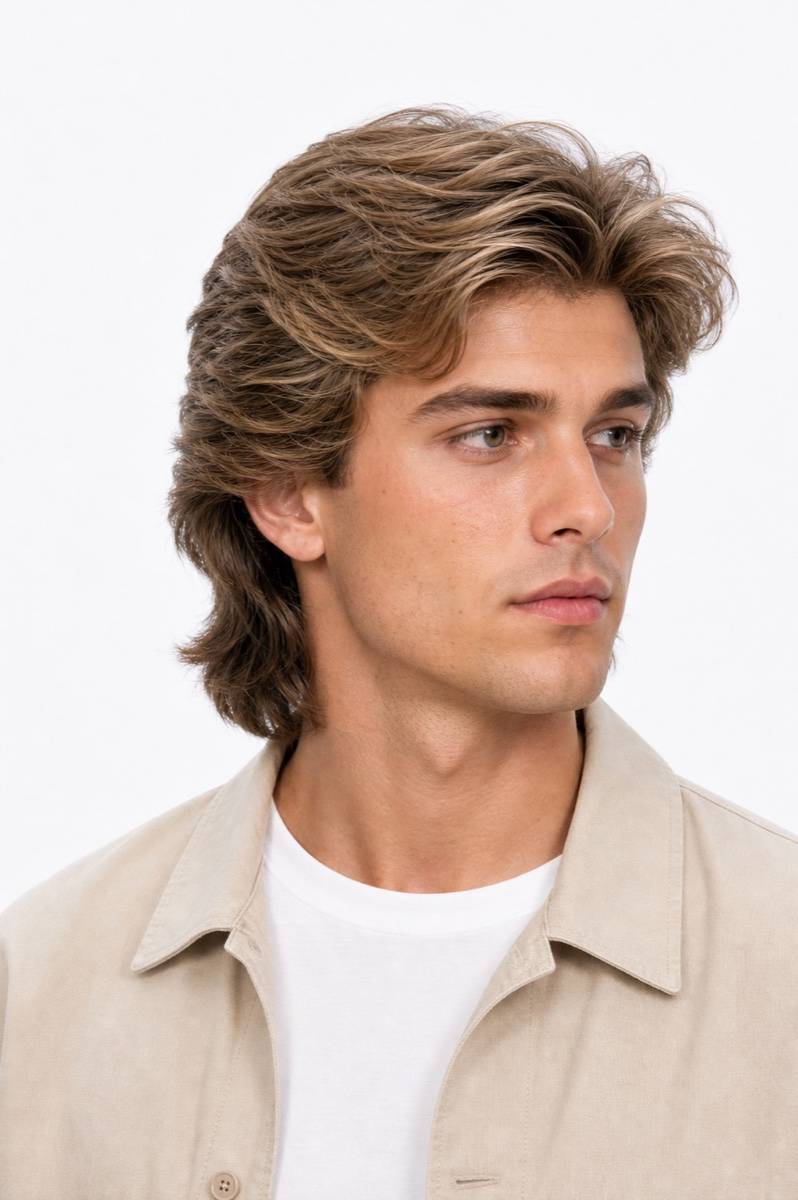
Men's and short cuts follow the same idea: avoid too much height on top with very tight sides if you do not want the face to look longer.
Diamond face shape
Diamond faces are widest at the cheekbones and narrower at the forehead and chin. The most useful haircut trick is to avoid adding even more width at the cheekbone while bringing softness to the forehead or jaw.
Deep side parts, chin-length bobs, textured lobs, soft fringe, and layers that sit around the jaw can work well. Slicked-back styles can look striking, but they expose every angle. If that is not the goal, choose a cut with a little movement near the forehead or jaw.
How texture changes the advice
Face shape is only half of the decision. Hair texture decides whether the haircut is easy or annoying after day three.
| Hair type | What to ask for | What to avoid |
|---|---|---|
| Fine hair | Clean perimeter, light face framing, minimal over-layering | Too many layers that make the ends look thin |
| Thick hair | Internal weight removal, longer layers, shape control | One-length heavy cuts with no movement |
| Wavy hair | Layers that respect natural bend, dry or semi-dry refinement | Cutting the shortest face frame while the hair is stretched straight |
| Curly / coily hair | Curl-by-curl shape planning, shrinkage allowance, lower-tension styling | Copying a straight-hair reference without adjusting for shrinkage |
| Straight hair | Blunt structure, precise length, intentional parting | Relying on "texture" that will not appear without daily styling |
Hair health also matters. The American Academy of Dermatology advises choosing care products for your hair type, being gentle with wet hair, and protecting hair from excessive heat. That is relevant to haircut choice because a cut that needs daily high heat may not be the best match for fragile, dry, or breakage-prone hair. See the AAD's healthy hair tips and styling-without-damage guidance if your desired cut depends on constant hot tools.
For tight ponytails, braids, extensions, or slicked styles, tension matters too. AAD notes that frequently wearing hairstyles that pull can contribute to hair loss, and NCBI's StatPearls review describes traction alopecia as hair loss caused by continuous pulling on hair roots. That does not mean you cannot wear pulled-back looks. It means your everyday version should not hurt, sting, or constantly pull at the hairline. Useful sources: AAD's page on hairstyles that pull and NCBI Bookshelf's traction alopecia review.
What to preview before you cut
Before saving twenty inspiration photos, test these five variables:
- Length: jaw, collarbone, shoulder, or long.
- Fringe: no bangs, curtain bangs, side bangs, blunt bangs.
- Part: center, soft side, deep side.
- Volume: crown height, cheek width, jaw width, or flat/sleek.
- Texture: straight, soft wave, curl definition, or piecey layers.
In HairWow, start with one conservative option and one bolder option. For example:
| If you are considering | Conservative preview | Bolder preview |
|---|---|---|
| A bob | Collarbone lob | Jaw-length bob |
| Bangs | Long curtain bangs | Full fringe |
| Short hair | Soft bixie or short bob | Pixie |
| Layers | Long face-framing layers | Shag or butterfly layers |
| Men's cut | Textured crop | High-volume quiff or fade |
The practical test is simple: if the bolder option looks great in try-on but you cannot imagine styling it twice a week, pick the conservative option and ask your stylist how to edge toward the bold version later.
What to tell your stylist
Do not walk in saying only, "I want something that suits my face." Give your stylist constraints.
Use this structure:
- "My face reads closest to [round / square / heart / long / diamond / oval]."
- "I want the cut to [lengthen / soften / add width / show my jaw / reduce bulk]."
- "I like this reference because of [length / fringe / layers / movement], not necessarily the exact color or styling."
- "My daily styling limit is [air-dry / five minutes / heat tools twice a week]."
- "Please avoid [too much cheek width / heavy bangs / jaw-length blunt line / high-maintenance layers]."
Example wording:
"My face reads round-heart. I want something that adds a little length without making my forehead feel wider. I like collarbone layers and curtain bangs, but I do not want a short, heavy fringe. I air-dry most days, so please keep the front pieces easy."
Bring a screenshot from your try-on session if possible. A visual reference plus specific wording is much harder to misunderstand than a trend name.
Common mistakes
Mistake 1: Treating face shape as a rulebook
Face shape is a starting point. Hair texture, density, hairline, glasses, beard, styling time, and personal style can override the generic rule.
Mistake 2: Choosing a celebrity cut without matching proportions
A celebrity reference may have different cheekbones, forehead height, camera angles, extensions, lighting, or professional styling. Use it for direction, not proof.
Mistake 3: Ignoring the haircut endpoint
Where the cut ends matters. Jaw-length cuts emphasize the jaw. Cheek-length volume emphasizes cheeks. Very long straight lines emphasize length.
Mistake 4: Forgetting maintenance
A cut that looks good only with a round brush, flat iron, curling wand, or product cocktail may not be your best cut if you prefer low effort.
Mistake 5: Overcorrecting
If you have a round face, you do not need to remove every soft line. If you have a square face, you do not need to hide your jaw. Better haircuts usually balance one feature rather than fighting your whole face.
FAQ
What haircut suits my face shape if I do not know my shape?
Start with a medium-length cut that has adjustable face framing: a lob, long layers, curtain bangs, or a textured crop. These cuts can be tuned after your stylist sees your proportions in person. Then use HairWow to compare one shorter and one longer version before committing.
Is an oval face really suited to every haircut?
Oval faces usually have more flexibility, but "anything works" is overstated. Hair density, texture, forehead height, neck length, and styling routine still matter. A heavy fringe can crowd a small forehead, and too many layers can make fine hair look thinner.
What haircut makes a round face look slimmer?
Cuts with vertical movement, diagonal lines, or length below the jaw often make a round face look more balanced. Try long layers, collarbone cuts, side-swept bangs, asymmetrical bobs, or pixies with height. Avoid adding the widest part of the haircut at the cheeks unless you want a softer, rounder effect.
What haircut softens a square face?
Soft layers, waves, curtain fringe, side parts, and lobs that fall below the jaw can soften a square face. A blunt jaw-length bob can still look strong and stylish, but it will emphasize the jaw instead of softening it.
Should I choose bangs based on face shape?
Yes, but also consider forehead height, cowlicks, hair density, and styling patience. Curtain bangs are usually the safest first step because they can be worn longer. Full blunt bangs are more committed and work best when you are ready for regular trims.
Can AI try-on replace a stylist consultation?
No. AI try-on helps you narrow options before the appointment, but a stylist still needs to check hair density, growth patterns, scalp comfort, and how the cut will behave after washing. Use try-on as a planning tool, then use your stylist for execution.
How often should I update a face-shape haircut?
Recheck the decision when your hair length, texture, color, facial hair, glasses, or styling routine changes. A cut that worked with long hair may not work after damage, thinning, curls, or a new fringe. The face shape may be stable, but the haircut context changes.
Final check before booking
Pick the haircut that passes three tests:
- It balances your face shape in the way you actually want.
- It works with your real texture and daily styling limit.
- It looks good on your own photo, not just on an inspiration model.
That is the point of combining face-shape logic with try-on. You do not need a perfect rule. You need enough visual proof to walk into the salon with a clear plan.