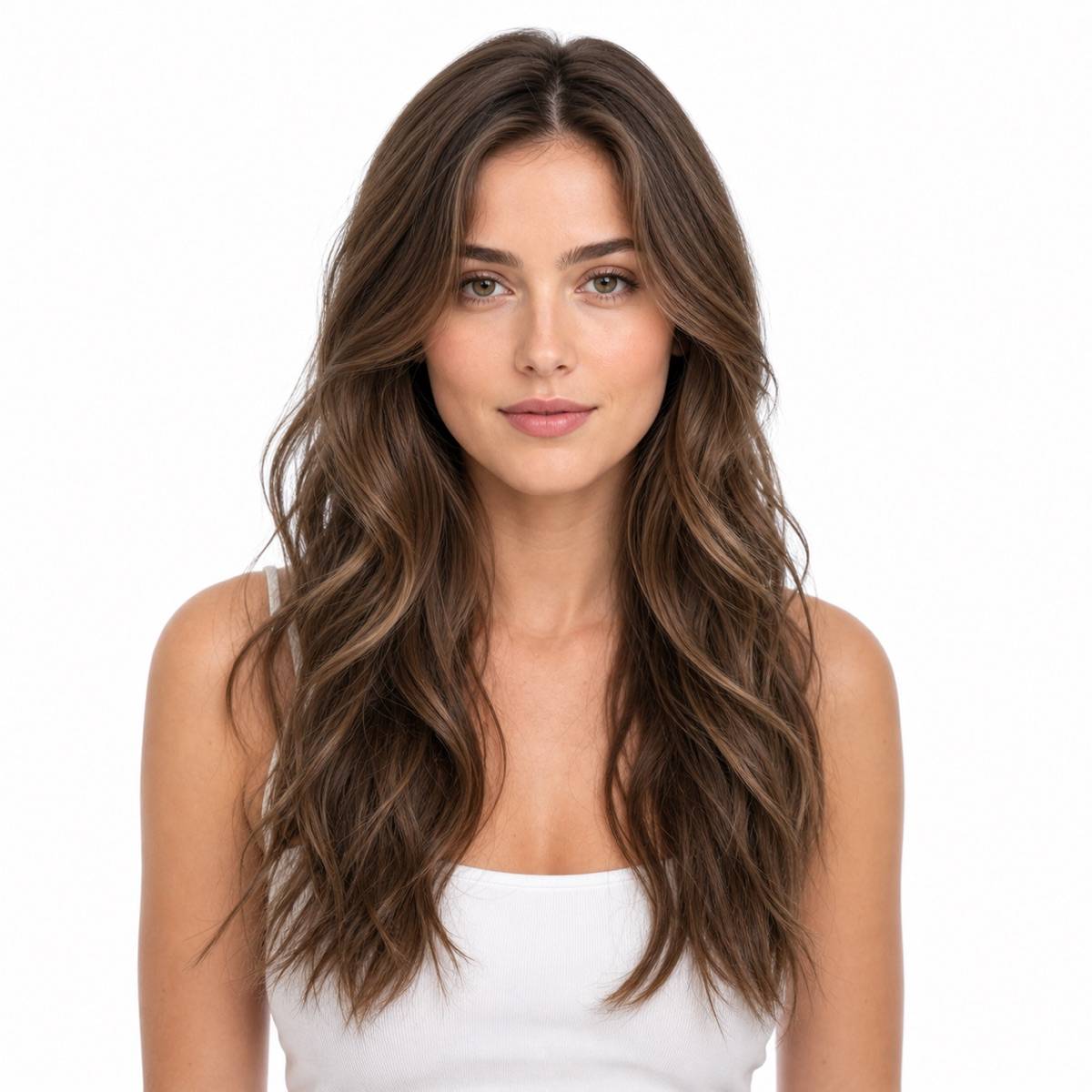
Frizzy Hair Routine: A Practical Plan for Smoother Hair
Build a frizzy hair routine by matching your wash day, product layers, drying method, and haircut shape to your real texture instead of fighting it.

· 13 min read

On this page
A good frizzy hair routine starts with one question: is your hair dry, damaged, humid-weather reactive, or simply textured? The answer changes the plan. Dry hair usually needs gentler cleansing and better conditioning. Damaged hair needs less heat and fewer chemical services. Wavy, curly, and coily hair often need more water, slip, and shape control instead of aggressive brushing.
The simplest starting routine is: cleanse your scalp, condition the lengths, detangle gently, add a leave-in or cream while the hair is still damp, seal or define only where needed, then dry with as little friction as your texture allows. Do that for 3 wash days before judging the routine. If the front pieces still puff up, the problem may be the haircut, not the product.
HairWow can help with the decision part. Use HairWow Hair Analyze to understand visible dryness, frizz, and damage cues, then use HairWow Try-On to test whether layers, curls, a bob, or more face-framing shape will make the texture easier to wear.
Key takeaways
- Frizz is not one problem. It can come from dryness, damage, humidity, rough handling, or a haircut that puts too many short pieces where they expand.
- Start with a 3-wash routine before buying more products.
- Conditioner, leave-in conditioner, and lower-friction drying are the first levers to test.
- Heat tools, tight styles, and aggressive brushing can make frizz look worse over time.
- Wavy and curly hair usually needs styling while damp; straight hair often needs partial drying before combing.
- If the hairline, ends, or crown are breaking, treat that as damage risk, not just "frizz."
- A haircut preview is useful because some frizz problems are shape problems: too much bulk, too many short layers, or not enough weight.
Definition: Frizzy hair is hair that looks fuzzy, expanded, or uneven because the fiber is not lying smoothly. The routine should reduce friction, support moisture balance, and choose a shape that works with the hair's natural texture.
Why frizzy hair happens
Frizz usually shows up when the outside of the hair fiber is rough, lifted, dry, swollen by humidity, or disturbed by friction. That can happen on healthy textured hair, and it can also happen on hair that has been weakened by heat, bleach, color, tight styling, or harsh handling.
The annoying part is that the surface symptom looks similar. A fuzzy halo after rain, broken pieces around the hairline, and undefined curls after towel rubbing can all be called "frizz." They need different fixes.
Use this quick read:
| What you see | Likely driver | First routine change |
|---|---|---|
| Hair expands in humid weather | Moisture from air disrupting the style | Use leave-in, cream, gel, or serum while damp, then dry without touching |
| Ends feel rough and snaggy | Dryness or damage | Condition more consistently and reduce heat or chemical stress |
| Short pieces around the hairline | Breakage, tension, or new growth | Stop tight styles and avoid rough brushing around the edges |
| Curls lose shape and turn fuzzy | Not enough water/product distribution or too much touching | Style wetter, use sections, and do not disturb while drying |
| Triangle shape or puffy sides | Haircut weight problem | Test longer layers, a cleaner perimeter, or more balanced face framing |
The American Academy of Dermatology recommends hair-care habits that reduce damage, including gentler drying, careful handling when wet, and limiting high-heat styling. Its guidance on healthy hair tips, styling without damage, and leave-in conditioner is a good baseline when your routine feels chaotic.
The 3-wash reset routine
Do not change shampoo, conditioner, towel, brush, cream, gel, oil, and haircut all at once. You will not know what worked. Run this reset for three wash days first.
| Step | What to do | Why it helps | If your hair is fine | If your hair is curly/coily |
|---|---|---|---|---|
| 1. Cleanse scalp | Shampoo the scalp, not the ends | Removes oil and buildup without over-scrubbing lengths | Use a lighter conditioner after | Make sure roots are clean before adding heavy stylers |
| 2. Condition lengths | Apply conditioner mid-length to ends | Adds slip so you can detangle with less friction | Rinse well so hair is not flat | Detangle while damp with conditioner slip |
| 3. Blot, do not rough-dry | Squeeze with towel or microfiber cloth | Reduces cuticle disturbance | Avoid heavy towel wrapping if hair collapses | Use a T-shirt or microfiber wrap if it preserves curl shape |
| 4. Apply leave-in or cream | Work through damp hair in sections | Creates a smoother base before drying | Use a small amount on ends only | Apply more evenly, especially underneath layers |
| 5. Add hold only if needed | Use gel, mousse, or serum based on texture | Keeps the style from expanding before it dries | Mousse or light gel may be enough | Gel or cream-gel can help clumps hold |
| 6. Dry with less touching | Air-dry, diffuse low, or blow-dry gently | Less friction usually means less frizz | Lift roots gently if needed | Do not separate curls until fully dry |
The goal is not perfectly flat hair. It is a repeatable baseline. If wash day 1 is better but day 2 is fuzzy again, you may need a refresh spray, looser sleep protection, or a different hold product. If all 3 wash days are still rough, look at damage, haircut shape, or buildup.
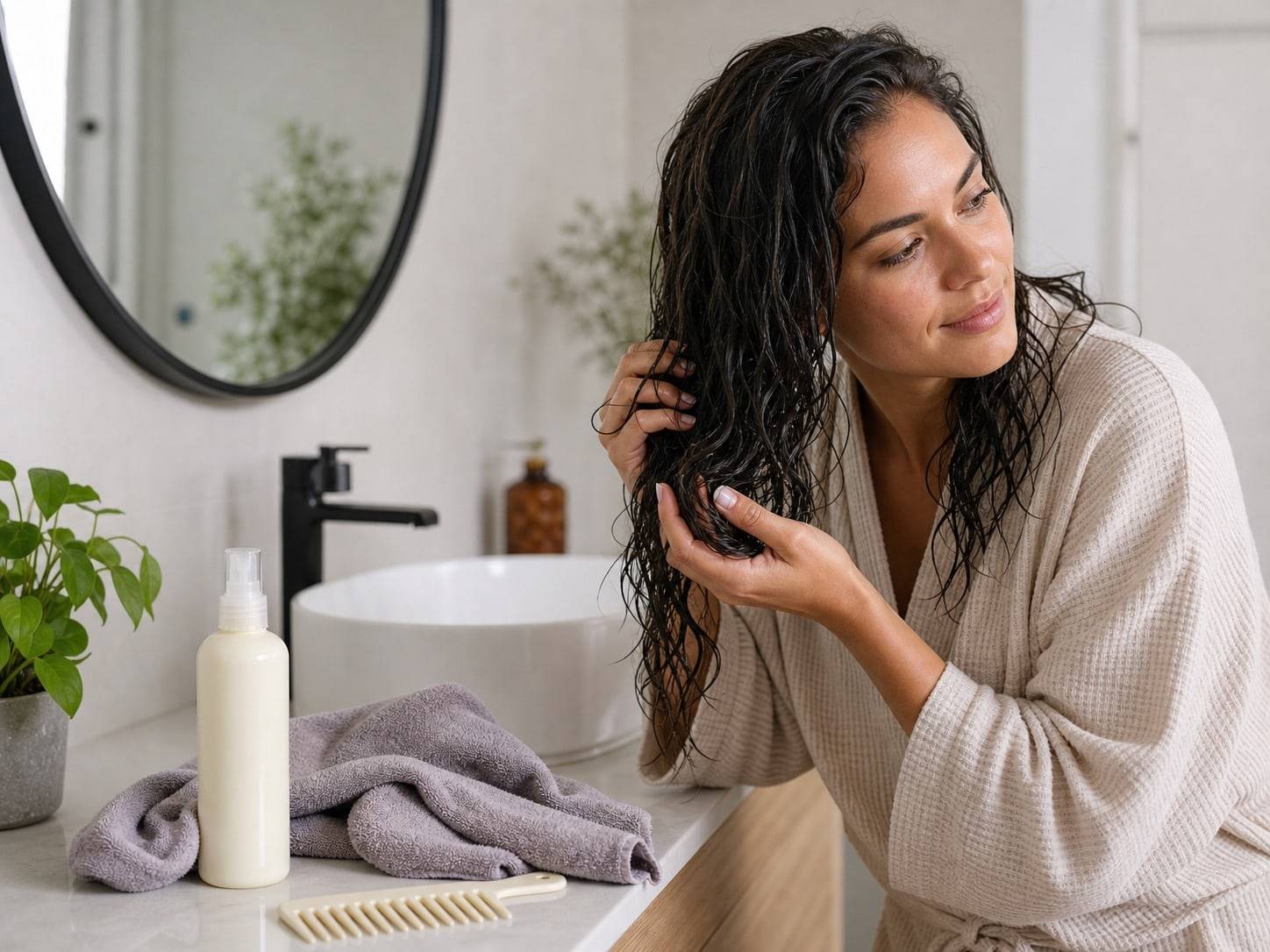
Choose products by what your hair is doing
Product labels can make frizz care feel more complicated than it is. Start by choosing the job, not the trend.
| Hair behavior | Product job | What to try first | What to avoid |
|---|---|---|---|
| Hair feels dry right after washing | Moisture and slip | Conditioner plus a small amount of leave-in | Clarifying too often |
| Hair is soft but puffy | Shape control | Light cream, mousse, gel, or serum | Touching while drying |
| Hair is limp at roots, frizzy at ends | Targeted care | Light root routine, richer ends routine | Heavy oils near the scalp |
| Curls separate into fuzz | Clump support | Apply product on wetter hair in sections | Brushing dry curls into a cloud |
| Ends look see-through or rough | Damage control | Trim plan, less heat, gentle detangling | More heat to force smoothness |
Leave-in conditioner is a useful middle step because it can help hair feel smoother, reduce static or flyaways, and make detangling easier. That does not mean every head of hair needs a heavy leave-in. Fine straight hair may need a pea-sized amount on the ends. Dense curls may need section-by-section application.
Oils and serums are finishing tools, not magic repairs. Use them to reduce surface fuzz or add slip, but do not expect them to fix breakage. If the ends are splitting, the honest answer is a trim plus gentler habits.
Drying and styling without adding more frizz
Most frizz routines fail between the shower and the moment the hair is dry.
For straight or slightly wavy hair, let the hair dry a bit before combing, then use a wide-tooth comb or gentle brush. For tightly curled or textured hair, detangling while damp can reduce breakage risk because the hair has more slip. That distinction matters. A single rule like "never brush wet hair" is too blunt.
The AAD also warns that repeated heat styling and tight styles can contribute to brittle, frizzy, lackluster hair and breakage. If you use a blow-dryer, keep the heat lower, keep air moving, and avoid pressing high heat into the same front pieces every day. A study in the Annals of Dermatology found that dryer technique matters; distance and continuous motion can reduce some forms of damage compared with harsh drying patterns, even though heat still needs caution.
Try this styling sequence:
- Detangle with conditioner or leave-in slip.
- Blot instead of rubbing.
- Apply product while the hair is damp enough to distribute evenly.
- Set the shape with your fingers, a wide-tooth comb, a diffuser, or a brush only where your texture tolerates it.
- Stop touching until the hair is dry.
- Break any gel cast or stiffness only after the style sets.
The boring rule is the useful one: less friction, less heat, less tension.
Haircuts that make frizz easier to manage
If the cut fights your texture, products have to do too much work. The best haircut for frizz keeps enough weight to prevent uncontrolled expansion while removing bulk where the hair balloons.
| Hair goal | Better haircut direction | Be careful with |
|---|---|---|
| Less triangle shape | Long layers or internal weight removal | Short top layers that spring up |
| Smoother ends | Blunt lob, soft U-shape, or clean perimeter | Over-thinning already rough ends |
| More curl definition | Shape that follows curl pattern | Cutting wet without shrinkage planning |
| Easier ponytails | Longer face-framing pieces | Short pieces that escape and puff |
| More volume but less fuzz | Controlled layers plus styling hold | Random choppy layers |
If your current hair is puffy at the sides, compare face-framing layers, butterfly haircuts, and haircuts for thin hair before booking. The right choice depends on density. Thick frizzy hair may need shape and weight removal. Fine frizzy hair usually needs fullness preserved.
How to use HairWow before changing the routine
Use HairWow for the two decisions that are hard to make in a product aisle.
First, use Hair Analyze to look at visible dryness, frizz, shine, density, and damage cues. Treat the result as a planning aid, not a medical diagnosis. If the report points to dryness or damage, build a routine around gentler cleansing, conditioning, and heat reduction before trying a dramatic cut.
Second, test shape in Try-On. Frizzy hair often looks better when the haircut gives it a controlled outline. Compare a few options:
- Long waves if you want more weight and less side expansion.
- Soft layers if your hair is heavy but still needs a clean perimeter.
- A bob or lob if the ends look better with a stronger line.
- Curtain bangs only if you are willing to style the front pieces.
- Controlled volume if your hair looks flat at the crown but fuzzy at the sides.
Bring one try-on image and one realistic texture reference to your stylist. The try-on helps with proportion. The reference helps with finish.
When frizz may actually be breakage
Frizz is not always a styling problem. Watch for these signs:
- Short snapped pieces around the hairline, crown, or nape.
- Ends that split quickly after trims.
- Hair that feels rough even after conditioning.
- More shedding or thinning than usual.
- Scalp symptoms such as itching, burning, scaling, or soreness.
If those are present, reduce heat and tension first. Tight ponytails, braids, extensions, and repeated high-heat passes can make fragile hair worse. Cleveland Clinic's hair-care guidance also frames hair as a fiber that needs gentle handling, especially when weather, heat, or chemical services are stressing it.
For persistent breakage, sudden shedding, scalp irritation, or patchy loss, do not keep buying smoothing products. See a board-certified dermatologist or qualified clinician.
FAQ
What is the best routine for frizzy hair?
Start with a gentle wash-day routine: shampoo the scalp, condition the lengths, detangle with slip, apply leave-in or cream while damp, add hold if your texture needs it, and dry without rubbing or constant touching. Run the routine for 3 wash days before changing products again.
Is frizzy hair damaged?
Not always. Healthy wavy, curly, or coily hair can look frizzy when humidity, brushing, or drying disrupts the pattern. Damage is more likely if you see snapped short pieces, rough ends, loss of elasticity, or hair that keeps breaking despite gentle care.
Should I brush frizzy hair wet or dry?
It depends on texture. Straight hair can often dry a bit before gentle combing. Tightly curled or textured hair may be easier and safer to detangle while damp with conditioner or leave-in slip. Use a wide-tooth comb and avoid tugging either way.
What haircut is best for frizzy hair?
The safest starting point is a cut with a clean perimeter and controlled layers. Thick frizzy hair may need weight removed in the right places. Fine frizzy hair often needs fewer short layers so the ends stay full. Avoid copying a styled reference without considering your natural dry shape.
Does leave-in conditioner help frizz?
It can. Leave-in conditioner can make hair easier to detangle, smoother, and less flyaway-prone. Use the amount your density can handle: a small amount on fine ends, more sectioned application on curls or dense hair.
How do I stop frizz in humidity?
You usually cannot stop humidity completely, but you can reduce expansion. Apply styling product while the hair is damp, use enough hold for your texture, dry without touching, and avoid brushing the finished style into fuzz. A stronger haircut shape also helps.
Should I use oil on frizzy hair?
Oil can help as a finishing or sealing step, especially on dry ends, but it does not repair split ends or replace conditioner. Start with a tiny amount. If your hair becomes greasy at the roots and still fuzzy at the ends, use less oil and improve the damp styling step.
When should I ask a dermatologist about frizz?
Ask for medical help if frizz comes with sudden shedding, patchy loss, scalp pain, scaling, burning, or breakage that keeps getting worse. A routine guide can help with styling, but it cannot diagnose scalp or hair-loss conditions.
Sources
- American Academy of Dermatology: Tips for healthy hair
- American Academy of Dermatology: How to style hair without damage
- American Academy of Dermatology: Dermatologists' top tips for using leave-in conditioner
- Cleveland Clinic: How to keep your hair healthy this winter
- Annals of Dermatology / PMC: Hair Shaft Damage from Heat and Drying Time of Hair Dryer